wayground logo

Free Printable Worksheets

Font size

S
M
L
XL
Worksheets

Evolution/ Classification

Total questions: 30

Worksheet time: 17mins

Name
Class
Date
1.
Natural selection could not occur without...
a)
genetic variation in species
b)
stable environments
c)
competition for unlimited resources
d)
gradual warming of the Earth
2.
Use the cladogram to determine which of the following organisms is most closely related to the dog?
a)
cat
b)
frog
c)
fish
d)
fly
3.
An inherited characteristic that increases an organism's ability to survive and reproduce in its specific environment is called a(n)...
a)
homologous structure
b)
vestigial organ
c)
adaptation
d)
speciation
4.
When farmers select the largest hogs, the fastest horses, or the cows that produce the most milk for breeding it is called...
a)
natural selection
b)
artificial selection
c)
survival of the fittest
d)
homologous variation
5.
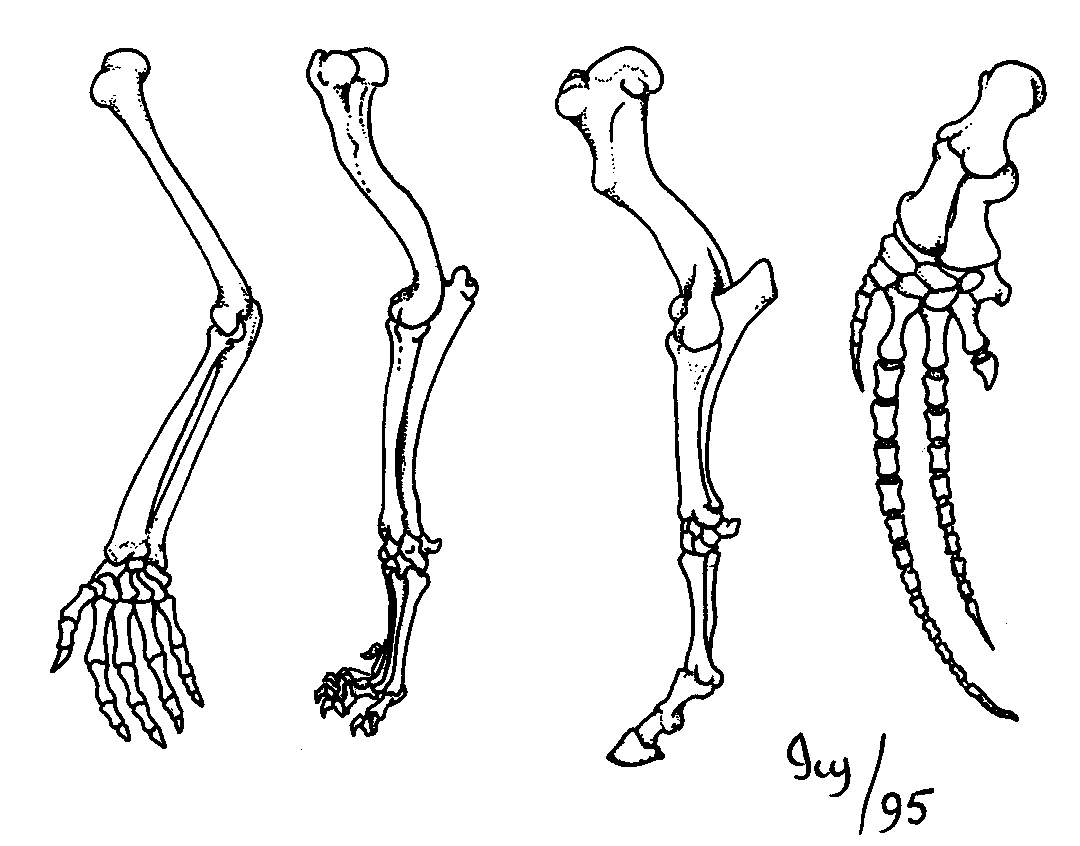
Refer to the illustration.  The similarity of these structures is one from of evidence that the organisms...
a)
share a common ancestor
b)
all grow at different rates
c)
evolved instantaneously
d)
live for a long time
6.
Natural selection is the process by which...
a)
the age of selected fossils is calculated
b)
organisms with traits well suited to their environment survive and reproduce more successfully than organisms less suited to the same environment
c)
acquired traits are passed on from one generation to the next
d)
all answers are correct
7.
How do fossils demonstrate evidence of evolution?
a)
They show that ancient species share similarities with species now on Earth
b)
They show evidence of species that are not extinct
c)
They are the primary source of evidence of natural selection
d)
Fossils reveal that many species have remained unchanged for millions of years
8.

The scientific name for an organism comes from its _____.

a)

class and phylum

b)

family and species

c)

kingdom and phylum

d)

genus and species

9.

What is a tool that is used to identify organisms and that consists of paired statements?

a)

Cladogram

b)

Dichotomous Key

c)

Map

d)

Fossil Record

10.

The scientific name of an Platypus is Ornithorhynchus anatinus, what is the species?

a)

Ornithorhynchus

b)

anatinus

11.
Term given to describe the 2 name naming system is:
a)
dichotmous key
b)
binomial nomenclature
c)
2 scientific names
d)
binomial key
12.
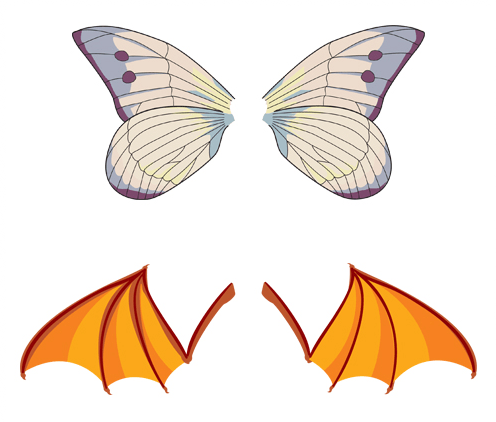
How would you describe this evolution?
a)
Homologous structure
b)
Analogous structure
c)
Structural adaption
d)
Functional adaption
13.
Structures with the same parts have different functions; suggests that organisms share a common ancestry
a)
vestigial structures
b)
homologous structures
c)
adaptive radiation
d)
fossil
14.

What are the rules to scientific naming?

a)

Genus first and capitalized

b)

Species second and lower cased

c)

in italics or underlined

d)

genus + species

15.

Who's system of taxonomy do we use?

a)

Linnaeus

b)

Darwin

c)

Lamarck

d)

Hooke

16.

Which type of evolution means to different species becoming more and more similar?

a)

convergent evolution

b)

divergent evolution

c)

parallel evolution

17.

In a dichotomous key there are always (a)   choices.

18.

Which of these is NOT evidence to support the theory of evolution?

a)

Fossil record

b)

embryology

c)

comparative body structure

d)

dichotomous key

19.

Check all of the ones that are adaptations

a)

mimicry

b)

camouflage

c)

the human thumb

20.

Who's work gave Darwin the mechanism for evolution, time?

a)

Hutton and Lyell

b)

Lamarck

c)

Linnaeus

d)

Mendel

21.

What is a change in allele frequencies that occurs due to chance events rather than difference in fitness?

a)

gene flow

b)

genetic drift

c)

founder effect

d)

migration

22.

What is the ENTIRE diagram below showing an example of?

a)

gene flow

b)

genetic drift

c)

founder effect

d)

migration

23.

__________________ divides two populations through a physical barrier, such as a canyon, river, or highway.

a)

geographic isolation

b)

isolating mechanism

c)

reproductive isolation

d)

speciation

24.

__________________ prevents members of two populations from mating, even if they inhabit the same area.

a)

geographic isolation

b)

isolating mechanism

c)

reproductive isolation

d)

speciation

25.
Which of the following RIMs depends on either songs or courtship dances of birds, or signaling between insects, or any other kind of learned or instinctual compatibility between mates?
a)
Mechanical
b)
Temporal
c)
Gametic
d)
Behaviroal
26.
What does the term "Hybrid" mean in the context of reproductive isolating mechanisms? 
a)
All offspring
b)
Only male offspring
c)
Offspring with parents from different species
d)
Offspring with parents from the same species
27.
Use the phylogenetic tree.  Which hypothetical organism is the most recent ancestor for Organisms A and G?
a)
1
b)
2
c)
3
d)
4
28.
What can a classification system show about an organism?
a)
absolute age of an organism
b)
what an organism is made of
c)
its relationship to other organisms
d)
which organisms are the strongest
29.

Which structures have the different structure but same function?

a)

Homologous

b)

Analagous

c)

Vestigial

d)

Similar

30.
What is a dichotomous key used for in science?
a)
To organize biomes
b)
Identify organisms
c)
Identify bacteria only
d)
None of these