

Wayground logo

Free Printable Worksheets

Font size

S
M
L
XL
Worksheets

Chemical Reactions Review

Total questions: 25

Worksheet time: 27mins
Name
Class
Date
1.

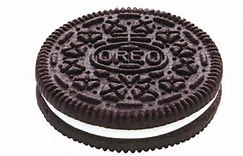
An oreo cookie has a mass of 20 grams. It gets crushed into crumbs for a recipe. What is the mass of the crumbs?

a)

15 grams

b)

25 grams

c)

20 grams

2.

If reaction starts with 20g of reactants, it will produce ---

a)

a total of 40g of product

b)

a total of 10g of product

c)

a total of 80 g of product

d)

a total of 20g of product

3.

How many of each type of atom are in the formula NH3?

a)

1 nitrogen, 3 hydrogen

b)

3 nitrogen, 3 hydrogen

c)

1 neon, 3 hydrogen

d)

1 nitrogen, 3 helium

4.

How many molecules are represented in the formula 3CO2?

a)

3 carbon, 2 oxygen

b)

6 carbon dioxide

c)

3 carbon dioxide

d)

3 carbon, 6 oxygen

5.

In a reaction A + B ----> C.

Reactant A has 5g and product C has 9g.

How many grams does reactant B should have?

a)

4g

b)

5g

c)

9g

d)

14g

6.
If there are 4 H atoms on the reactant side, how many H atoms will be on the product side? 
a)
2
b)
4
c)
6
d)
You need more information to answer this question
7.

Water is heated and changed to steam ________________

a)

Physical Change

b)

Chemical Change

8.
Which of the following is a sign that a chemical reaction has occurred?
a)
change in shape
b)
melting
c)
formation of a gas
d)
dissolving
9.
Is melting butter for popcorn a chemical or physical change?
a)
chemical
b)
physical
10.
Which of the following is NOT an example of a physical change?
a)
crumpled paper
b)
pencil sharpening
c)
shrunken clothing
d)
rust
11.
A change where one or more new substances are created.
a)
Physical Change 
b)
Chemical Change 
12.
Change in color is a physical change.
a)
True
b)
False
13.
A copper penny turning greenish after a few years is an example of ...
a)
Chemical Change
b)
Physical Change
14.
Which of the following is NOT an example of chemical change?
a)
sour milk
b)
burning wood
c)
breaking a pencil
d)
rust
15.
Which of the following is NOT an example of a physical change?
a)
crumpled paper
b)
pencil sharpening
c)
shrunken clothing
d)
sour milk
16.
What is a coefficient?
a)
The small number on the right of the chemical symbol.
b)
The large number to the left of a formula.
17.
Which side of a chemical equation is the product side?
a)
Left (before the arrow)
b)
Right (after the arrow)
18.
Which side of a chemical equation is the reactant side?
a)
Left (before the arrow)
b)
Right (after the arrow)
19.
Which problem is balanced?
a)
PbO2 + 2H2
b)
SO2 + H20 --> H2SO4
c)
2Na + 2H2O --> 2NaOH + H2
20.
Is the equation balanced?: 2H2O + O2 --> 4MgO + 3Fe
a)
Yes
b)
No
21.
What is the little number after an element in a chemical equation called.
Example: H2
a)
Coefficient 
b)
Subscript
c)
Atom
d)
Equation
22.
Balance this equation
_Zn+_HCl-->_ZnCl2 +_H2
a)
1,1,2,1
b)
1,1,1,2
c)
1,2,1,1
d)
2,1,1,1
23.
Balance this equation.
_Mg + _Cl2 --> _MgCl2
a)
1, 2,1
b)
already balanced
c)
2,1,1
d)
1,1,2
24.
What does the Law of Conservation of Mass state?
a)
Matter cannot be gained or lost in a chemical reaction.
b)
Matter can only be lost in a chemical reaction.
c)
Matter can only be gained in a chemical reaction.
d)
Matter can be gained and lost in a chemical reaction. 
25.
KNO3 --> KNO2 + O2
What coefficients are needed to balance the reaction?

a)
2, 2, 1
b)
2, 3, 2
c)
1, 2, 2
d)
1, 3, 1