wayground logo

Free Printable Worksheets

Font size

S
M
L
XL
Worksheets

Physics 2nd Nine Weeks Test Review

Total questions: 174

Worksheet time: 4hrs 52mins

Name
Class
Date
1.

What is the mass number of this isotope?

a)

131

b)

53

c)

184

d)

78

2.

What is the atomic number of this isotope?

a)

131

b)

53

c)

184

d)

78

3.

What is the name of this isotope?

a)

Iodine-131

b)

Iodine-53

c)

Iodine-184

d)

Iodine-78

4.

An alpha particle is made up of

a)

2 protons and 4 neutrons

b)

1 proton and 1 neutron

c)

2 protons and 2 neutrons

d)

4 protons and 2 neutrons

5.

Which type of nuclear radiation can be stopped by a sheet of paper?

a)

Alpha

b)

Beta

c)

Gamma

6.

Which type of nuclear radiation can be stopped 60 cm of aluminum or 7 cm of lead?

a)

Alpha

b)

Beta

c)

Gamma

7.

When a substance undergoes beta decay

a)

The atomic number increases by 1

b)

The atomic number decreases by 2

c)

The atomic number does not change

8.

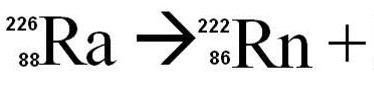
Which type of nuclear decay did Radon-198 go through?

a)

alpha decay

b)

beta decay

c)

gamma decay

9.

A sample of Radium-228 decays from 100g to 12.5g. How many half lives did it experience?

a)

1

b)

2

c)

3

d)

4

10.

How much of a 250g sample would be left after 5 half lives?

a)

125g

b)

62.5g

c)

31.25g

d)

7.81g

11.

Charged particles and electromagnetic waves that are emitted from the nuclei of radioisotopes

a)

Nuclear radiation

b)

Radioactivity

c)

Radioisotope

12.
Isotopes have different numbers of
a)
protons
b)
neutrons
c)
electron
d)
properties
13.
What would two different isotopes of an atom have in common?
a)
Number of neutrons 
b)
Number of protons
c)
Atomic weight 
d)
Atomic mass
14.
This is an electron emitted by an unstable nucleus and has a negative charge
a)
beta particle
b)
alpha particle
c)
gamma rays
d)
nuclear electrons
15.
Is a penetrating ray of energy emitted by an unstable nucleus. 
a)
gamma ray
b)
beta particle
c)
alpha particle
16.

Ionising radiation...

a)

can remove protons from atoms

b)

can remove neutrons from atoms

c)

can removed electrons from atoms

d)

has no effect on atoms

17.

Select the dangers associated with gamma rays.

a)

cancer

b)

mutating DNA

c)

heating of internal organs

d)

sun burn

18.

What are the symptoms of radiation sickness?

a)

hearing loss

b)

vomiting

c)

blindness

d)

hair loss

19.

Which wave causes skin burns?

a)

gamma rays

b)

infrared

c)

ultraviolet

d)

x-rays

20.
In the equation,  146C --> 147N + 0-1B, the _______ decay of radioactive carbon-14 results in the creation of a new nitrogen-14 atom.
a)
Radioactive
b)
Beta
c)
Alpha
d)
Gamma
21.
Complete the nuclear equation and determine the type of decay that is occurring in this reaction. 
a)
alpha
b)
beta
c)
gamma
d)
none
22.
What type of decay?
a)
alpha
b)
beta
c)
gamma
23.

What type of nuclear decay is shown here

13756Ba →→ 13756Ba + γ rays

a)

alpha

b)

beta

c)

gamma

24.

Finish this equation

20983Bi--> _______ + 20581Tl

a)

42He

b)

0-1e

c)

y

25.

Identify the type of nuclear decay shown here

21483Bi 0-1e + 21484Po

a)

alpha

b)

beta

c)

gamma

26.

finish the equation


18173Ta --> ____ + 18174W

a)

42He

b)

0-1e

c)

y

27.
After the third half-life, how much of the sample is left?
a)
1/2
b)
1/3
c)
1/16
d)
1/8
28.
If 10 mg of iodine 131 is given to a patient, how much is left after 24 days? The half-life of iodine-131 is 8 days.
a)
1.25mg
b)
1.25g
c)
10g
d)
10mg
29.
The half-life of strontium-90 is 25 years. How much strontium-90 will remain after 100 years if the initial amount is 4.0 g?
a)
3.0g
b)
0.25mg
c)
0.3g
d)
0.25g
30.

The % of the parent isotope remaining after 2 Half Lives.

a)

50%

b)

25%

c)

12.5%

d)

6.25%

31.
The splitting of a nucleus into smaller nuclei is
a)
fusion
b)
fission
c)
decay
d)
gamma radiation
32.
What is a chain reaction?
a)
When electrons are emitted causing electricity
b)
When a nuclear fission reaction occurs, the protons emitted can strike other nuclei in the sample, and cause them to split
c)
When a nuclear fission reaction occurs, the neutrons emitted can strike other nuclei in the sample, and cause them to split
d)
When a nuclear fission reaction occurs, the electrons emitted can strike other nuclei in the sample, and cause them to split
33.
An example of an uncontrolled fission reaction is _______________
a)
Nuclear power plants
b)
Radio active decay
c)
Atomic Bomb
d)
On the surface of the sun
34.
Where does fusion occur naturally?
a)
Underwater
b)
All around us
c)
In the radioactive waste
d)
On the sun
35.
What do  control rods do in a nuclear reactor?
a)
Regulate the rate of reaction  by absorbing and slowing neutrons
b)
Produce electricity
c)
Produce neutrons to increase the rate of reaction
d)
Reduce heat produced by the uranium rods
36.
Nuclear energy uses _____ to turn turbines to power a generator.
a)
wind
b)
water
c)
steam
d)
solar
37.
One disadvantage of nuclear energy is ___.
a)
it is a fossil fuel
b)
it leaves behind radioactive waste
c)
it emits large amounts of pollution into the atmosphere
d)
there are no disadvantages
38.
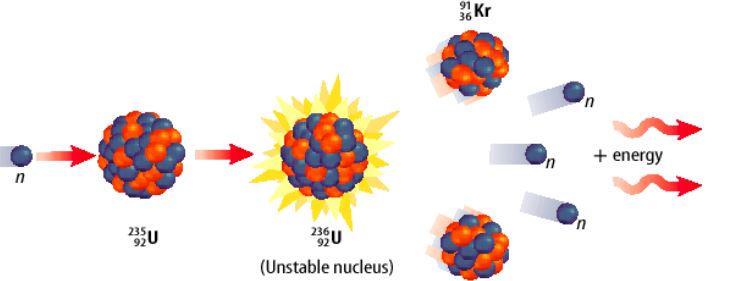
This is an example of...
a)
Fission  reaction
b)
Fusion reaction
c)
Decomposition reaction
d)
Decay
39.
This type of reaction occurs when light nuclei combine to form a larger, single nucleus.
a)
Fission
b)
Fusion
c)
single displacement
d)
double displacement
40.
Fusion produces ____ nuclei.
a)
same-sized
b)
smaller
c)
larger
d)
all of the above
41.
What are the two types of nuclear reactions?
a)
addition and reduction
b)
fusion and fission
c)
reduction and fission
d)
fusion and addition
42.
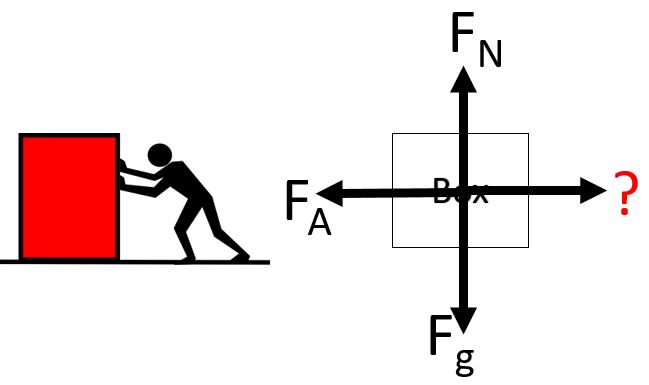
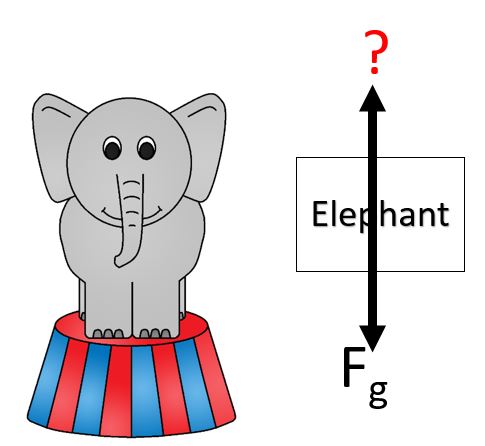
Name the missing force...
a)
frictional force
b)
weight force
c)
thrust
d)
buoyant force
43.
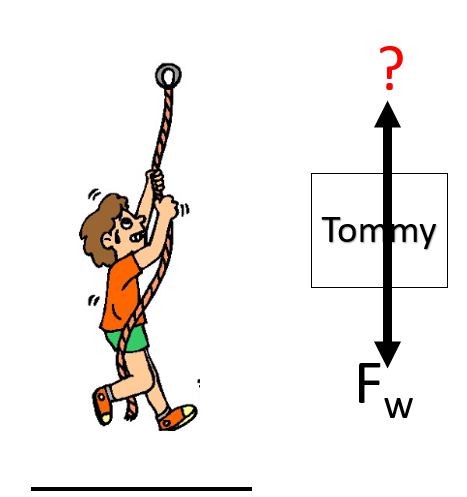
Name the missing force...
a)
applied force
b)
weight force
c)
tension force
d)
drag
44.
Name the missing force...
a)
tension force
b)
gravitational force
c)
normal force
d)
applied force
45.
Name the missing force...
a)
weight force
b)
normal force
c)
applied force
d)
frictional force
46.
Calculate the net force of the object in the image shown.
a)
20N
b)
35N
c)
5N
d)
25N
47.
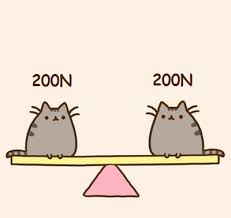
Is this a balanced or unbalance force?
a)
Balanced
b)
Unbalanced
c)
Neither one
d)
Both
48.
Which direction will the object move?
a)
Up
b)
Down
c)
Right
d)
Left
49.
Calculate the net force of the object.
a)
10N
b)
2N
c)
15N
d)
5N
50.

Student A is pushing at 63 newtons, and student B is pushing at 56 newtons. What is the net force (calculation).

a)

119 N Right

b)

7

c)

7 N Right

d)

119

51.

Student A is pulling at 57 newtons and student B is pushing at 96 newtons. What is the net force (calculation).

a)

153 N Left

b)

39 N Left

c)

153 N Right

d)

39

52.
What is the FORCE? 
a)
5 N
b)
10 N
c)
400 N
d)
0 N
53.

Items that are elastic include

a)

metal wires

b)

concrete blocks

c)

spring toys

d)

all of the above

54.

A rubber band keeps a newspaper tightly rolled because it

a)

can be tied tightly

b)

exerts elastic force

c)

is unbreakable

d)

none of the above

55.

When you compress a spring, it

a)

resists the change in shape

b)

exerts a force in the same direction.

c)

permanently changes to a new shape.

d)

none of the above

56.

The example of objects that can produce elastic force are

a)

trampoline

b)

bungee jumping

c)

spring

d)

all of the above

57.
How does friction affect speed?
a)
more friction decreases speed
b)
more friction increases speed
c)
less friction decreases speed
58.
Friction is a force that acts in an ___________ direction of movement.
a)
similar
b)
opposite
c)
parallel
d)
west
59.
What does friction produce?
a)
light
b)
sound
c)
heat
d)
gravity
60.

Which of the following answers is the most scientific answer for the question:


What is friction?

a)

The random force between two solids, liquids, or gases.

b)

The contact force between two solids, liquids, or gases that slide past one another.

c)

The thing that creates static electricity

d)

A force that is random

61.

Which type of friction is shown in the picture?

a)

rolling

b)

fluid

c)

static

d)

sliding

62.

Types of friction include

a)

static friction.

b)

sliding friction.

c)

rolling friction

d)

all of the above

63.

You can move heavy boxes by sliding them over the ground, or you can put them on a dolly and then roll them over the ground. Which way makes it easier to move the boxes? Why?

a)

Sliding the boxes on the floor is easier than using the dolly because rolling friction is less than sliding friction

b)

Sliding the boxes on the floor is easier than using the dolly because sliding friction is less than rolling friction.

c)

Rolling the boxes over the floor on the dolly is easier because sliding friction is less than rolling friction.

d)

Rolling the boxes over the floor on the dolly is easier because rolling friction is less than sliding friction.

64.

When you put on the brakes of your bike, the wheels stop turning. Then friction between the wheels and the road slows your bike to a stop. Which type of friction is this?

a)

static friction.

b)

sliding friction.

c)

rolling friction.

d)

all of the above

65.
What is the SI unit used to measure force? 
a)
pounds 
b)
grams 
c)
newtons 
d)
kg/ m2
66.
The force of gravity is also known as
a)
Mass
b)
Weight
c)
Distance
d)
Acceleration
67.
As distance between two objects increase the pull of gravity 
a)
Increases
b)
Decreases
c)
Stays the same
68.
Which of the following will not change in different gravitational fields?
a)
weight
b)
force
c)
mass
d)
pounds
69.
A person would weigh more on Jupiter than on the Earth because . . .
a)
Jupiter has more mass, and therefore more gravity
b)
Jupiter has less mass, and therefore more gravity
c)
Jupiter has more mass, and therefore less gravity
d)
Jupiter has less mass and therefore less gravity
70.
An object at rest remains at rest and an object in motion remains in motion unless it experiences an unbalanced force is what law?
a)
First Law
b)
Second Law
c)
Third Law
d)
Ninth Symphony
71.
The tendency of an object to resist being moved or if in motion, being stopped is...
a)
Inertia
b)
Force
c)
Fricition
d)
Monty
72.
The unbalanced force acting on an object equals the object's mass times its acceleration is which law...?
a)
First Law
b)
Second Law
c)
Third Law
d)
Murphy's Law
73.
The formula we get from the second law is...?
a)
F = m*a
b)
v = d/t
c)
a = v/t
d)
f = 1/T
74.
What is the force necessary to accelerate a 1785 kg car at a rate of 50 m/s/s?
a)
89,250 N
b)
35.7 N
c)
98.8 N
d)
75,620 N
75.
Which statement illustrates Newton’s first law?
a)
A stone will not move unless something pushes or pulls it
b)
As a car comes to a stop, the passengers continue to move forward
c)
A ball rolling across the floor eventually slows down
d)
All of them!
76.
What is the unbalanced force on a boy and his skateboard if the total mass of the boy and skateboard is 62 kg and their acceleration is 0.36 m/s/s forward?
a)
22.32 N
b)
172.2 N
c)
180 N
d)
24 N
77.
All objects in the universe attract each other through gravitation force is called...
a)
The Law of Universal Gravitation
b)
The Law of Conservation of Momentum
c)
The Law of Thermodynamics
d)
The Law of Monty the Snake
78.
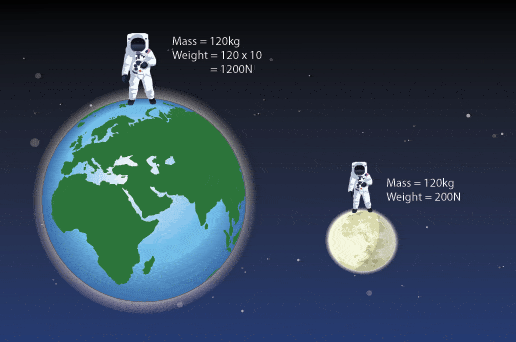
If the mass of an object on Earth is 18 grams, what would the mass of the same object be on the Moon?
a)
18 g
b)
4 g
c)
0 g 
d)
32 g 
79.

Einstein's concept of gravity involves...

a)

mass.

b)

space.

c)

time.

d)

all of these

80.

Einstein’s concept of gravity is similar to what happens when you place a bowling ball on the surface of a trampoline. In this analogy, if the bowling ball represents Earth, then the surface of the trampoline represents

a)

Space-time.

b)

Earth's gravity

c)

Earth's mass

d)

None of these

81.

What is the velocity of an object that has been falling freely in a vacuum for 2 seconds?

a)

9.8 m/s down

b)

10.1 m/s down

c)

19.6 m/s down

d)

39.2 m/s down

82.

An object initially at rest falls freely near Earth's surface. How long does it take the object to attain a speed of 98 m/s?

a)

0.1 s

b)

10 s

c)

98 s

d)

960 s

83.

A ball drops from a tall building. The ball strikes the sidewalk 2.0 seconds later. What is the velocity of the ball when it hits the sidewalk?

a)

19.6 m/s2

b)

9.8 m/s2

c)

4.9 m/s2

d)

7.8 m/s2

84.

A girl drops a 7 gram bowling ball and a 1gram rock from a cliff. Which will hit the ground first?

a)

Bowling Ball

b)

Rock

c)

Ignoring air resistance, both will hit at the same time.

d)

The cliff

85.
If you throw a baseball straight up, what is its velocity at the highest point?
a)
9.8 m/s2
b)
9.8 m/s
c)
0 m/s2
d)
0 m/s
86.
If you throw a baseball straight up, what is its acceleration at the highest point?
a)
9.8 m/s2
b)
9.8 m/s
c)
0 m/s2
d)
0 m/s
87.
What is the horizontal acceleration of a projectile?
a)
0 m/s2
b)
9.8 m/s2
88.
What is the vertical acceleration of a projectile?
a)
0 m/s2
b)
9.8 m/s2
89.
If I throw a crayon straight up at 12m/s, how fast is its speed when i catch it at the same height?
a)
6 m/s
b)
12 m/s
c)
18 m/s
d)
24 m/s
90.
Two objects of the same mass are launched from the ground. Object A has a launch angle of 45, while Object B has a launch angle of 65. Which object has the greatest maximum height height?
a)
A
b)
B
c)
Both objects reach the maximum height
d)
unable to determine with the given information
91.

When you toss a projectile sideways, it curves as it falls. It will be an Earth satellite if the curve it follows

a)

matches the curve of planet Earth.

b)

results in a straight line.

c)

spirals out indefinitely.

d)

is within 150 kilometers of Earth’s surface

92.

When a satellite travels at constant speed, its shape is a(n)

a)

circle.

b)

ellipse.

c)

oval that is almost elliptical.

d)

square.

93.

A satellite in elliptical orbit about Earth travels

a)

fastest when it moves closer to Earth.

b)

fastest when it moves farther from Earth.

c)

slowest when it moves closer to Earth.

d)

at the same rate for the entire orbit.

94.

Energy is conserved when an Earth satellite travels

a)

in either a circular or elliptical orbit.

b)

in only an elliptical orbit.

c)

away from Earth.

d)

toward Earth

95.

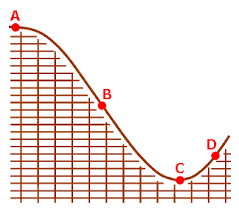
The orbital path of a satellite is shown in the sketch. Use the sketch to answer the question.

In which of the positions A through D does the satellite have the most KE?

a)

A

b)

B

c)

C

d)

D

96.
Objects with greater _________ also have greater inertia.
a)
speed
b)
mass
c)
temperature
d)
friction
97.
Because of inertia, a resting object will remain at ________.
a)
rest
b)
a constant speed
c)
school
d)
inertia 
98.
Because of inertia, a moving object will keep ________.
a)
at rest
b)
moving
c)
in one spot
d)
inertia 
99.

Mark slams on the brakes after traveling 25 m/s. It takes him 3 seconds to come to a complete stop. What is his acceleration?

a)

8.33 m/s2

b)

-8.33 m/s2

c)

75 m/s2

d)

-75 m/s2

100.

How much time did it take Matthew to slow down to a complete stop, after traveling at 30 m/s. His acceleration is -12 m/s2

a)

2.5 s

b)

360 s

c)

.4 s

d)

-2.5 s

101.

If Anthony was running for 300 s after starting at rest, what was his final velocity if he had an acceleration of 0.05 m/s2

a)

.25 m/s

b)

.01 m/s

c)

100 m/s

d)

15 m/s

102.

Mars’ gravitational force is less than that of Earth’s . If an astronaut drops a hammer and its speed increases from 0 to 15 m/s in 4.04 s, what is the acceleration due to gravity on Mars?

a)

9.8 m/s2

b)

0.269 m/s2

c)

60.6 m/s2

d)

3.71 m/s2

103.
A car starts from rest at a stop light and reaches 20 m/s in 3.5 s. Determine the acceleration of the car.
a)
2.2m/s2
b)
7.0m/s2
c)
5.7m/s2
d)
70m/s2
104.

A man pushes a 50kg box at a constant velocity. He applies a force of 200N to the left.


Find FN

a)

50kg

b)

200N

c)

500N

d)

50kg

105.

A man pushes a 50kg box at a constant velocity. He applies a force of 200N to the left.


Find Ff

a)

50kg

b)

200N right

c)

500N

d)

200N left

106.

A man pushes a 50kg box at a constant velocity. He applies a force of 200N to the left.


Is this balanced or unbalanced?

a)

Balanced

b)

Unbalanced

c)

Not enough information

107.

Find the weight of a 20g object

a)

200N

b)

20g

c)

0.2N

d)

0.02kg

108.

What is the weight of a 456g object?

a)

456g

b)

0.456kg

c)

4.56N

d)

456N

109.

You have a ball with a weight of 76N. What is the mass of the ball?

a)

76N

b)

76kg

c)

7.6kg

d)

7.6N

110.

Which of the following has the MOST momentum?

a)

rolling ping-pong ball

b)

rolling bowling ball

c)

rolling soccer ball

d)

rolling basketball

111.

If an object has a velocity of 15 m/s and a momentum of 30 kg*m/s, what is its mass?

a)

450 kg

b)

2 kg

c)

4,500 kg

d)

.5 kg

112.

If an object has a mass of 20 kg and a velocity of 4 m/s, what is the momentum of the object?

a)

80 kgm/s

b)

4 kgm/s

c)

5 kgm/s

d)

.2 kgm/s

113.

An object has a mass of 5 kg, a displacement of 5 m, and a time of 25 s, what is its momentum?

a)

1 kgm/s

b)

750 kgm/s

c)

25 kgm/s

d)

625 kgm/s

114.
While playing pool, the white cue ball strikes the 8 ball. Before the collision, the cue ball's velocity was 10 m/s and the 8 ball was at rest. If both ball's have a mass of 0.15 kg and the cue ball's velocity after the collision is 2 m/s, what is the 8 ball's velocity?
a)
2 m/s
b)
8 m/s
c)
-2 m/s
d)
1.5 m/s
115.

In a physics experiment, two carts of mass 1.5 kg each are rolled towards each other. The orange cart has a velocity of 2 m/s and the blue cart has a velocity of -1m/s. The carts stick together when they collide. Calculate their final speed.

a)

0.5 m/s

b)

1.0 m/s

c)

0.33 m/s

d)

0.67 m/s

116.
Two football players with mass 75 kg and 100 kg run directly toward each other with speeds of 6 m/s and 8 m/s respectively. If they grab each other as they collide, the combined speed of the two players just after the collision would be:
a)
2 m/s 
b)
3.4 m/s 
c)
4.6 m/s 
d)
7.1 m/s
117.
An 1 kg object moving to the right at 2 m/s collides inelastically with a 1 kg object moving to the left at 2 m/s. The final velocity of both objects will be 
a)
0 m/s
b)
1 m/s
c)
2 m/s
d)
4 m/s
118.
 Work done = Force x _________
a)
a. distance
b)
b. acceleration
c)
c. velocity
d)
d. speed
119.
The unit used to measure work is the 
a)
Watt
b)
Newton
c)
Joule
d)
meter
120.
What is work?
a)
A push or pull.
b)
When the object moves in the same direction in which the force is exerted.
c)
A change in energy.
d)
The rate at which energy is transferred.
121.
If you push a cart with a force of 60 N for 2 m, how much work have you done?
a)
120 J
b)
30 J
c)
120 N 
d)
30 N
122.
Fred kicks a ball with a force of 20N to George, who is 5M away. How much work was done to the ball?
a)
25J
b)
100J
c)
4J
d)
75J
123.

It took 500 Newtons of force to push a car four meters. How much work was done?

a)

2000 J

b)

125 J

c)

0.008 J

d)

500 J

124.

What is the power of a kitchen blender if it can perform 3,750 Joules of work in 15 seconds?

a)

250 W

b)

0.004 W

c)

56,250 W

d)

25 W

125.

How much power is used if a force of 35 Newtons is used to push a box a distance of 10 meters in five seconds? (Hint: Solve for work first. This is a 2-step problem.)

a)

70 W

b)

3.5 W

c)

7 W

d)

350 J

126.

If it takes 10 J of work to climb up the stairs in 5 seconds, what is your power?

a)

2 W

b)

5 W

c)

150 W

d)

200 W

127.
What type of simple machine is found on the cap of a pickle jar?
a)
lever
b)
inclined plane
c)
screw
d)
wheel and axle
128.
What is the fixed point upon which a lever rotates?
a)
fulton
b)
fulcrum
c)
furmen
d)
falcon
129.
What type of simple machine is found on the floor of a bathtub?
a)
screw
b)
inclined plane
c)
wedge
d)
pulley
130.
Which of these is an example of a wedge?
a)
skateboard
b)
broom
c)
stairs
d)
butter knife
131.
Which of these is not an example of an inclined plane?
a)
ladder
b)
stairs
c)
wall
d)
driveway
132.
Which type of simple machine would be found on the bottom of a wagon?
a)
a pulley
b)
a screw
c)
a wedge
d)
a wheel and axle
133.
Which  simple machine is found on the head of an ax?
a)
wedge
b)
lever
c)
pulley
d)
screw
134.
The seesaw is an example of which simple machine?
a)
incline plane
b)
wedge
c)
lever
d)
pulley
135.
The bottle cap is an example of which simple machine?
a)
inclined plane
b)
wedge
c)
screw
d)
lever
136.
The door knob and rod make up which simple machine?
a)
lever
b)
pulley
c)
screw
d)
wheel and axle
137.
The wheel and rope make up which simple machine?
a)
pulley
b)
lever
c)
wheel and axle
d)
inclined plane
138.

A lever used to lift a heavy box has an input arm of 4 meters and an output arm of 0.8 meters. What is the mechanical advantage of the lever?

a)

1

b)

2.5

c)

5

d)

10

139.

A 5-meter ramp lifts objects to a height of 0.75 meters. What is the mechanical advantage of the ramp?

a)

6.67

b)

5.67

c)

5

d)

6

140.

What is the mechanical advantage of this pulley system?

a)

4

b)

6

c)

8

d)

10

141.

How much effort is required to lift the 300 newton load?

a)

50

b)

60

c)

75

d)

90

142.
If a wheel is turned with a certain force, what will happen to the force on the axle?
a)
The force on the axle will be bigger than the force on the wheel.
b)
The force on the axle will be smaller than the force on the wheel.
c)
The force on the axle and wheel will be the same.
d)
There will be no force on the axle.
143.
Which simple machine or part is NOT found in this object?
a)
fulcrum
b)
lever
c)
wedge
d)
inclined plane
144.
Which simple machine is NOT found in the object?
a)
lever
b)
wedge
c)
wheel and axle
d)
inclined plane
145.

What is energy?

a)

moving energy

b)

stored energy

c)

renewable energy

d)

The ability to do work.

146.

What is potential energy?

a)

moving energy

b)

stored energy

c)

renewable energy

d)

non renewable energy

147.

What is kinetic energy?

a)

moving energy

b)

potential energy

c)

stored energy

d)

renewable energy

148.

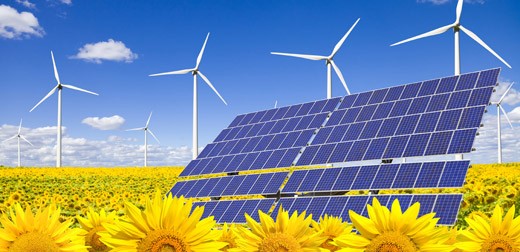
What is NOT a renewable energy source?

a)

coal

b)

wind

c)

solar

d)

water

149.

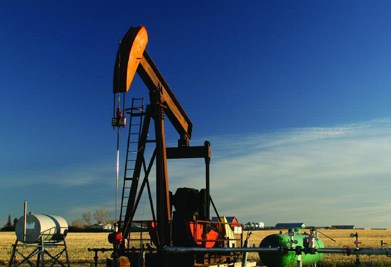
Which is NOT a non-renewable energy source?

a)

coal

b)

oil

c)

wind

d)

gas

150.

What is given off from energy?

a)

water

b)

heat

c)

smoke

d)

ash

151.

Which of these is an example of kinetic energy?

a)

a bicycle

b)

a battery

c)

a solar panel

d)

firewood

152.

A cheetah can run briefly with a speed of 31 m/s. Suppose a cheetah with a mass of 47 kg runs at this speed. What is the cheetah’s kinetic energy?

a)

1457 J

b)

728.5 J

c)

45,167 J

d)

22,583.5 J

153.

A ping pong ball has a mass of about 2.45 g. Suppose that ball is hit across the table with a speed of about 4.0 m/s. What is its kinetic energy?

a)

19.6 J

b)

0.0196 J

c)

4.9 J

d)

0.0049 J

154.

What is the kinetic energy of a 26 kg eagle, flying at an altitude of 65 m at a speed of 19 m/s?

a)

32,110 J

b)

16,055 J

c)

4693 J

d)

247 J

155.

A polar bear has an average mass of 500 kg. If its maximum kinetic energy is 60500 J, what is its top speed?

a)

242 m/s

b)

121 m/s

c)

15.56 m/s

d)

15,125,000 m/s

156.

The highest inhabited town in the world has an elevation of 5334 m above sea level. What would be the gravitational potential energy of a 64 kg person in this town?

a)

341,376 J

b)

83.3 J

c)

3,345,484.8 J

d)

34,834.3 J

157.

What is the gravitational potential energy of an 85 kg mountain climber at the summit of a 6267 m volcano?

a)

5,220,411 J

b)

532,695 J

c)

73.7 J

d)

54,356.6 J

158.

What is the gravitational potential energy of a 26 kg eagle, flying at an altitude of 65 m at a speed of 19 m/s?

a)

32,110 J

b)

1690 J

c)

172.4 J

d)

16,562 J

159.

What equation is used to calculate the elastic force used in changing the objects length?

a)

F = mg

b)

F = k x

c)

F = EQ

d)

F = PA

160.

Calculate the force that changes the spring length by 0.25m, when the spring's spring constant is 350Nm-1.

a)

1400 N

b)

14000 N

c)

7.14 x 10⁻⁴ N

d)

87.5 N

161.

Calculate the elastic potential energy Leo puts into the trampoline mat when he stretches the mat (k= 473 Nm-1) by 0.35 m.

a)

2.887 J

b)

28.97 J

c)

82.775 J

d)

12.76. J

162.

What types of energy does the toy oven use to bake the cakes?

a)

Light and sound

b)

Electrical and thermal

c)

Thermal and mechanical

d)

Mechanical and electrical

163.

What kinds of energy are needed in this investigation to change the state of matter of the candle?

a)

Thermal and mechanical

b)

Mechanical, light, and electrical

c)

Electrical and thermal

d)

Light, mechanical, and thermal

164.

What type of energy is being used when riding a bicycle?

a)

mechanical

b)

light

c)

thermal

d)

sound

165.
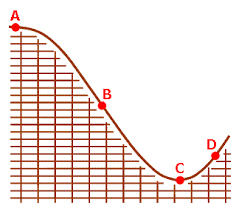
At which point(s) on the roller coaster is the gravitational potential energy at its maximum?
a)
A
b)
B
c)
C
d)
D
166.
At which point(s) on the roller coaster is the kinetic energy at its maximum?
a)
A
b)
B
c)
C
d)
D
167.

1. A ball has a 17 J of kinetic energy and its mechanical energy is 25 J. If the ball has a mass of 3.2 kg, what is its height above the ground?

a)

0.26 m

b)

0.52 m

c)

5.2 m

d)

25 m

168.

The given graph shows the releation between gravitional potential energy & height . If the mechanical energy at height A= 0.49 what is the kinetic energy

a)

0.10 j

b)

0.01 j

c)

0.5 j

d)

0.49 j

169.

__________ is an energy resource that WILL NOT run out in the next several hundred years.

a)

Renewable Energy Resource

b)

Nonrenewable Energy Resource

c)

Fossil fuels

d)

biodegradable

170.

__________ is an energy resource that WILL run out in the next several hundred years.

a)

Renewable Energy Resource

b)

Nonrenewable Energy Resource

c)

natural resources

d)

pollution

171.
what is a non renewable resource?
a)
water
b)
wind
c)
coal
d)
biomass
172.
This renewable energy source requires a sunny climate.
a)
Solar
b)
Hydro
c)
Wind
d)
Geothermal
173.

One way to preserve our current energy resources is to increase the ________________ of our energy use.

a)

Efficiency

b)

Use

c)

Effectiveness

174.

Another way to preserve those resources is to __________ energy whenever possible.

a)

Turn it off

b)

Run the water

c)

Conserve

d)

Use only what you need