
 Worksheets
Clay Terms Quiz Review
Total questions: 26
Worksheet time: 13mins

Made to create "Ceramics" or "Pottery" this material is an all natural compound made of granite and igneous rock, harvested from the earth.
Shale
Clay
Slip

When clay is soft and moldable we say that it is in the ____________ state.
Leather Hard
Bone Dry
Plastic

When clay can hold its form and is the consistency of Thick Leather we say that it is...
Slip
Bone Dry
Leather Hard

This is a "glue" for connecting clay. It is created by saturating clay with water until it becomes like a mug.
Score
Slip
Smooth

The piece of pottery on the right is ________________. This means that all of the moisture is gone and it is ready to be bisque fired.
Leather Hard
Bone Dry
Black Hard
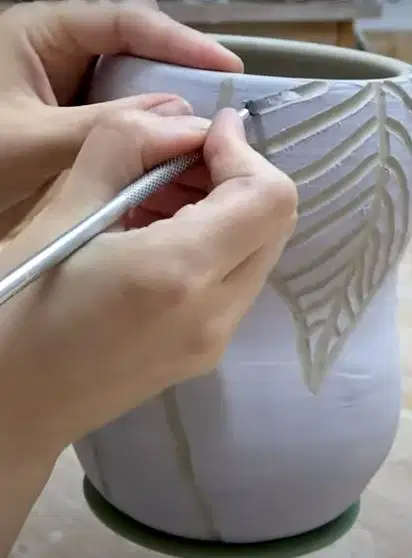
This is a decoration technique where a ceramic piece is coated in underglaze and the artist uses tools to scratch away the underglaze to reveal the clay beneath.
Impressed Texture
Filigree
Sgraffito
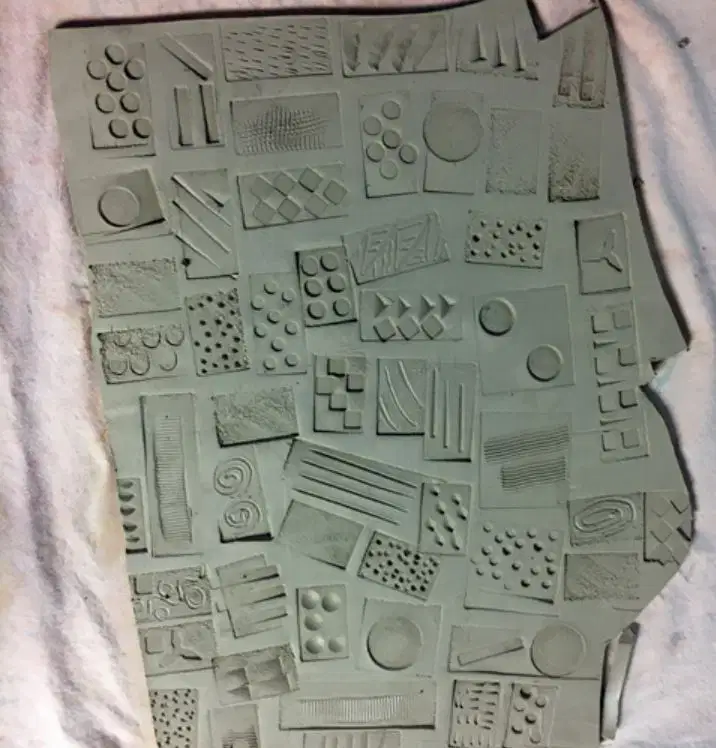
This technique is a surface decoration in which items are pushed into the plastic clay and leave behind a texture.
Sgraffito
Slip Trailing
Impressed Texture
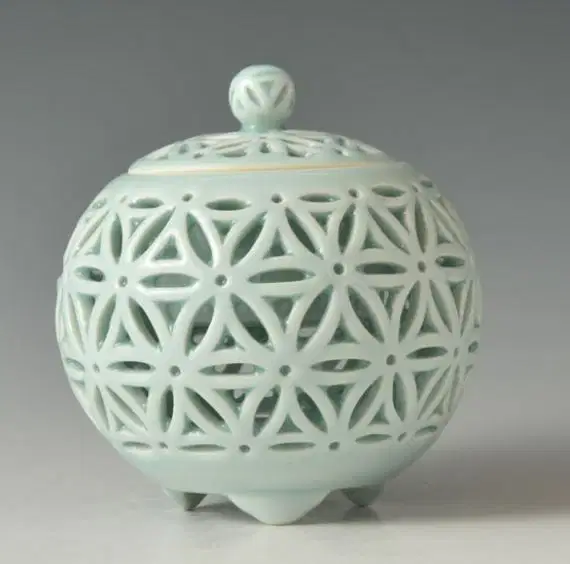
This is a decorative technique where intricate cut-outs are made in the walls of the clay piece
Filigree
Impressed Texture
Sgraffito
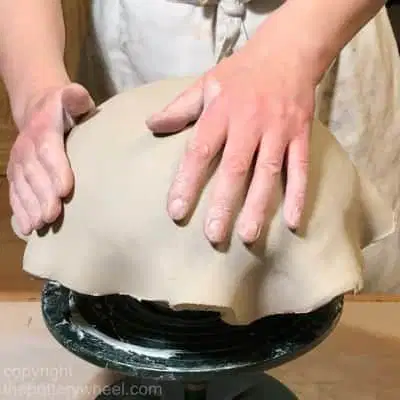
This refers to a support over which a clay slab is draped to shape as it dries.
Slip Mold
Slump Mold
Drape Mold

This basic way of forming clay includes forming clay into a ball, inserting thumb, and pinching the walls of the vessel.
Thrown
Coil
Pinch

Done before applying slip. Placing groves in clay in order to make sure that the connection is strong.
Slip
Score
Smooth

First Firing to make the clay piece Permanent and no longer able to be reclaimed back into usable clay.
Glaze Fire
Bisque Fire
Kiln Fire

This is an important process where you knead the clay like dough to force out any air bubbles.
Wedging
Pugging
Watering

This type of WARE is done and ready to be fired.
Bisque Ware
Glaze Ware
Green Ware

This is a mixture of pigment and liquid clay applied to green ware. This pigment must be coated with clear transparent glaze to make it shiny after the glaze fire.
Underglaze
Acrylic Paint
Glaze

This is a surface decoration technique in which pieces of clay are attached to the surface of damp clay in order to give the piece texture and dimension.
Impressed Texture
Sprigging
Slip Trailing

This is a method of forming a vessel with long ropes of clay. They can be smooth out or left for decoration.
Pinch
Slab
Coil

This is a technique of building clay with flattened our hunks of clay.
Pinch
Coil
Slab

This is a technique where a wheel spins fast. The potter centers the clay and pull of the walls of the vessel to form a piece of pottery.
Coil
Pinch
Thrown

This refers to the top rim of a piece of potter.
Lip
Mouth
Foot

This part of the piece of potter should be clean, flat, and sturdy.
Lip
Leg
Foot

It's super important that the foot of your piece clean and free of glaze or it will stick to the kiln shelf in the glaze fire. We say it has to have a _________________.
Clean Base
Dry Foot
Wet Foot

This is an important piece of equipment in the pottery studio. It fires the clay at crazy high temperatures in order for the clay to become permanent. They can be electric, wood burning, or gas.
Oven
Kiln
Pug Mill
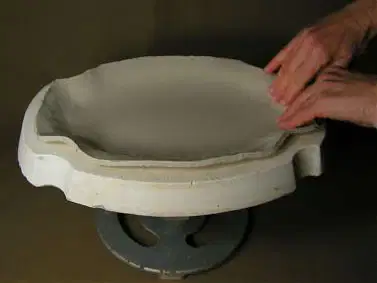
This refers to a support in which a clay slab is laid into a form to shape as it dries.
Slump Mold
Hump Mold
Drape Mold

This is a decorative technique in which a nozzle is used to apply slip to the ware while it is in the plastic state.
Filigree
Sprigging
Slip Trailing

This is the second firing where pieces covered in glaze become waterproofed.
Glaze Fire
Bisque Fire
Kiln Fire

