
 Worksheets
Stogs Reflection and Refraction
Total questions: 20
Worksheet time: 13mins
What is the law of reflection?
Angle of incidence > angle of reflection
Angle of incidence = angle of refraction
Angle of incidence = angle of reflection
Angle of incidence < angle of reflection

What does letter A represent in the diagram?
light ray
normal
incidence ray
reflected ray

What does letter B represent in the diagram?
incidence ray
normal
light ray
reflected ray

What does letter C represent in the diagram?
normal
angle of reflection
angle of incidence
angle of refraction

What does letter D represent in the diagram?
normal
angle of reflection
angle of incidence
angle of refraction

What does letter E in the diagram represent?
normal
incidence ray
reflected ray
refracted ray
When light goes from a less dense medium to to a more dense medium, light bends ............... the normal.
towards
away from
When light goes from a more dense medium to a less dense medium, light bends ....................... the normal.
towards
away from
Light is produced by ....................... objects.
luminous
smooth
all
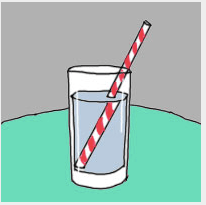
Why does the straw appear to be bent?
light is reflected
light is absorbed
light is turned
light is refracted
What do we call a material that light can travel through?
air
water
medium
pathway
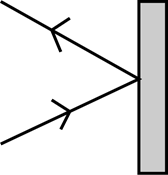
In the illustration, the light ray striking the object is-


What might explain why light travels in a straight line?
If there is nothing to interfere with light waves, they should travel in a straight line.
Light waves will always travel in a straight line, even if they come into contact with another object.
Light waves don't travel in a straight line.
Light waves travel in a straight line because sound waves travel in a straight line.

What is the angle of incidence?
The angle at which light bends in water.
The angle at which light hits a surface.
The angle at which light is absorbed by an object.
The angle at which light bounces off a surface.

What is the angle of reflection (θr) in the image?
56o
90o
124o
34o
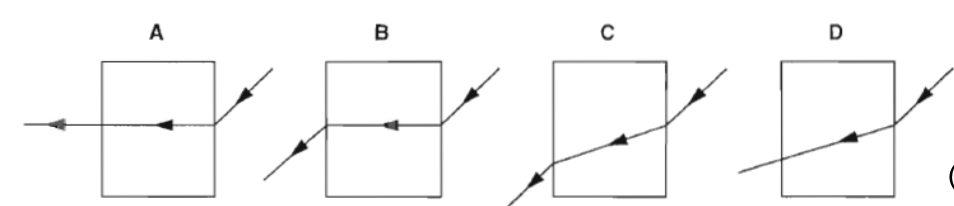
A ray of light travels from air into a glass block.
Which diagram correctly shows the path of the ray through the glass block?
A
B
C
D
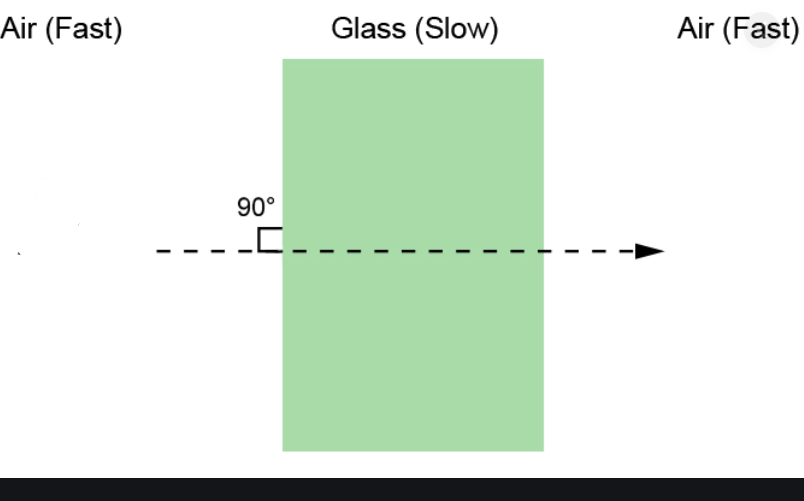
The line 90 degress through the refracting or reflecting surface is called?
Medium
Normal
Incidence
Reflection

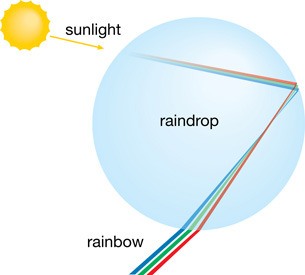
What is happening in this picture?
Reflection
Refraction

