
Font size
 Worksheets
TBSHS GCSE Geography - Tropical Cyclones
Total questions: 31
Worksheet time: 16mins
What is the strongest category of hurricane on the Saffir-Simpson Scale?
Category 5
Category 10
Category 1
Tropical cyclone characteristics:
Very high pressure
Very low pressure
A large rotating storm
They are usually 10-15 metres in diameter
What is the critical wind speed (km/hour) for a tropical storm to be classified as a tropical cyclone?
209
250
119
74
The location of tropical cyclones
Select the correct option(s)
Between 5 and 30 degrees north and south of the Equator
Areas immediately around the Equator
In temperate latitudes
The Caribbean Sea

In which direction do tropical cyclones rotate in the Northern Hemisphere?
Clockwise
Anticlockwise
They do not rotate
Backwards
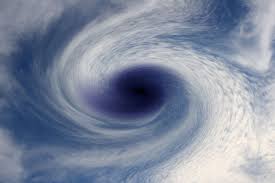
What is the calm area in the centre of a tropical cyclone called?
Wall
Eye
Void
Hole

Where are the strongest winds and heaviest rains in a tropical cyclone located?
In the eyewall
In the outer bands
On the leading edge
In the eye
The eye of a tropical cyclone is dry and calm because it is the only places for kilometres around where the air is...
rising
sinking
converging
rotating
Tropical cyclone formation
High temperatures in the tropics cause air to ________ away from the ocean surface.
Sink
Rise
Fall
Tropical cyclone formation
Sometimes tropical storms converge. This creates a flow of rapidly rising air, producing an area of extreme ________ pressure
High
Low
Warm
Cold
Tropical cyclone formation
In order for tropical storms to converge fully into a tropical cyclone, several trigger conditions need to be present:
A source of warm, dry air
A source of warm, moist air
Winds converging at the ocean surface, causing air to rise
Winds converging at the ocean surface, causing air to sink
Tropical cyclone formation
In order for tropical storms to converge fully into a tropical cyclone, several trigger conditions need to be present:
Warm ocean temperatures at or above 27oC
Warm ocean temperatures at or above 17oC
Formation some distance from the Equator so the Coriolis force will cause the storm to rotate
Formation at the Equator so the Coriolis force will cause the storm to rotate
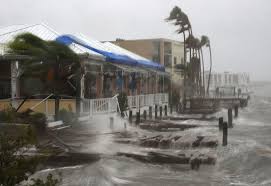
What happens as a tropical cyclone moves further inland?
It speeds up and gets stronger
It turns around and goes back to sea
It slows down and gets weaker
It turns into a tornado
The name given to the route taken by a tropical cyclone:
Path
Road
Track
Journey
The track of the tropical cyclone affects how strong it becomes.
The further it travels over _____________ the more heat and moisture it collects.
the Equator
the land
the ocean
the Tropics
The track of a tropical cyclone is determined by...
prevailing winds
the polar jet stream
incoming solar radiation
surface ocean currents
Tropical cyclones have different names around the world.
In the western Pacific Ocean they are known as...
cyclones
hurricanes
typhoons
depressions
Tropical cyclones have different names around the world.
In the Caribbean Sea and North Atlantic Ocean they are known as...
cyclones
hurricanes
typhoons
depressions
The tropical cyclone season in the northern tropics:
All year round
There is no season
November to April
June to November
The tropical cyclone season in the southern tropics:
All year round
There is no season
November to April
June to November
Typical dimensions of a tropical cyclone:
40 km wide and 1 km high
400 km wide and 10 km high
10 km wide and 400 km high
100 km wide and 40 metres high
Hazards associated with tropical cyclones:
High winds
Earthquakes
Storm surge
Intense rainfall
Volcanic eruptions
Impacts of tropical cyclones - high winds
High winds can cause...
trees to be uprooted
landslides
the movement of beach huts and sheds
earthquakes
Impacts of tropical cyclones - intense rainfall
Intense rainfall can cause...
landslides
flooding
dangerous, fast flowing water
earthquakes
Impacts of tropical cyclones - storm surges
For storm surges to form they require...
high winds
a large area of high pressure over the sea
a large area of low pressure over the sea
earthquakes
Impacts of tropical cyclones - storm surges
Storm surges can cause...
the contamination of farmland
the erosion of beaches
the destruction of coastal habitats
earthquakes
Impacts of tropical cyclones - coastal flooding
Coastal flooding can cause...
the contamination of farmland
earthquakes
deforestation
the destruction of coastal defences
Impacts of tropical cyclones - landslides
Landslides can cause...
the blockage of river channels
earthquakes
deforestation
the blockage of roads and railways
Impacts of tropical cyclones - landslides
These factors increase the risk of landslides:
Intense rainfall
Steep slopes
Slopes with a gentle gradient
Deforestation
The probable level of damage a tropical cyclone will cause if it reaches land is determined based on...
air temperature
amount of rainfall
wind speed
sea temperature
The Saffir-Simpson scale is used to categorise tropical cyclones.
Which of the following is the most important measurement used when deciding the category of a tropical cyclone?
The length of time that the tropical cyclone lasts
The wind speed in the tropical cyclone
The dimensions of the tropical cyclone
The height of the storm clouds

