Wayground logo

Free Printable Worksheets

Font size

S
M
L
XL
Worksheets

9I - Forces and Motion

Total questions: 50

Worksheet time: 50mins
Name
Class
Date
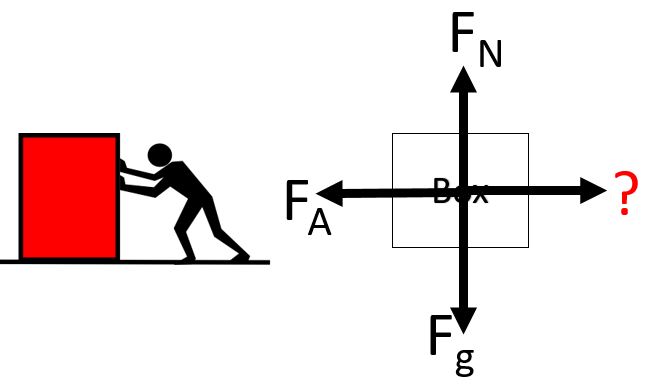
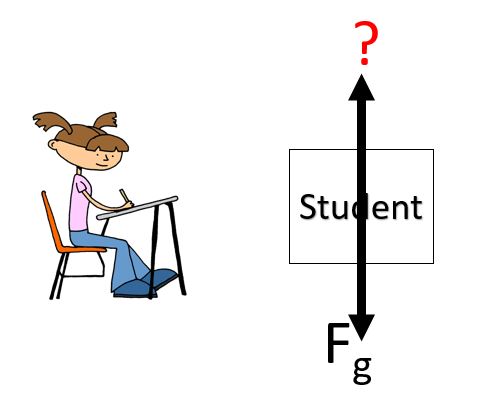
1.
Name the missing force....
a)
weight force
b)
normal force
c)
frictional force
d)
tension force
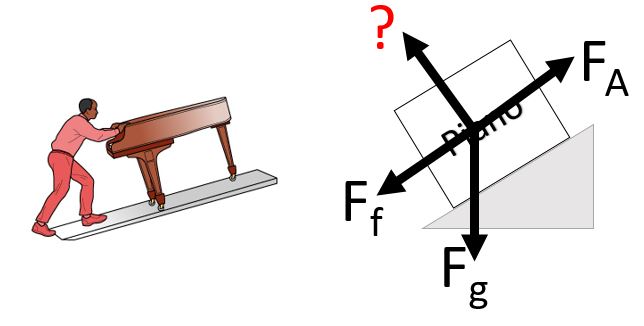
2.

Name the missing force...

a)

upthrust (buoyant) force

b)

normal force

c)

weight force

d)

frictional force

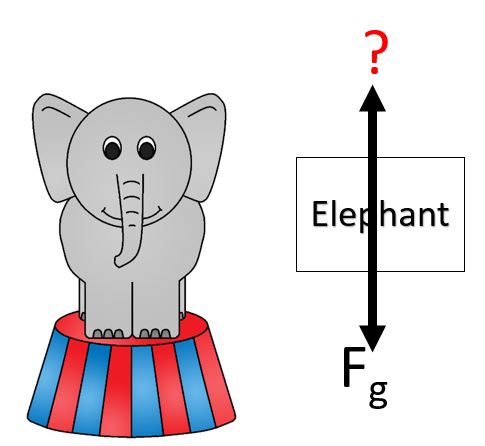
3.

Name the missing force...

a)

tension force

b)

weight force

c)

normal force

d)

buoyant force

4.
Name the missing force...
a)
tension force
b)
frictional force
c)
normal force
d)
spring force
5.
Name the missing force...
a)
frictional force
b)
weight force
c)
thrust
d)
buoyant force
6.
Name the missing force...
a)
thrust
b)
frictional force
c)
normal force
d)
weight force
7.
Name the missing force...
a)
weight force
b)
normal force
c)
buoyant force
d)
applied force
8.
Name the missing force...
a)
normal force
b)
applied force
c)
frictional force
d)
tension force
9.
Name the missing force...
a)
tension force
b)
gravitational force
c)
normal force
d)
applied force
10.
Name the missing force...
a)
weight force
b)
normal force
c)
applied force
d)
frictional force
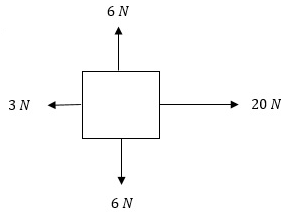
11.

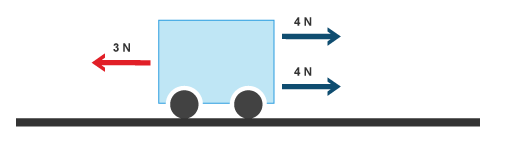
What is the NET FORCE of this diagram?

a)

17 N, right

b)

17 N, left

c)

23 N, right

d)

12 N, up

12.
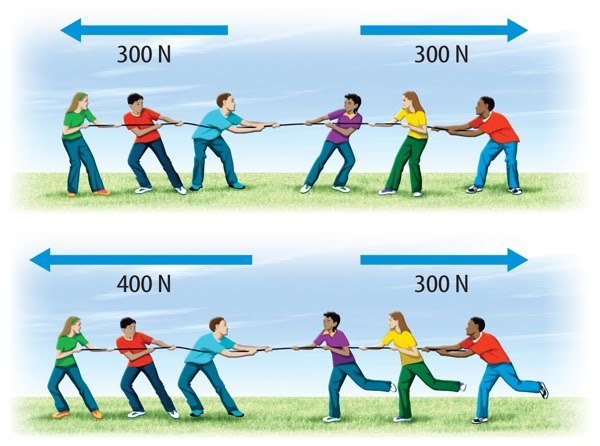
Which one is balanced?
a)
top
b)
bottom
c)
both
13.
Is it BALANCED? 
a)
Yes
b)
No
14.
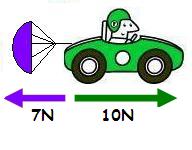
What is the net force?
a)
17 N Right
b)
3 N Right
c)
3 N Left
d)
17 N Left
15.

When determining the NET force on an object you should (TWO correct answers)

a)

subtract forces in opposite directions

b)

add forces in the same direction

c)

divide by velocity

d)

multiply by acceleration

16.

A force has both strength and _____.

a)

power

b)

direction

c)

color

d)

balance

17.
What is the unit of force?
a)
Kilogram
b)
Meter
c)
Pascal
d)
Newton
18.

The total amount of forces acting on an object is called...

a)

Contact Force

b)

Balanced Force

c)

Unbalanced Force

d)

Resultant (Net) Force

19.
When an object has a net for that is GREATER than 0 Newtons, the object is...
a)
balanced and still
b)
balanced and moving at a constant speed
c)
unbalanced and accelerating
d)
unbalanced and still
20.
What is the formula to calculate speed?
a)
S = t/d
b)
S = d/t
c)
S = d x t
d)
S = t x d
21.

A runner races in the 100 meter dash. It takes her 10 seconds to finish. What is her average speed?

a)

10 m/s

b)

1000 m/s

c)

100 seconds

d)

10 seconds

22.
Dave runs a 400 m race with a speed of 4 m/s. What time will it take him to finish the race?
a)
400 minutes
b)
100 minutes
c)
100 seconds 
d)
.25 seconds 
23.
Which of the following is a unit of time?
a)
sec
b)
mi
c)
m/s
d)
km
24.
Which of the following is a unit of speed ?
a)
sec
b)
mi
c)
m/s
d)
min
25.
Which of the following is a unit of distance ?
a)
miles/hr
b)
hr
c)
km
d)
min
26.
Which of the following is a unit of speed?
a)
km/hr
b)
hr
c)
km
d)
s
27.
Reese rides her bike 10 miles in 5 hours.
Avery rides her bike 15 miles in 5 hours. Which girl rides her bike faster?
a)
Reese
b)
Avery 
28.

At 60 seconds, how far had this object traveled?

a)

0 m

b)

10 m

c)

20 m

d)

40 m

29.

How long did Bob take to complete the race?

a)

17 seconds

b)

12 seconds

c)

14 seconds

d)

15 seconds

30.
Where is the object not moving
a)
A-B
b)
O-A
c)
C-D
d)
B-C
31.

What is this graph showing?

a)

Constantly slowing down

b)

Constantly speeding up

c)

Acceleration

d)

Returning to starting point

32.

What is this graph showing?

a)

Fast constant speed

b)

Slow constant speed

c)

At rest

d)

Accelerating

33.

What is this graph showing?

a)

At rest

b)

Acceleration

c)

Constant speed of 1 m/s

d)

Gradually speeding up

34.

What is this graph showing?

a)

Fast constant speed

b)

Slow constant speed

c)

Accelerating

d)

At rest

35.

What is the graph showing?

a)

Speeding up moving away from start

b)

Speeding up moving towards start

c)

Slowing down moving towards start

d)

Slowing down moving away from start

36.

What is the graph showing?

a)

Constant speed away from start

b)

Constant speed toward start

c)

Accelerating away from start

d)

Stopped toward start

37.
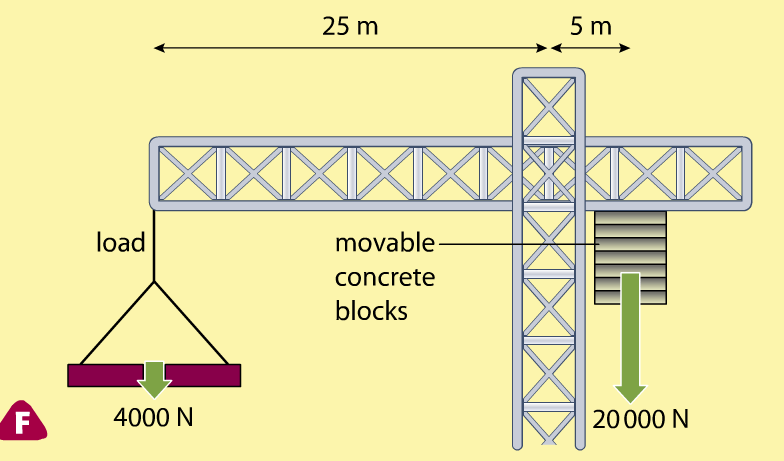
What is the anticlockwise moment acting on this crane?
a)
80,000Nm
b)
100,000Nm
c)
120,000Nm
d)
140,000Nm
38.
What is the moment acting on the seesaw?
a)
1.6Nm
b)
15Nm
c)
16N
d)
4Nm
39.
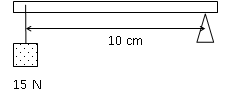
What is the moment produced by the 15 N?
a)
15 Nm (clockwise)
b)
150 Nm (anti - clockwise)
c)
1.5 Nm (anti - clockwise)
d)
0.15 Nm (clockwise)
40.
The easiest way to open a heavy door  is by applying the force
a)
Near the hinges
b)
In the middle of the door
c)
At the edge of the door far from the hinges
d)
At the top of the door
41.

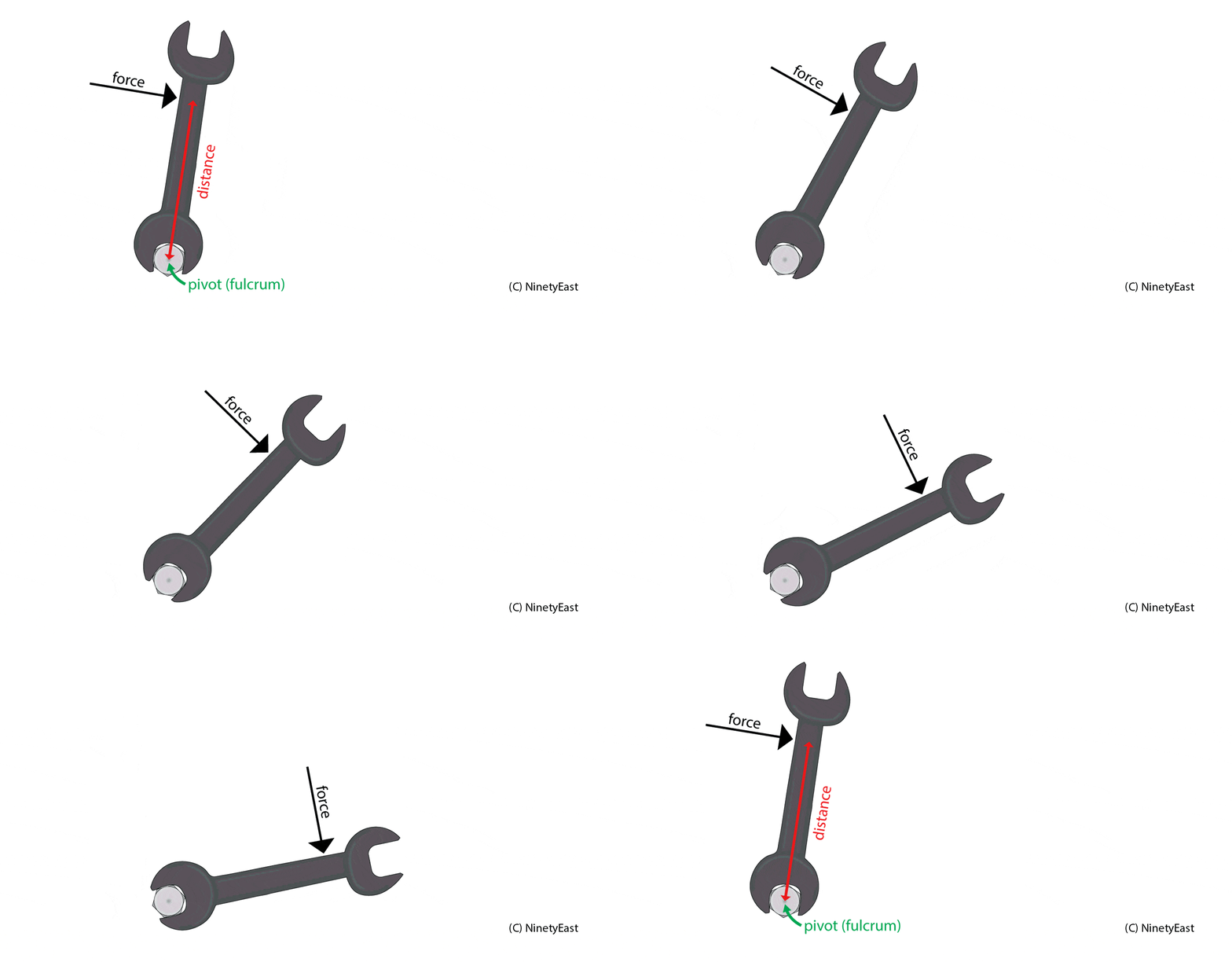
A nut can be loosened more easily with

a)

a short spanner because a larger turning effect can be produced.

b)

a long spanner because a larger turning effect can be produced.

c)

a long spanner because a larger force can be produced.

d)

a short spanner because a larger force can be produced.

42.

The figure below shows a man lifting a heavy rock using a steel bar. He pushes downwards on the end of the bar with a force F.


Which pivot positions allows the force F to be as small as possible?

a)

A

b)

B

c)

C

d)

D

43.

What to we call forces applied to anything that turns?

a)

Minute

b)

Moment

c)

Minimum

d)

Monument

44.
How does friction affect speed?
a)
more friction decreases speed
b)
more friction increases speed
c)
less friction decreases speed
45.
The rougher the surface, the faster an object will travel over the surface.
a)
True
b)
False
46.
Friction is a force that acts in an ___________ direction of movement.
a)
similar
b)
opposite
c)
parallel
d)
west
47.
Rougher surfaces have ...
a)
greater friction
b)
less friction
c)
the same level of friction
48.

Which two of these forces act on parachutes?

a)

Air Resistance

b)

Weight

c)

Thrust

d)

Kinetic Energy

49.

What causes an object to fall faster?

a)

Smaller surface area

b)

Larger surface area

c)

If it has a parachute

d)

If it is softer

50.

Air resistance pushes against falling

objects and __________________.

a)

Speeds them up

b)

Keeps them afloat

c)

Slows them down

d)

Spins them