
Font size
 Worksheets
fertilisation,pregnancy and formation of twin
Total questions: 20
Worksheet time: 10mins
Name the process when a sperm meets and fuses with an ovum to form a zygote.
Fertilisation
Fusion
Conception
Implantation
During fertilisation, nucleus in the head of sperm fuses with the ovum nucleus to form a ___________________
embryo
zygote
foetus
baby
After fertilisation, the zygote will divide to form ___________________
a baby
a foetus
an embryo
implantation
Name the process where the embryo implants onto the uterine lining of uterus.
Plantation
Implantation
Pregnancy
Development
What structure protects and cushions the fetus throughout its prenatal development?
amniotic sac and fluid
placenta
umbilical cord
vagina
Which is the correct order?
embryo, foetus, zygote
foetus, zygote, embryo
embryo, zygote, foetus
zygote, embryo, foetus
Which foods should a woman AVOID during pregnancy?
raw shellfish
caffeine
raw or undercooked meat
deli meat (sandwich meat)
Which of the following consist of a hollow ball of cells
Gastrula
Morula
Blastocyst

State the no of chromosomes in a human zygote.
12
23
46
92
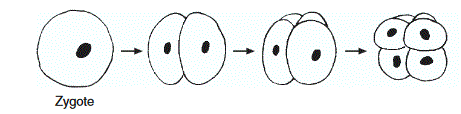
The diagram below represents some stages of early embryonic development. Which process is represented by the arrows in the diagram?
meiosis
Mitosis
Fertilization
Evolution
Which of the following twins form from the fertilisation of one sperm and one ovum?
Identical twins
Fraternal twins
Siamese twins
The embryos of the twins develop into two foetuses, each with its own placenta and umbilical cord.
The above description is true for
identical twins
fraternal twins
siamese twins

The above image is
identical twins
fraternal twins
siamese twins
Which of the following carry blood rich in carbon dioxide and nitrogenous waste products from the foetus to the placenta?
foetal artery
umbilical artery
umbilical vein
foetal vein
Sexual reproduction is vital to the propagation of the Human race. Which of the following sequences represents the correct order of events in the formation of a human fetus?
Zygote → Blastocyst → Embryo → Fertilization
Fertilization → Zygote → Blastocyst → Embryo
Blastocyst → Embryo → Differentiation → Zygote
Fertilization → Growth → Differentiation → Zygote
The main function of the placenta is to :
allow direct exchange of blood between the mother and fetus for nutrition.
facilitate gas and nutrient exchange between the fetus and mother.
support the weight of the developing fetus in the uterus.
store gases and nutrients for later delivery to the fetus.
Choose the correct pathway of sperm to meet ovum for fertilisation.
Sperm duct > Penis> Vagina > Cervix > Uterus
Testis > Sperm duct > Urethra> Penis > Vagina> Fallopian tube
Testis > Sperm duct > Urethra > Penis > Vagina > Cervix > Uterus > Fallopian tube
Testis > Sperm duct > Penis> Vagina > Uterus> Fallopian tube
Choose the structures that involved in development of foetus in the uterus.
Placenta
Umbilical cord
Amnion
Fallopian tube
Sperm duct

