

wayground logo

Free Printable Worksheets

Font size

S
M
L
XL
Worksheets

Cells and tissues

Total questions: 24

Worksheet time: 18mins

Name
Class
Date
1.

The thick liquid that is inside the cell is:

a)

Cell membrane

b)

Cell wall

c)

Organelles

d)

Cytoplasm

2.

A group of cells forms...

a)

Multicellular organism

b)

Organs

c)

Systems

d)

Tissues

3.

The main differences between a plant cell and an animal cell are:

a)

Plant cells have cell walls and nucleus.

b)

Plant cells have cell walls and chloroplasts with chlorophyll.

c)

Plant cells have organelles and cell wall.

d)

Plant cells have nucleus, cell walls and chlorophyll.

4.

Define tissue with regards to anatomy

a)

Multiple sheets of thin paper used to clean your nose

b)

The smallest structural and functional unit of an organism

c)

A series of different cells in the same area

d)

A group of structurally and functionally related cells that come together to perform common functions
5.
The stomach consists of what type of muscle?
a)
Smooth muscle
b)
Skeletal muscle
c)
Cardiac muscle
d)
Deoxygenated muscle
6.
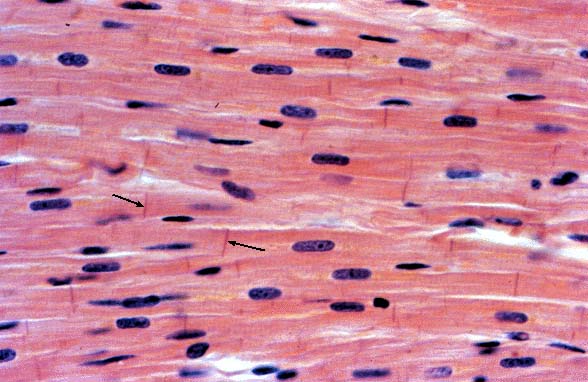
What tissue type is this? (The arrows are a clue)
a)
Cardiac muscle
b)
Skeletal muscle
c)
Smooth muscle
d)
Nervous tissue
7.
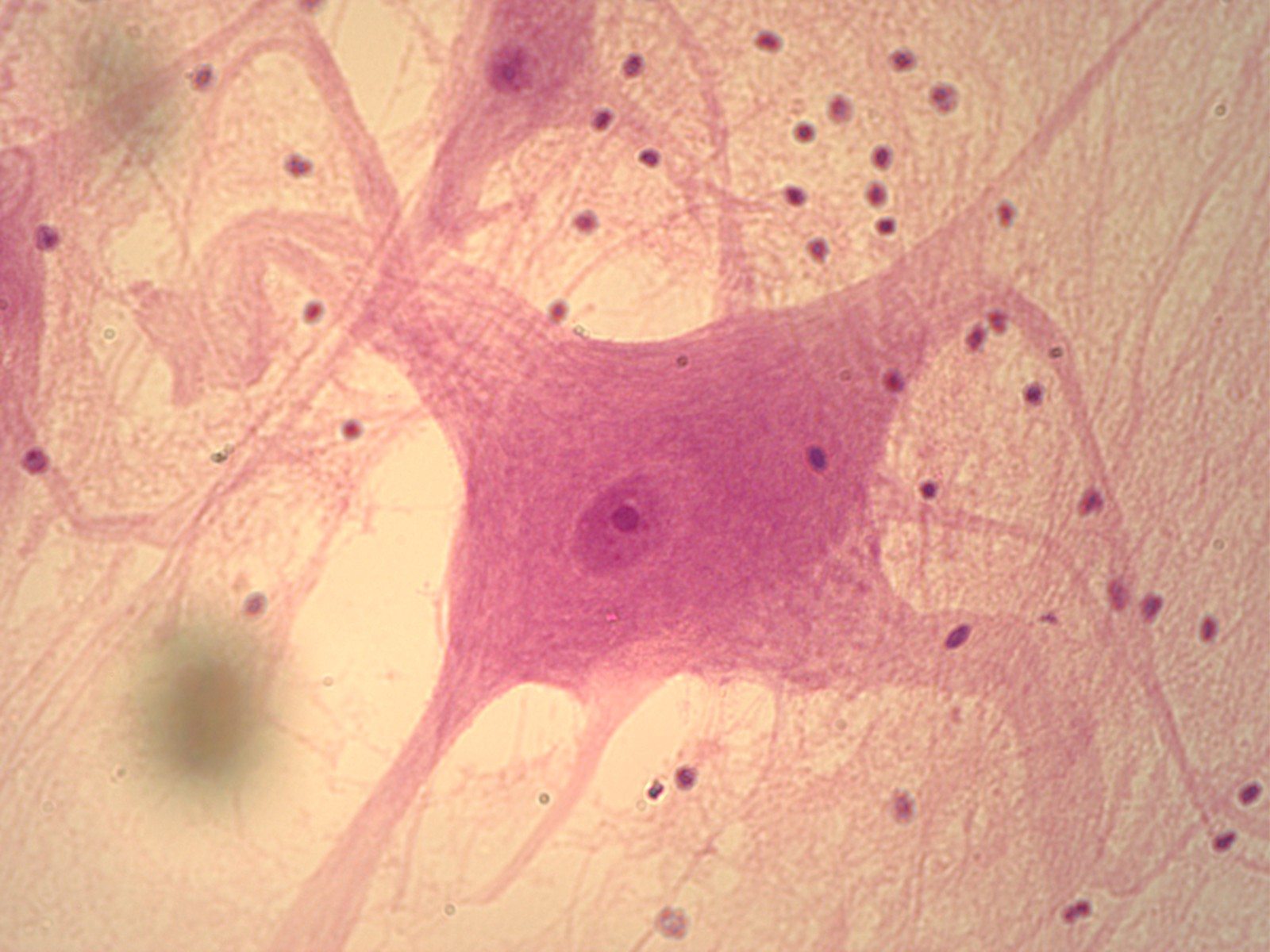
What tissue type is this?
a)
Nervous tissue
b)
Cardiac muscle
c)
Smooth muscle
d)
Connective tissue proper
8.
What type of muscle tissue is VOLUNTARILY controlled
a)
Skeletal Only
b)
Skeletal and Cardiac
c)
Smooth and Cardiac
d)
Cardiac Only
9.
What are the four main tissues found in the body?
a)
Epithelial, Connective, Bone, Blood
b)
Muscle, Connective, Blood, Epithelial
c)
Nervous, Muscle, Connective, Epithelial
d)
Nervous, Muscle, Connective, Bone
10.

Basic unit of life

a)

Organelles

b)

Cell

c)

System

d)

Organs

e)

Tissue

11.

Structures that make up a cell and carry out a specific Function

a)

Cell

b)

Organs

c)

Organelles

d)

Tissue

e)

Digestion

12.

Specialized corporal tissues that work together

a)

Organelles

b)

Organs

c)

Cell

d)

Tissue

e)

System

13.

Group of similar cells that carry out a specific function

a)

System

b)

Digestion

c)

Organs

d)

Tissue

14.

Neurons...

a)

cells from nervous tissue

b)

Send nerve impulses

c)

Take and receive information

d)

All the answers are true

15.

Muscles that let us run are made up ...

a)

Skelletal muscle tissue

b)

Cardiac muscle tissue

c)

Smooth muscle tissue

16.

If humans come from other humans, then cells must come from where?

a)

Organs órganos

b)

Blood sangre

c)

Other cells

17.
This is a protective barrier that is found in both plant and animal cells. 
Esta es una barrera protectora que se encuentra tanto en células plantas como animales.
a)
cell wall la pared de las células
b)
cell membrane membrana de célula
c)
bone hueso
18.

The DNA is found in both Prokaryotes (single-celled organisms) and Eukaryotes (multi-celled organisms), but only one has DNA in the NUCLEUS. Which is it?

a)

Prokaryotes

b)

Eukaryotes

c)

Both

19.

These organelles are small, round, and builds proteins for the cell

a)

Lysosomes

b)

Cytoplasm

c)

Ribosomes

20.
Which organism is made up of cells that have both a cell membrane and a cell wall?
a)
desert mouse
b)
human
c)
maple tree
d)
zebra
21.
A student listed similarities between a plant and an animal cell for a class assignment. The student made an error in one of the points they listed. Which point did the student write incorrectly?
a)
Both the plant cell and the animal cell can produce energy rich molecules.
b)
Both the plant cell and the animal cell can make food using light energy.
c)
Both the plant cell and the animal cell have a selectively permeable membrane.
d)
 Both the plant cell and the animal cell have a membrane to enclose genetic material.
22.
What do animal and plant cells have in common?
a)
Both have central vacuoles.
b)
 Both have chloroplasts.
c)
 Both have cell membranes.
d)
Both have cell walls.
23.

A prokaryotic cells is:

a)

Also known as Bacteria

b)

Have three protective layers Cell Wall, membrane and Capsule

c)

Sometimes have chloroplasts

d)

are basic unicellular structures

24.
a)

stratified columnar epithelial tissue

b)

simple squamos epithelial tissue

c)

pseudostratified cuboidal tissue
