
 Worksheets
2nd 9wks Review
Total questions: 60
Worksheet time: 35mins
As a child, Haydn was a soloist in a
band
boychoir
Ballet company
string quartet
Haydn met or taught many other composers, including?
Wolfgang Amadeus Mozart
Ludwig van Beethoven
George Frideric Handel
all of the above
Haydn was born in ?
Austria, Rohrau
Malaysia,Forest City
USA,New York City

Haydn is considered one of the greatest composers of the _____________________ era.
Baroque
Classical
Romantic
Modern

Who did Haydn work for during much of his life?
King Henry VIII
Count Giucciardi
Prince Esterhazy
Emperor Joseph II

Since he wrote so many, Haydn was nicknamed the ______________________________________________.
Haydn Seek
Father of the Symphony
Royal Composer of Songs
Grandfather of Music

The ___________________________ is a popular example of Haydn's wit.
Classical Era
Ode to Joy
A Little Night Music
Surprise Symphony
Where was Mozart born?
Vienna, Italy
Salzburg, Austria
Las Vegas, NV
Paris, France
What is a clavier?
Keyboard instrument with strings
Brass instrument
Woodwind instrument
A requiem is music written for a funeral.
True
False
A prodigy is
A greatly talented child
a musician hired by a member of royalty
A court musician is
a greatly talented child
a musician hird by a member of royalty
The Listening Example, Overture to The Marriage of Figaro, is from
an oratorio
an opera
a ballet
a clavier
Mozart was influenced by the music of
Antonio Vivaldi
Franz Joseph Haydn
Hildegard
George Frideric Handel
The term interval in music refers to the distance between two pitches.
true
false
Most songs use notes within a particular scale which is
a collection of notes in order from low to high.
that white stuff on the bathroom sink
the skin of a fish
what I use to weight myself.
Where are the half steps on the white keys of a piano?
Between B-C and F-G
Between E-F and B-C
Between D-E and A-B
Between E-F and C-D
What is the formula for creating a major scale?
(a)
What are the notes in the C Major Scale?
A-B-C-D-E-F-G-A
C-D-E-F-G-A-B-C
E-F#-G#-A#-B-C#-D#-E
C#-D#-E#-F#-G#-A#-B#-C#
What is the correct order that sharps appear in a key signature?
F# - C# - G# - D# - A# - E# - B#
A# - B# - C# - D# - E# - F# - G#
B# - E# - A# - D# - G# - C# - F#
C# - F# - B# - E# - A# - D#
What is the first note of the F# Major Scale?
D
E
F#
G
What is the correct order that flats appear in a key signature?
Fb - Cb - Gb - Db - Ab - Eb - Bb
Cb - Fb - Bb - Eb - Ab - Db - Gb
Bb - Eb - Ab - Db - Gb - Cb - Fb
Ab - Bb - Cb - Db - Eb - Fb - Gb
What key signature has 2 sharps?
D Major
C# Major
E Major
B Major
To tell what sharp key you're in, you have to go a _________ step up from the last given sharp in the key signature.
Whole
Half
To tell which flat key we're in, you have to look at the ___________________ flat of the key signature.
First
Next to the last
Last
None of these tell you who to get the "Key of" in flats.
There are 3 flats in your key signature. What are they? Must select 3 choices.
B
E
A
D
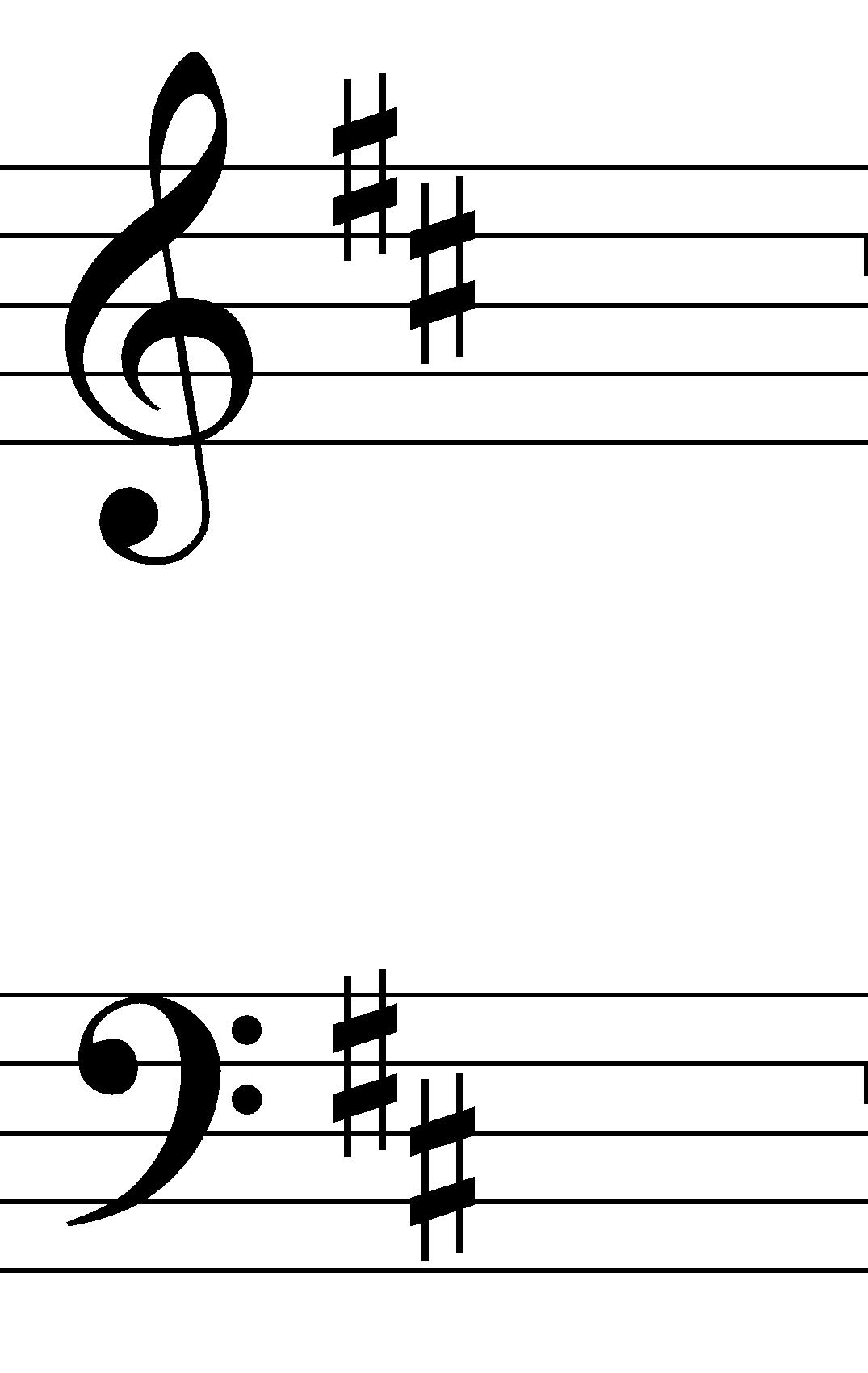
This key signature represents what major key?
F#
C#
D
E
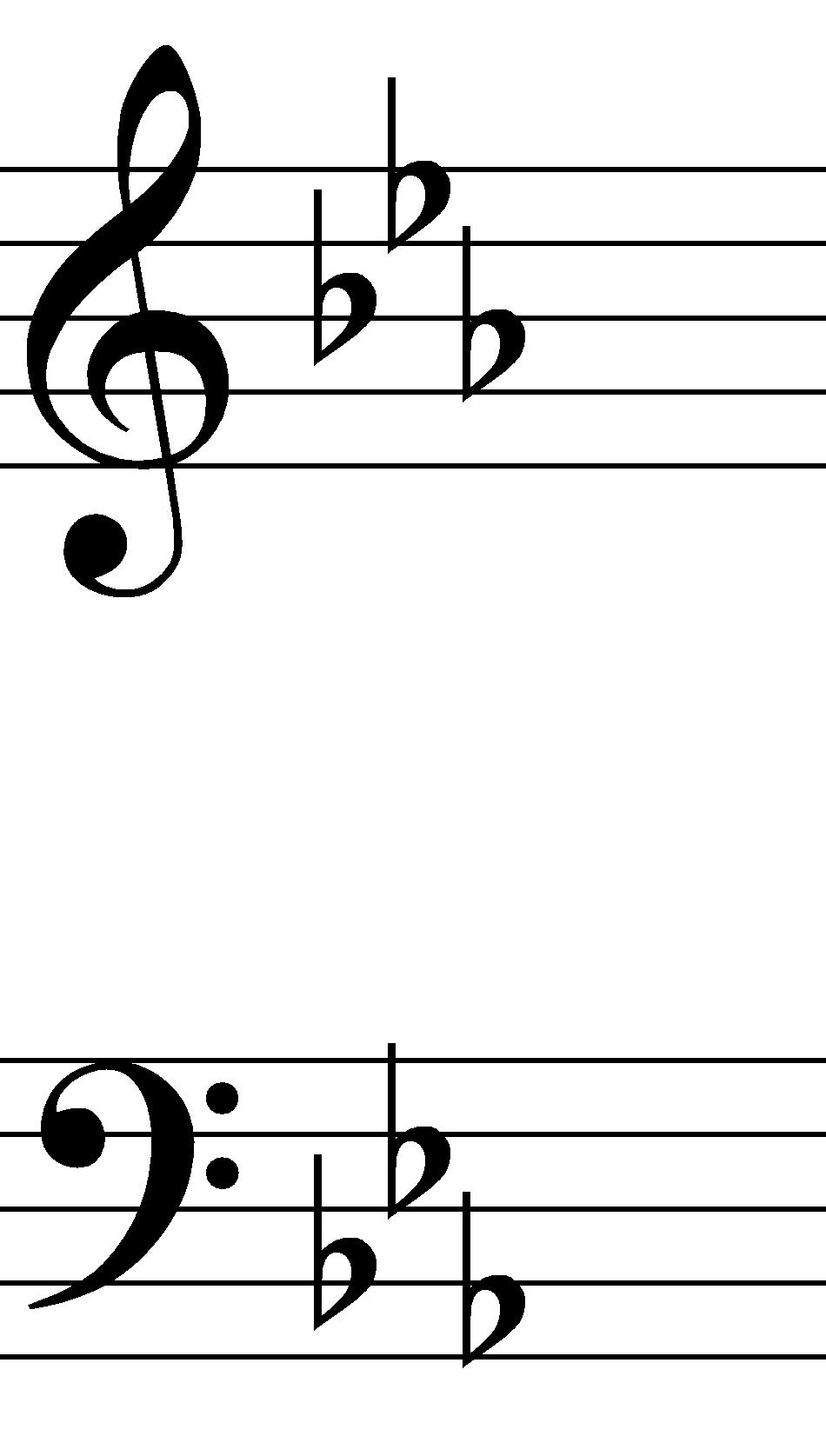
This key signature represents what major key?
Eb
Ab
Bb
A
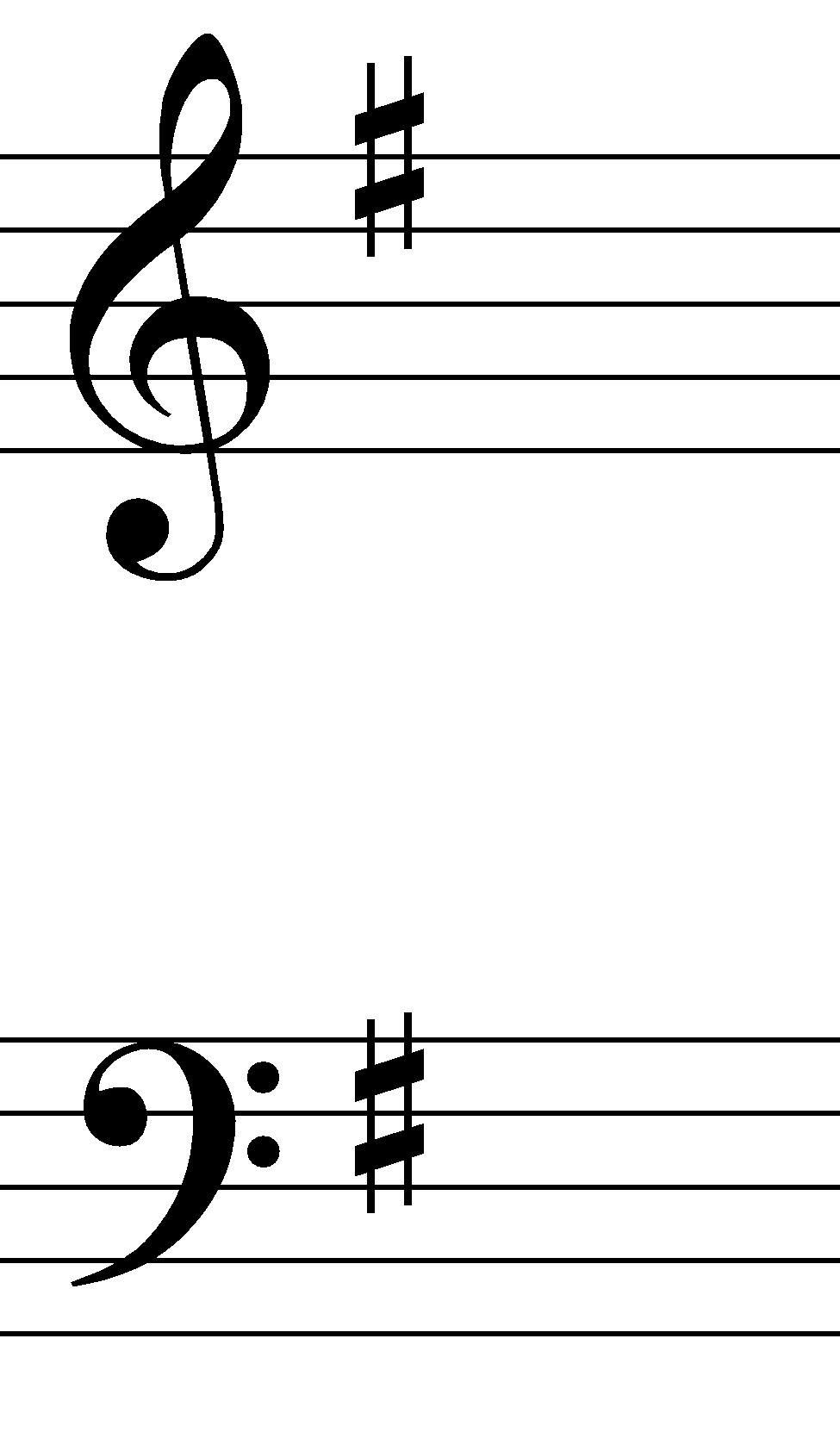
This key signature represents what major key?
G
F#
B
B#
The Listening Example, Schubert's Symphony No. 8, is also known as ___________________.
the Surprise Symphony
the Undiscovered Symphony
the Unfinished Symphony
the Vienna Symphony
The Listening Example is from which movement of Schubert's Symphony No. 8?
the First Movement
the Second Movement
the Third Movement
the Fourth Movement
Who was the composer that organized performances of Schubert's music after his death?
Robert Schumann
Leonard Bernstein
Ludwig van Beethoven
Schubert lived and died in what city and country?
Vienna, Austria
Bonn, Germany
London, England
Vienna, Italy

What is the interval from C to D?
Half-Step
Whole-Step
None of the above

What is the interval from F to F#?
Half-Step
Whole-Step
None of the above

What is the interval from E to F#?
Half-step
Whole-step
None of the above

What does this symbol do to a note?
Lowers the pitch by one half-step
Raises the pitch by one half-step
Lowers the pitch by one whole-step
Raises the pitch by one whole-step

What does this symbol do to a note?
Lowers the pitch by one half-step
Raises the pitch by one half-step
Lowers the pitch by one whole-step
Raises the pitch by one whole-step

What is this symbol called?
half notes
flat
natural
sharp
What direction on the piano keyboard do you go if you need to make a note sharp?
Up a half step
Down a half step
Up a whole step
Down a whole step
What direction on the piano keyboard do you go if you need to make a note flat?
Up a half step
Down a half step
Up a whole step
Down a whole step
Which is an example of an enharmonic?
F sharp and G sharp
A sharp and B flat
C flat and D sharp
E and F

Identify this note
F
G
G sharp
A

Identify this note
D sharp and E flat
D flat and E
D flat and E sharp
E sharp and D

Is this a half step or whole step?
Half
Whole

Is this a half step or whole step?
Half
Whole


Beethoven wrote
only five symphonies
more than five symphonies

Beethoven's 5th Symphony was known as....
Ode to Joy
Pastoral
fate knocking
The Hero's

