wayground logo

Free Printable Worksheets

NEW

Font size

S
M
L
XL
Worksheets

Sediments & Coastlines TEST_vA

Total questions: 40

Worksheet time: 1hrs 20mins

Name
Class
Date
1.
What is the origin of this sediment? (satellite image of a river draining into an ocean)
a)
Lithogenous 
b)
Biogenous 
c)
Hydrogenous
d)
Cosmogenous
2.

Sediment that is comprised of more than 30% of the broken down shells of organisms is known as what?

a)

slime

b)

ooze

c)

tektite

d)

clay

3.

Which of the following sediment types has the smallest grain size?

a)

clay

b)

silt

c)

sand

d)

granule

4.

This sediment type is the LEAST prevalent on the ocean floor.

a)

biogenous sediment

b)

hydrogenous sediment

c)

lithogenous sediment

d)

cosmogenous sediment

5.

Neritic sediments are found on the

a)

continental shelf

b)

abyssal plain

c)

continental rise

d)

undersea volcanoes

6.
Which of the following is a hydrogenous sediment?
a)
diatomaceous earth
b)
silt
c)
tektites
d)
manganese nodules
7.
What is the origin of this sediment? These are tiny shells called "tests." 
a)
Lithogenous 
b)
Biogenous 
c)
Hydrogenous
d)
Cosmogenous
8.

Constructive waves are best for...

a)

...Tidal power

b)

...surfers

c)

...tourism

d)

...eroding cliffs

9.

Destructive waves are best for...

a)

...a relaxing swim at the beach

b)

...surfers

c)

...tourism

d)

...maintaining beaches

10.
Which of the following is not a factor affecting wave height?
a)
direction wind is blowing
b)
wind speed
c)
length of time wind is blowing
d)
distance wind is blowing
11.
What is Erosion?
a)
When waves lose energy and leave sediments / sand along a coast.
b)
The wearing away of land, removal of beach rocks/sand by water or wind.
c)
An area of land that smells different to other places.
d)
An area that has a lot of wind.
12.
What is Deposition?
a)
When waves lose energy and leave sediments / sand along a coast.
b)
The wearing away of land, removal of beach rocks/sand by water or wind.
c)
An area of land that smells different to other places.
d)
An area that has a lot of wind.
13.
Which of these coastal landforms are created by deposition?
a)
Cave
b)
Stack
c)
Beach
d)
Wave cut platform
14.
What are destructive waves?
a)
Waves that are tall and frequent, crashing into shoreline, digging out chunks.
b)
Long and low waves, beginning far out in the sea, with a smooth gentle landing.
c)
The circular movement caused by wind and gravity fighting.
d)
When people wave their hand to aggresively destroy things.
15.
What are constructive waves?
a)
Waves that are tall and frequent, crashing into shoreline, digging out chunks.
b)
Long and low waves, beginning far out in the sea, with a smooth gentle landing.
c)
The circular movement caused by wind and gravity fighting.
d)
When people wave their hand to aggresively destroy things.
16.
What would be the best thing to help preserve a sand dune?
a)
Put a sign up telling people to stop stealing stand.
b)
Build a sea wall.
c)
Beach reprofiling.
d)
Plant vegetation on the sand dune to hold it in place.
17.

The movement of material along a coast by waves that approach at an angle to the shore but recede straight down the beach is called...

a)

Longshore drift

b)

Swash

c)

Backwash

d)

Recession

18.
This is a
a)
Headland
b)
Stack
c)
Arch
d)
Bay
19.
This is a
a)
Headland
b)
Stack
c)
Arch
d)
Bay
20.

What is this type of wave?

a)

Constructive wave

b)

Destructive wave

21.

What is this type of wave?

a)

Coast building - constructive

b)

Coast destroying - destructive

22.

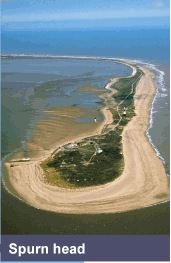
Identify this coastal landform.

a)

Spit

b)

Tombolo

c)

Headland

d)

Sandbar

23.
Hydraulic action is when air becomes trapped in joints and cracks on a cliff face and then a wave breaks, the trapped air is compressed which weakens the cliff and causes erosion.
a)
true 
b)
false 
24.

What are the structures illustrated in the photo?

a)

groins

b)

seawalls

c)

breakwaters

d)

inlets

25.

What is illustrated in this aerial photo?

a)

seawall

b)

breakwater

c)

groin

d)

inlet

26.

What coastal management is in the photo?

a)

Rock armour

b)

Beach nourishment

c)

Manage Retreat

27.

What coastal management is in the photo?

a)

Rock armour

b)

Manage Retreat

c)

Beach nourishment

28.

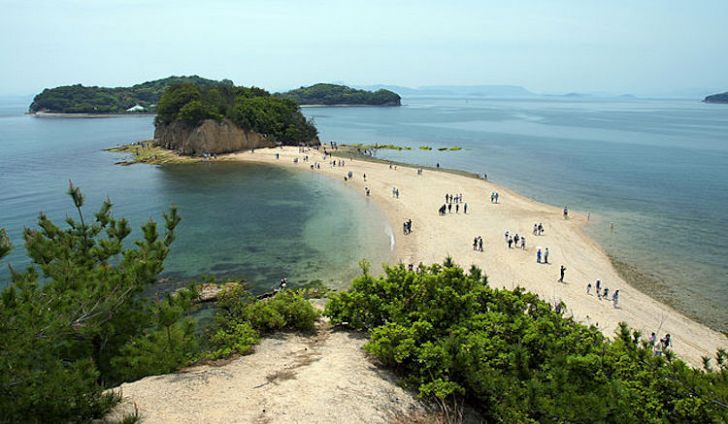
Identify this coastal landform.

a)

Spit

b)

Tombolo

c)

Headland

d)

Sandbar

29.

Abrasion occurs when?

a)

Little rocks get picked up by the waves and smashed on to the cliffs

b)

Small rocks are smashed against each other, making smaller rocks.

c)

Chemicals in the sea water dissolve the rocks

d)

At low tide when animals enter the coastal environment.

30.

Attrition occurs when?

a)

Little rocks get picked up by the waves and smashed on to the cliffs

b)

Small rocks are smashed against each other, making smaller rocks.

c)

Chemicals in the sea water dissolve the rocks

d)

At low tide when animals enter the coastal environment.

31.

What is number four?

a)

Cliff

b)

Sedimentary Rock

c)

Wave-Cut Notch

d)

Wave-Cut Platform

32.

Waves transporting pebbles and sand by bouncing them along the sea bed is a process called...

a)

traction

b)

saltation

c)

solution

d)

suspension

33.

The erosion feature shown is...

a)

stack

b)

beach

c)

wave cut platform

d)

cliff

34.

Seawalls protect the coast from erosion by...

a)

reflecting waves back out to sea

b)

absorbing wave energy

c)

building beaches

35.

Allowing low-lying coasts to be flooded by the sea to become salt-marshes is called...

a)

managed retreat

b)

an accident

c)

cliff retreat

d)

beach nourishment

36.

Label a shows...

a)

fault line or line of weakness in the cliff face

b)

cave

c)

arch

d)

stack

37.

Label b shows...

a)

fault line or line of weakness in the cliff face

b)

cave

c)

arch

d)

stack

38.

Label D shows...

a)

arch

b)

cave

c)

stump

d)

stack

39.

Label E shows...

a)

arch

b)

cave

c)

stump

d)

stack

40.
Below the CCD, you would find more _______ ooze.
a)
calcareous
b)
siliceous