
 Worksheets
Q#2 Chemistry Regents review
Total questions: 50
Worksheet time: 2hrs 57mins
In an atom, an orbital represents
the most probably location of a proton
the most probable location of an electron
the least probably location of a neutron
photons emitted as electrons move to lower energy levels
Which particle has a mass so small, it is considered to be 0 amu?
proton
hydrogen nucleus
neutron
electron

During a flame test, sodium chloride produces an intense yellow flame. This yellow color is produced when electrons in excited atoms
are gained by the atoms
are lost by the atoms
move to higher energy states within the atoms
move to lower energy states within the atoms
What quantity is the same among atoms of the same element?
mass number
atomic number
number of neutrons
number of nucleons
An atom that has 8 protons and 10 neutrons is an isotope of the element
nitrogen
oxygen
fluorine
neon
Which electron configuration represents the atoms of a bromine atom in the excited state?
2-8-18-7
2-8-18-8
2-8-17-8
2-8-18-7-1
Under which conditions does a gas behave least like an ideal gas?
high temperature and low pressure
high temperature and high pressure
low temperature and low pressure
low temperature and high pressure
In an atom, an orbital represents
the most probably location of a proton
the most probable location of an electron
the least probably location of a neutron
photons emitted as electrons move to lower energy levels
During a flame test, sodium chloride produces an intense yellow flame. This yellow color is produced when electrons in excited atoms
are gained by the atoms
are lost by the atoms
move to higher energy states within the atoms
move to lower energy states within the atoms
An atom that has 8 protons and 10 neutrons and 6 electrons is an ion of the what element?
nitrogen
oxygen
fluorine
neon
What part of the atom determines the identity of an atom?
Electrons
Neutrons
Protons
Nucleus
Which scientist discovered the electrons?
Dalton
Thomson
Atristotle
Bohr
Rutherford and his students did experiments that showed
quark
nucleus
proton
electron
Bohr discovered that electrons are located in
the nucleus
inside protons
electron cloud
circular orbits around the nucleus
What is the charge of a neutron?
+1
-1
0
+2
Which scientist is known for the discovery of the nucleus?
Bohr
Rutherford
Thomson
Dalton
An atom that has 7 protons, 7 neutrons and 10 electrons is an ion of what element?
Nitrogen
Oxygen
Fluorine
Neon
The elements on the Periodic Table are arranged in
order of increasing
atomic mass
atomic number
molar mass
oxidation number
Which term represents the strength of the attraction an
atom has for the electrons in a chemical bond?
electrical conductivity
electronegativity
first ionization energy
specific heat capacity
Which term represents the amount of energy required
to remove the most loosely bound electron from an
atom in the gaseous state?
atomic radius
electronegativity
First ionization energy
electrical conductivity
As the elements in Period 2 of the Periodic Table are
considered in order from left to right, which property
generally decreases?
atomic radius
electronegativity
ionization energy
nuclear charge
Which sequence correctly places the elements in order
of increasing ionization energy?
H -> Li -> Na -> K
I -> Br -> Cl -> F
O -> S -> Se -> Te
H -> Be -> Al -> Ga
In a given period of the Periodic Table, the element
with the lowest first ionization energy is always in
Group 1
Group 2
Group 17
Group 18
Which of these elements has physical and chemical
properties most similar to silicon (Si)?
germanium (Ge)
lead (Pb)
phosphorus (P)
chlorine (Cl)
As the atomic number of elements within Group 2
increases, the metallic character of each successive
element
decreases
increases
remains the same
How much energy is required to remove the most
loosely bound electron from a neutral atom of neon
in the gaseous phase?
363 kJ
441 kJ
1086 kJ
2081 kJ
Which atom has the greatest attraction for the
electrons in a chemical bond?
hydrogen
oxygen
silicon
sulfur
Which element is a noble gas?
Argon
chlorine
hydrogen
magnesium
The element helium is classified as a
metal
metalloid
noble gas
An atom of which element has the largest atomic
radius?
Fe
Mg
Si
Zn


146C --> 0-1e + ________


What is the atomic number?
the number of protons in the nucleus
the number of protons and neutrons in the nucleus
the number of neutrons in the nucleus
the number of protons in the energy levels
What is the mass number?
the number of protons in the nucleus
the number of protons and neutrons in the nucleus
the number of neutrons in the nucleus
the number of protons and electrons in the atom
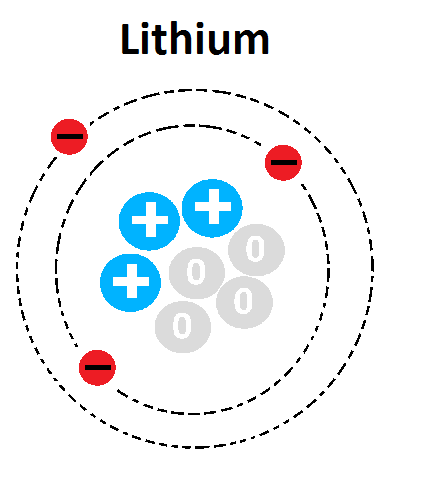
What is the atomic number of this atom?
1
3
4
7
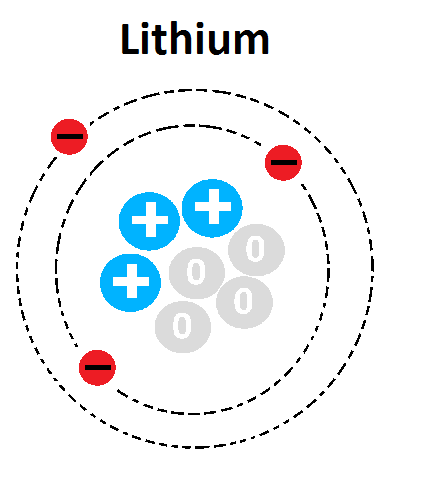
What is the mass number of this atom?
1
3
4
7
Who discovered that the atom had an small, dense, positively charged center?
Ernest Rutherford
J.J Thomson
Robert Millikan
John Dalton
Place the following atomic models in order, from earliest to latest:
A) Rutherford B) Thomson C) Dalton
B, C, A
C, A, B
A, C, B
C, B, A

