
 Worksheets
solar system form 2
Total questions: 114
Worksheet time: 6hrs 1mins

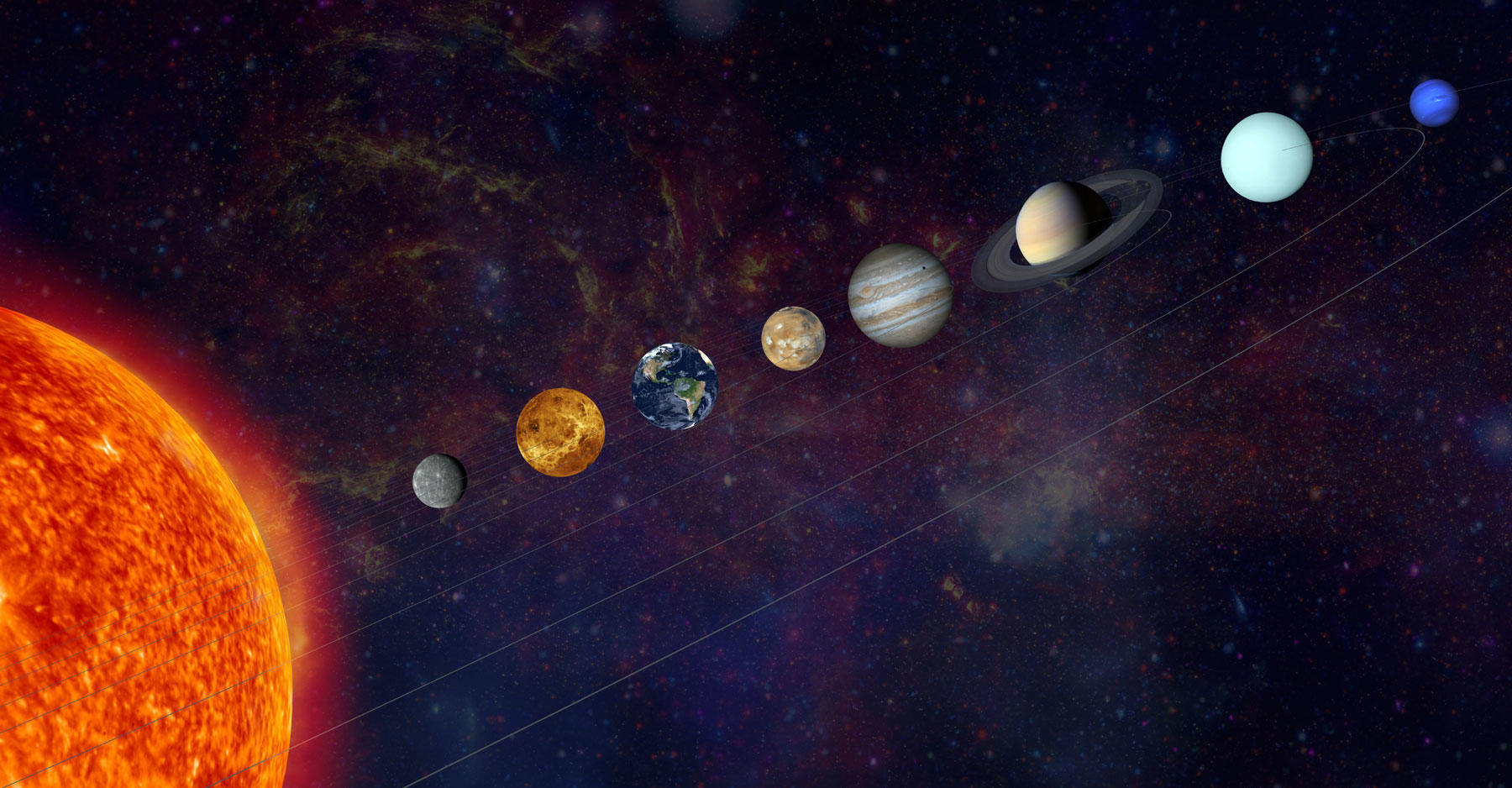
The planets are all equally distanced from each other.

Which planet is the largest?
Jupiter
Neptune
Earth
Mercury
The only planet that supports life.
Pluto
Mars
Earth
Mercury
The furthest four planets are called the _______ planets.
inner
outer
The closest four planets are called the ________ planets.
inner
outer
Scientists who study the solar system and outer space are called ______________.
astronomers
astronauts
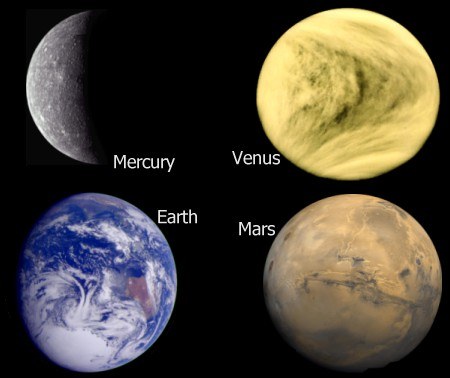

All planets in our Solar System is the same size.
True
False
What is the name of our Galaxy
(a)
There are _________ planets in our solar system.
6
7
8
9

to represent each one. She painted each one a different color. Then, she placed the Moon
and Earth close together and the Sun much further away.What is one limitation of the student's model?


How long does Earth's orbit around the sun take?
365 and 1/4 days
360 days
24 hours
2 years
The fourth planet from the Sun; also known as the "red planet."
Neptune
Mercury
Earth
Mars
The sixth planet from the Sun; known for its large rings.
Saturn
Mercury
Earth
Mars
The fifth planet from the Sun; this is the LARGESTplanet in the Solar System.
Jupiter
Mercury
Earth
Neptune
This is the eighth (last) planet from the Sun; it is deep dark blue in color.
Earth
Neptune
Mercury
Jupiter
These are the 4 planets closest to the sun (Mercury, Venus, Earth, Mars).
inner planets
outer planets
dwarf planets
solar planets
These are the four planets FARTHEST from the Sun; Jupiter, Saturn, Uranus, and Neptune.
inner planets
outer planets
solar planets
the best planets
A group of stars that make a pattern in the night sky.
planets
comets
asteroids
constellation
Where is the Asteroid Belt located in the Solar System?
near Neptune
between Mercury and Venus
between Mars and Jupiter
around the Sun
What is a planet?
A large body in space that orbits a star and does not produce light of its own
Space and all the matter and energy in it
Balls of ice, rock, and dust in space with a tail
A collection of stars, dust, and gas bound together by gravity
A universe is . . .
space and all the matter and energy in it
the study of the moon, stars, and other objects in space
the movement of an objects around another object
a natural satellite that revolves around a planet
A galaxy is . . .
a collection of stars, dust, and gas bound together by gravity
a natural satellite that revolves around a planet
a group of star that form a pattern in the sky
space and all the matter and energy in it
All of the following are ways that the atmosphere makes the existence of life on Earth possible EXCEPT —
maintains a constant temperature
shields Earth from small collisions
offers protection from radiation
allows for gas exchange between plants and animals

Scientists have determined that there is a particular distance from the Sun that is most likely to allow life to inhabit a planet. This area is called the inhabitable zone and is shaded in the diagram below. Also, the planet needs liquid water and oxygen present.
According to the information above, why would Planet E NOT be a good place to look for life?
Too Hot
No Oxygen
Too Cold
No Water

The table shows characteristics of planets in our solar system.
Which planet could most likely support human life?
Planet A
Planet B
Planet C
Planet D

