wayground logo

Free Printable Worksheets

Font size

S
M
L
XL
Worksheets

IIT-JEE & NEET LEVEL- 5 (9-O)

Total questions: 100

Worksheet time: 2hrs 40mins

Name
Class
Date
1.

Simplify

a)
b)
c)
d)
2.

Rationalize

a)
b)
c)
d)
3.

Rationalize

a)
b)
c)
d)
4.
Simplify as much as possible:
3√8
a)
6√2
b)
√72
c)
12√2
d)
6√4
5.

Simplify by rationalizing the denominator:

(Hint: rewrite without a surd on the denominator)

a)
b)
c)
d)
6.

Simplify by rationalising the denominator:

(Hint: Rewrite without surds in the denominator)

a)
b)
c)
d)
7.
What is a rational number ?
a)
A rational number  is a number that cannot be written as a fraction.
b)
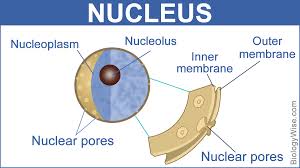
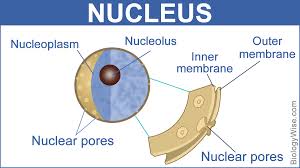
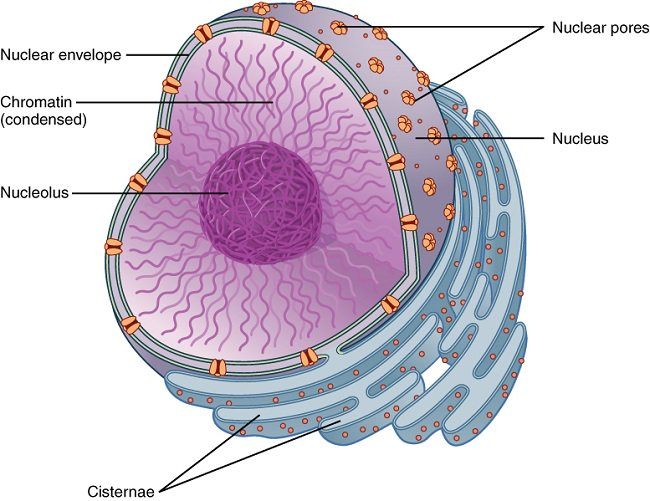
A rational number is a number that can be written as a ratio.
c)
A rational number cannot be a repeating  decimal.
8.
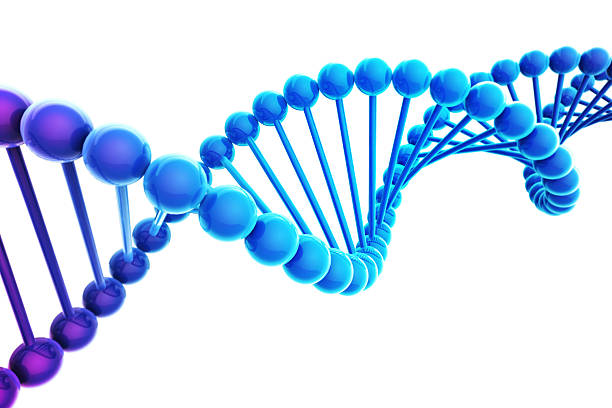
Which statement relating to surds is incorrect?
a)
Surds are irrational numbers.
b)
The four operations can be performed on surds.
c)
Surds can be written as fractions.
d)
The radical sign acts as a grouping symbol.
9.
√3  
a)
rational
b)
irrational
10.
Simplify:
√6 x √6
a)
√36
b)
2√3
c)
12
d)
6
11.
A fraction is which type of number?
a)
Rational
b)
Irrational
12.
A non-perfect square is which type of number?
a)
Rational
b)
Irrational
13.
The square root of 57 is ...
a)
rational 
b)
irrational 
14.
Simplify completely:
2√3 + 4√3
a)
6√3
b)
6√6
c)
8√3
d)
8√6
15.
Simplify completely:
√27 + 2√3
a)
5√3
b)
√27 + 2√3
c)
11√3
d)
2√81
16.
Simplify: 
√5 x √6
a)
2√15
b)
√11
c)
√30
d)
3√10
17.

Simplify the following surd...

a)

4√2

b)

8√2

c)

2√4

d)

2√8

18.

What is a surd?

a)

A recurring decimal

b)

An irrational number

c)

A fraction

d)

A rational number

19.

Select a surd.

a)

√2

b)

√4

c)

√99

d)

√20

20.

5√2 x 2√3

a)

10√6

b)

6√10

c)

60

d)

15√6

21.
Why is a Triangle called Equilateral?
a)
It has two sides that match
b)
It has all 3 sides that match
c)
It has no sides that match
d)
It has four sides that match
22.

4 L

a)

40000 liters

b)

4000 grams

c)

4000 milliliters

d)

40 liters

23.
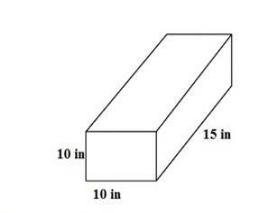
What is the surface area of this figure?
a)
200 cm 2
b)
800 cm 2
c)
400 cm 2
d)
100 cm 2
24.
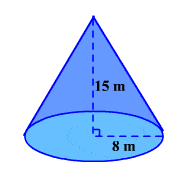
Find the Surface Area of the given figure.
a)
477.52m2
b)
427.26m2
c)
578.05m2
d)
628.32m2
25.
a)

60.5

b)

59

c)

62

d)

35

26.

What is the area

a)

64 cm square

b)

26 cm

c)

31 cm

d)

29 cm square

27.

Formula for the total surface area of a cube is...

a)

x2x^2

b)

6x26x^2

28.
a)
52 cm2
b)
28 cm2
c)
1 cm2
d)
25 cm2
29.
What is the area of the swimming pool?
a)
1,000 m2
b)
1,500 m2
c)
1,350 m2
d)
1,250 m2
30.
Find the Volume of the Cone
a)
150.72 cm³
b)
75.36 cm³
c)
452.16 cm³
d)
151 cm³
31.
Why is a Triangle called Equilateral?
a)
It has two sides that match
b)
It has all 3 sides that match
c)
It has no sides that match
d)
It has four sides that match
32.

Which is the correct formula for the total surface area of a cone?

a)

πr2\pi r^2

b)

13πr2h\frac{1}{3}\pi r^2h

c)

πrl\pi rl

d)

πr2+πrl\pi r^2+\pi rl

33.
Say 'TRUE' or 'FALSE'
The perimeter of square of area 36 cm² is 24 cm.
a)
TRUE
b)
FALSE
34.

Calculate the area of the triangle shown

a)

14.5 cm2

b)

14.7 cm2

c)

28.2 cm2

d)

28.3 cm2

35.
The side of a square whose perimeter is 64 cm is __________
a)
32 cm
b)
8 cm
c)
16 cm
d)
12 cm
36.

 l×l l\times l\   This formula is to find area of 

a)

square

b)

trapezium

c)

traingle

37.

The area of a rhombus whose diagonals are 9 cm and 7 cm is ______

a)

16 cm2

b)

63 cm2

c)

63 cm2

d)

18 cm2

38.

Find the area and the perimeter of a triangle whose sides are 16cm, 19.8cm, and 28.6cm

(a)  

39.

Formula of perimeter of rectangle .

a)

L x b

b)

2 ( l + b )

c)

4 x side

40.

Find perimeter of rectangle whose length = 30 cm , breadth = 25 cm

a)

110 cm

b)

140 cm

c)

750 cm

41.

Find the area of square whose perimeter is 84 cm

a)

21 cm

b)

29 cm

c)

35 cm

42.

The velocity-time graph of a body is shown in figure, the acceleration of the body for time intervals (0 to 10 sec) , (10 to 15 sec) and (15 to 25 sec) are:

a)

2 m/s2 , 1 m/s2 , 2 m/s2

b)

1 m/s2 , 2 m/s2 , 3m/s2

c)

2 m/s2 , 0 m/s2 ,3 m/s2

d)

0.5 m/s2 , infinity m/s2 ,0.33 m/s2

43.

A train takes 1 hour to go from one station to another , it travels at a speed of 20 km/hr for half an hour and 30 km/hr for another half an hour. The average speed of the train is:

a)

25 km /hr

b)

24 km/hr

c)

28 km/hr

d)

23 km/hr

44.

The acceleration of a particle starting from rest varies with time according to the relation a=bt+c , Then the velocity of the particle after time t must be:

a)

2bt2+ct

b)

1/2 bt2+ct

c)

bt2+ct

d)

1/2(bt2+ct)

45.

A police car running with a speed of 120 km/hr chases a truck running ahead with a speed of 110 km/hr , the relative speed of car with truck is:


.

a)

115 km/hr

b)

10 km/hr

c)

330 km/hr

d)

120/110 km/hr

46.

A projectile is fired a velocity of 150 meters per second at an angle of 30 degrees with the horizontal. What is the magnitude of the vertical component of the velocity at the time the projectile is fired?

a)

150. m/s

b)

130. m/s

c)

75. m/s

d)

225 m/s

47.

A particle has initial velocity (2j + 3k) and acceleration ( 0.3j + 0.2k) . The magnitude of velocity after 10 seconds will be:

a)

9 √2 units

b)

5 √2 units

c)

5 units

d)

9 units

48.

A missile is fired for maximum range with initial velocity 20 m/s, the range of the missile is : ______ ( take g= 10 m s-2)

a)

40 m

b)

50 m

c)

60 m

d)

20 m

49.

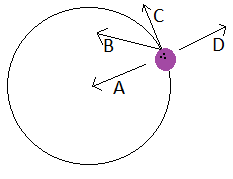
Which vector represents the acceleration of the ball performing uniform circular motion?

a)

A

b)

B

c)

C

d)

D

50.

The time taken for one complete revolution is called the...

a)

Period

b)

Frequency

c)

Angular velocity

51.
Calculate the centripetal force required to make a 5 kg ball move 4 m/s in a circle with a radius of 2 m.
a)
10 N
b)
20 N
c)
30 N
d)
40  N
52.
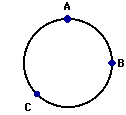
What is the direction of the velocity at point B, if the ball is revolving clockwise?
a)
up
b)
right
c)
down
d)
left
53.
Which statement is true about an object that is traveling in uniform circular motion?
a)
The speed of the object varies.
b)
The net force on the object is directed toward the center of the circular path.
c)
The direction of the object's velocity is constant.
d)
The net force on the object is directed away from the center of the circular path.
54.

If the displacement of a body is proportional to square of time then:

a)

The body moves with uniform velocity.

b)

The body moves with uniform acceleration.

c)

The body moves with increasing acceleration.

d)

The body moves with decreasing acceleration.

55.

Choose the incorrect option:

a)

A\overrightarrow{A} . B\overrightarrow{B} = B\overrightarrow{B} . A\overrightarrow{A}

b)

i.j=0

c)

k.k=0

d)

j.j=1

56.
If you throw a baseball straight up, what is its velocity at the highest point?
a)
9.8 m/s2
b)
9.8 m/s
c)
0 m/s2
d)
0 m/s
57.
Cross product of i x j
a)
k
b)
-k
58.

When the only force on an object is gravity:

a)

free fall

b)

acceleration

c)

gravity

d)

range

59.

identify the correct option representing a - b =c

a)
b)
c)
d)
60.
What kind of quantity has both a magnitude and a direction?
a)
scalar
b)
vector
c)
frame of reference
d)
time
61.
What type of cell has a nucleus? 
a)
eukaryotic
b)
prokaryotic 
62.

Directs all cell activities through the DNA located there.

a)

Endomembrane System

b)

Nucleus

c)

Ribosomes

d)

Mitochondria

63.

Made up of two layers (an inner and an outer), this acts like a cushiony outer shell of protection.

a)

nucleoplasm

b)

nuclear pores

c)

nuclear membrane

d)

nucleolus

64.

Tiny holes in the nuclear membrane that allow different cellular materials to come in and go out of the cell.

a)

nucleus

b)

nucleoplasm

c)

nucleolus

d)

nuclear pores

65.

Helps assemble ribosomes, which are combinations made of protein and RNA (ribonucleic acid ).

a)

nuclear membrane

b)

nuclear pores

c)

nucleoplasm

d)

nucleolus

66.

A double stranded helix that holds the code for all the cells in the body.

a)

RNA

b)

DNA

c)

Chromatin

d)

Nucleus

67.

What is a cell?

a)

A place where criminals live.

b)

The smallest structural and functional unit of an organism.

c)

Small circles on top of your body.

68.

What is the nucleus?

a)

A part of the cell that tells everything else what to do.

b)

An organ that makes you healthy.

c)

A wall that protects everything in the cell.

69.

Where is the nucleus located?

a)

In the cell

b)

In the brain

c)

In the blood

70.

What important material is contained in the nucleus?

a)

Jeans

b)

Digestive enzymes

c)

DNA

d)

Nuclear ladders

71.

What is the function of the nucleus?

a)

The nucleus gives the cell energy

b)

The nucleus protects the cell from outside things

c)

The nucleus controls what happens in the cell

d)

The nucleus does not have a job in the cell

72.
All cells come from other...
a)
cells 
b)
plants 
c)
nucleus 
d)
microscopes 
73.

What is the function of nuclear pores?

a)

for the nucleus to breath

b)

to allow in/out of nucleus

c)

to store new DNA inside the nucleus

d)

to remove old DNA from nucleus

74.

Put the phases of Mitosis in order.

a)

1, 2, 3, 4, 5

b)

2, 1, 5, 3, 4

c)

3, 2, 5, 1, 4

d)

2, 3, 1, 5, 4

75.
______________ produces the most ATP.
a)
photosnthesis
b)
aerobic respiration
c)
anaerobic respiration
d)
glycolysis
76.
What are the products of aerobic respiration?
a)
Glucose and oxygen
b)
Carbon dioxide and water
c)
Lactic acid
d)
Carbon monoxide
77.

Which of the following is part of the mitochondria

a)

outer membrane

b)

DNA

c)

matrix

d)

all of the above

78.

Mitochondria have their own ____ and DNA floating in the matrix

a)

ions

b)

ATP

c)

water

d)

ribosomes

79.

Increase the surface area available for ATP synthesis

a)

cristae

b)

matrix

c)

inner membrane

d)

outer membrane

80.
My main goal is to produce a lot of ATP energy. 
a)
Chloroplast
b)
Mitochondria
81.
Which of the following has a full valence shell?
a)
Oxygen
b)
Neon
c)
Barium
d)
Carbon
82.
An ionic bond forms when atoms ___________ electrons.
a)
gain
b)
share
c)
increase
d)
transfer
83.
Which type of bond has an equal sharing of electrons?
a)
Polar Covalent 
b)
Non Polar Covalent
c)
Ionic
d)
Metallic
84.
Which type of bond has an unequal sharing of electrons?
a)
Polar Covalent 
b)
Non Polar Covalent
c)
Ionic
d)
Metallic
85.
Which type of bond has a transfer of an electron from on atom to another?
a)
Polar Covalent 
b)
Non Polar Covalent
c)
Ionic
d)
Metallic
86.
Which type of bond has a transfer of an electron from on atom to another?
a)
Polar Covalent 
b)
Non Polar Covalent
c)
Ionic
d)
Metallic
87.
Chemical bonds form when atoms
a)
combined nuclei
b)
give up neutrons
c)
gain protons
d)
share or transfer electrons
88.
Bonds that form between two metals are called ______________ bonds.
a)
ionic 
b)
covalent
c)
metallic
d)
pervasive
89.
If an atom loses two electrons what charge will it have?
a)
+ 2
b)
 - 2
c)
+1
d)
-1
90.
If an atom gains one electron what charge will it have?
a)
-2
b)
-1
c)
+1
91.
Covalent compounds
a)
Share electrons
b)
transfer electrons
c)
contain a sea of electrons
d)
conduct electricity
92.
What is the number of valence electrons for Oxygen?
a)
8
b)
6
c)
2
d)
1
93.
How many valence electrons in this structure?
a)
6
b)
5
c)
4
d)
7
94.
A bond that forms when electrons are transferred is called a/an
a)
ionic bond
b)
covalent bond
c)
hydrogen bond
95.
When electrons are shared unequally a/an ___________ bond is formed 
a)
ionic 
b)
hydrogen
c)
polar covalent 
96.
How are covalent bonds explained?
a)
When one atom takes the other atom's electron
b)
When the atom shares an electron with an another atom
c)
When the two nucleus merge
d)
When the neutrons leave the nucleus
97.
Atoms joined together by SHARING electrons are?
a)
Ionic bonds
b)
Covalent bonds
c)
Metallic Bonds
d)
James Bonds
98.
Which type of bond creates a "pool" of electrons between atoms?
a)
Ionic Bonds
b)
Covalent Bonds
c)
Metallic Bonds
d)
Saving Bonds
99.
What elements generally make an ionic bond?
a)
metal and nonmetal
b)
2 nonmetals
c)
metal
d)
none of the above
100.
What elements generally make a covalent bond?
a)
metal and nonmetal
b)
2 nonmetals
c)
metal
d)
none of the above