

wayground logo

Free Printable Worksheets

NEW

Font size

S
M
L
XL
Worksheets

Case 21-Review

Total questions: 70

Worksheet time: 48mins

Name
Class
Date
1.

What impact did the railroads have on Native Americans?

a)

the railroads helped the Native Americans move east

b)

Native Americans got jobs on the railroads

c)

the railroads limited their land and decreased their food supply and resources

d)

the railroads increased the amount of land the Native Americans had

2.

Which of the following was a social effect of westward expansion on the Native Americans?

a)

NA could not get enough supplies and this led to poverty

b)

NA were forced to live on reservations, which separated them from white pioneers

c)

NA could no longer access the rich mineral deposits found in the Black Hills

d)

NA culture became widely accepted by white settlers

3.

How were the Native Americans economically affected by displacement?

a)

They profited from gold found on their reservations

b)

Their families were separated from their children

c)

They lived comfortably on reservations

d)

Many suffered from poverty and starvation

4.
What was the effect of the Transcontinental Railroad?
a)
Became a more efficient form of transportation for settlers
b)
Increased trade between the east and west and boosted the economy
c)
Polluted the air and the natural environment
d)
All of the above
5.
I am an Exoduster and I chose to move west in hopes of finally owning land. I was also trying to escape the KKK.
a)
European Immigrants
b)
Asian Immigrants
c)
Mexican Americans
d)
African Americans
6.
The belief that the US had a right and duty to expand across the North American contitent was known as
a)
The Great Expansion
b)
Manifest Destiny
c)
Oregon Fever
d)
The Monroe Doctrine
7.
What was the Indian Removal Act?
a)
All NA had to move to Europe
b)
All NA had to move to Canada
c)
all NA east of the Mississippi are forced to move to a territory in Oklahoma
d)
All NA west of the Mississippi River had to move to Oklahoma
8.

The Homestead Act was when the United States gave away ___________ to settlers.

a)

lumber to build houses

b)

plots of land

c)

seeds to grow crops

d)

wagons to travel out west

9.
How were the Chinese discriminated against?
a)
They were denied water and supplies
b)
Black Codes prevented their freedoms
c)
they were objected to Jim Crow Laws
d)
they were paid less than other workers
10.

Which of the following is not an effect of the Dawes Act.

a)

Native Americans forced to Americanize/Assimilate.

b)

Forced them to become farmers

c)

Native Americans became wealthy landowners

d)

Abolished Native American Tribes

11.

Political Machines took advantage of what major groups?

a)

The Immigrants and the Poor

b)

The Immigrants and Big Businesses

c)

The Poor and the Chinese

d)

The Chinese and the Big Businesses

12.

Overcrowding and pollution were caused primarily by what?

a)

Urbanization

b)

Industrialization

c)

Nativism

d)

Assimilation

13.

Declining wages and a rise unemployment on the west coast led to what piece of legislation?

a)

Chinese Exclusion Act

b)

Dawes Act

c)

Homestead Act

d)

Pendleton Act of 1883

14.

How did Political Machines use Infrastructure to gain power and manipulate Immigrants?

a)

Got them to work on those projects in exchange for votes

b)

Got them to work on those projects in exchange for money

c)

Kept them from getting those jobs

15.

Who is most associated with political machines in New York City?

a)

"Boss" Tweed

b)

John Rockefeller

c)

Jane Adams

d)

Andrew Carnegie

16.

What legislation is this cartoon referring to?

a)

30 day waiting period for immigration

b)

Deportation after completion of Transcontinental Railroad

c)

Immigration Reduction Act

d)

Chinese Exclusion Act

17.

From this image, who is in control of the US lawmakers.

a)

Large monopolies

b)

small private business

c)

political machines

d)

labor unions

18.

This period, during 1877 to 1900, is known for the rise of railroads, big business, industrialization and social problems in the United States.

a)

World War I

b)

Progressive Era

c)

Gilded Age

d)

Roaring Twenties

19.

The Dawes Severalty Act dealt with which group in America?

a)

Indians (Native Americans)

b)

Immigrants

c)

Chinese

d)

Settlers

20.

Civil Service Reform was a response to what?

a)

Political Machines and the Spoils System

b)

Chinese Immigrants

c)

Indians (Native Americans)

d)

The need to regulate State Governments

21.
My first presidential platform was the  "Square Deal" 
a)
Wilson
b)
Debs
c)
Taft
d)
Roosevelt
22.
I was handpicked as Roosevelt's successor.
a)
Taft
b)
Wilson
23.
One of the major goals of the Pure Food and Drug Act of 1906 was to
a)
limit the amount of sugar in snack products.
b)
protect farmers from bankruptcy due to changing food prices.
c)
control the price put on beverages and food products.
d)
ensure that products were labeled accurately.
24.
Which Constitutional amendment provided for Prohibition (conservative social progressives)?
a)
16th
b)
17th
c)
18th
d)
19th
25.
I formed the Bull Moose Party
a)
Taft 
b)
Wison 
c)
Roosevelt 
26.
Which of the following combinations were the three Progressive Presidents?
a)
Taft, Hayes, T Roosevelt
b)
Wilson, Garfield, Taft
c)
T Roosevelt, Johnson, Morgan
d)
T Roosevelt, Wilson, Taft
27.

Investigative reporters who exposed corruption.

a)

Streetsweeper

b)

Muckraker

c)

Sludgesifter

d)

Cleaner

28.

A person who fought for women's suffrage, or women’s right to vote

a)

Women

b)

Suffragist

c)

Prohibition

d)

Children

29.

Theodore Roosevelt’s promised program of fair and equal treatment for all

a)

Triangle Trade

b)

Circular Circumstance

c)

Oval Office

d)

Square Deal

30.

A government official who investigates and combats business alliances formed to control competition and prices.

a)

Arbitrator

b)

Square Deal

c)

Trustbuster

d)

New Deal

31.

What event in U.S. history is synonymous with William Randolph Hearst and Yellow Journalism?

a)

The Spanish-American War

b)

The Civil War

c)

The New York Mafia Wars

d)

World War I

32.
The belief that some societies are better than others
a)
Social Darwinism
b)
expansionism
c)
militarism
d)
colonialism
33.
Addition to the Monroe Doctrine that states the US will be a police power within Latin America
a)
Monroe Doctrine
b)
Roosevelt Corollary
c)
Yellow Journalism
d)
Industrialization
34.
Exaggerated stories to sell newspapers
a)
Industrialism
b)
Militarism
c)
Yellow Jouralism
d)
Imperialism
35.
Why did industrialized countries seek to set up colonies or "spheres of influence" in less developed countries?
a)
for vacation destinations
b)
their countries were overpopulated
c)
3rd world countries were exotic
d)
they wanted raw materials and new markets 
36.
What effect did the Roosevelt Corollary have on the Monroe Doctrine?
a)
The United States would permanently station troops in the Philippines and other Pacific islands.
b)
The United States reserved the right to intervene in the affairs of Central America and the Caribbean.
c)
The United States had the right and duty to expand its colonial possessions in Asia.
d)
The United States would provide military aid to Europe to resist communism.
37.
Leader of Hawaii when the American businesses over threw the government by surrounding her throne at gunpoint.
a)
Sanford Dole
b)
Queen Liliokahlani
c)
Queen Kalakaua  
d)
Jose Marti
38.

What was the goal of President Taft's Dollar Diplomacy?

a)

Help US allies increase readiness of armed forces

b)

Raise living standards of people in poverty-stricken countries

c)

Create stability abroad for benefit of US economic interests
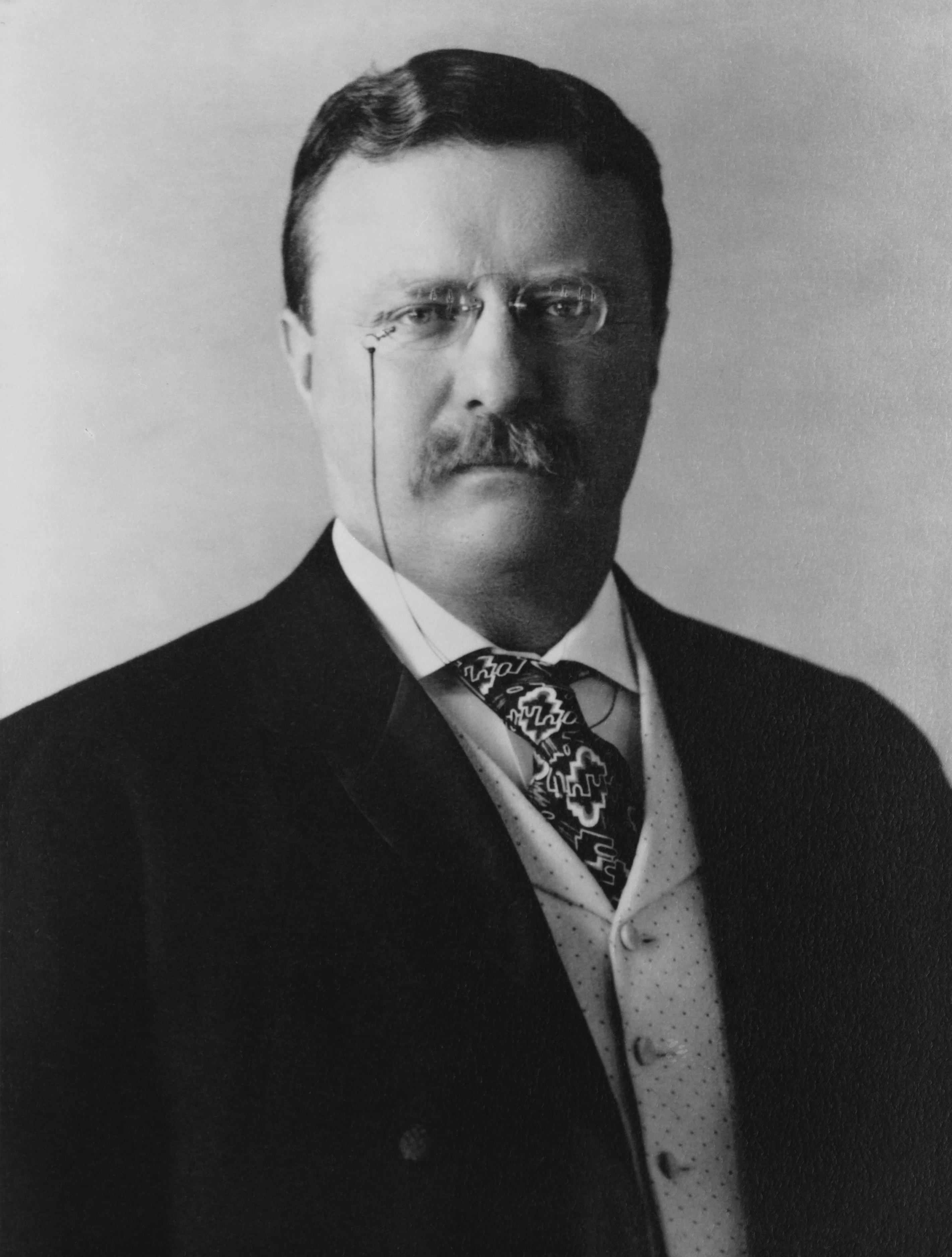
39.

Teddy Roosevelt's policy was to "Speak softly and carry a big stick." What did he mean by this?

a)

Debate calmly, and always be willing to negotiate

b)

Speak quietly, but yell if necessary.

c)

Negotiate peacefully, but always have the threat of the military to back you up.

40.
Who was President during the Spanish American War?
a)
William McKinley
b)
Theodore Roosevelt
c)
Benjamin Franklin
d)
George Washington
41.
What was the "spark" of WWI?
a)
The assassination of Ferdinand.
b)
Nationalist movements in the Balkans
c)
Imperialism in Africa
d)
The sinking of the Lusitania
42.
The attack on this ship killed over 100 AMericans in WWI.
a)
Titanic
b)
Santana
c)
Sullivan
d)
Lusitania
43.

Austria-Hungary sought support from

a)

Germany

b)

Russia

c)

Italy

d)

France

44.

Europe is divided into which two alliances?

a)

Triple Entente (Allied Powers) & Triple Alliance (Central Powers)

b)

Warsaw Pact & NATO

c)

Axis Powers & Allied Powers

d)

Roundheads & Cavilers

45.

Which of the following countries does not lose their empires after WWI?

a)

Ottoman

b)

Germany

c)

Austro-Hungarian

d)

British

46.

Which country takes the blame of WWI and has to pay reparations (war debt)?

a)

Germany

b)

Austria-Hungary

c)

Russia

d)

Ottoman Empire

47.
What type of warfare was introduced in WWI?
a)
Total War
b)
Machine Guns
c)
Trench Warfare
d)
Tanks
48.
What was created by Woodrow Wilson to help maintain peace?
a)
Treaty of Versailles
b)
League of Nations
c)
Treaty of Paris
d)
Woodrow Wilson did not suggest anything he was against peace
49.
What was the Zimmerman Note?
a)
The German policy of attacking all ships entering or leaving Britain
b)
Wilson's speech concerning why the U.S  should enter WWI
c)
A proposal by Germany that Mexico attack the US in return for territory
d)
a note left behind by a Serbian Nationalist in Austria-Hungary
50.

Wilson’s Fourteen Points is best described as...

a)

An economic policy

b)

WWI treaty

c)

Proposal for world/international peace

d)

A declaration of war

51.
Which of the following innovations contributed most to the development of popular culture, like the popularity of baseball, in the 1920s?
a)
Radio
b)
Airplanes
c)
Automobiles
d)
Plastic
52.
The assembly line allowed Henry Ford's Model Ts to be sold for less than half the cost of other cars.
a)
True
b)
False
53.
The goal of the New Deal was
a)
To specifically help farmers
b)
To ensure that Franklin D. Roosevelt was reelected
c)
To restore confidence in the economy
d)
To put an end to dying industries
54.
The outpouring of creativity among African Americans poets, writers, and artists in the 1920s is known as the 
a)
Harlem Renaissance
b)
Artists Movement
c)
Roaring Twenties
d)
Jazz Age
55.
The 18th amendment ____________________
a)
Banned the selling of clothing
b)
Banned the selling of food
c)
Banned the selling of alcohol
d)
Banned the selling of cigarettes
56.
What did the Twenty-first Amendment do?
a)
It stopped speakeasies
b)
It ended Prohibition
c)
It arrested bootleggers
57.
The 1920s were not a good time for which of the following?
a)
sharecroppers and farmers
b)
business owners
c)
housewives
58.
New inventions such as household appliances increased the need for which of the following?
a)
electricity
b)
automobiles
c)
communication
59.
How did people embrace or become familiar with "mass culture"?
a)
factories
b)
movies and radios
c)
electricity
60.
Which amendment gave women the right to vote?
a)
14th Amendment
b)
15th Amendment
c)
19th Amendment
61.
Which government agency gives benefits to people when they are retired or unemployed?
a)
Federal Deposit Insurance Corporation
b)
Securities and Exchange Commission
c)
Tennessee Valley Authority
d)
Social Security Admistration
62.
Which New Deal program was chiefly designed to correct abuses in the stock market?
a)
Civilian Conservation Corps
b)
Federal Deposit Insurance Corporation
c)
Securities and Exchange Commission
d)
National Recovery Administration
63.

What problem were both the Civilian Conservation Corps (CCC) and the Works Progress Administration (WPA) developed to address?

a)

Excessive stock market speculation

b)

High unemploment

c)

Increased use of credit

d)

Overproduction of goods

64.
The ____ was an agency formed to insure bank deposits up to a certain amount.
a)
Social Security
b)
SEC
c)
FDIC
d)
Tennessee Valley Authority
65.
Which was a guiding principle of New Deal economic policies?
a)
“Rugged individualism” will end social inequality
b)
Government must assume greater responsibility for helping the unfortunate
c)
Antitrust legislation could destroy the free enterprise system
d)
State governments should have more power over the economy than the national government
66.
One difference between the administrations of President Roosevelt and President Hoover was that Roosevelt was-
a)
more willing to use government intervention to solve economic problems
b)
unwilling to allow government agencies to establish jobs
c)
able to ignore economic issues for most of his first term in office
d)
opposed to any type of government regulation of financial institutions
67.

The TVA provided ________ for rural citizens.

a)

Electricity

b)

new farm land

c)

new homes

d)

New Deal support

68.
What were the programs started by Franklin D. Roosevelt to help the country out of the Great Depression called?
a)
Big Deal
b)
New Deal
c)
Good Deal
d)
The Depression Deal
69.
When did the Stock Market crash?
a)
1919
b)
1929
c)
1985
d)
1829
70.
Who was the president during the beginning of the Great Depression?
a)
Woodrow Wilson
b)
Franklin Roosevelt
c)
Herbert Hoover
d)
Jimmy Carter
