Wayground logo

Free Printable Worksheets

Font size

S
M
L
XL
Worksheets

Weather

Total questions: 42

Worksheet time: 1hrs 18mins
Name
Class
Date
1.
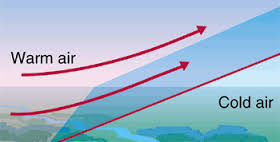
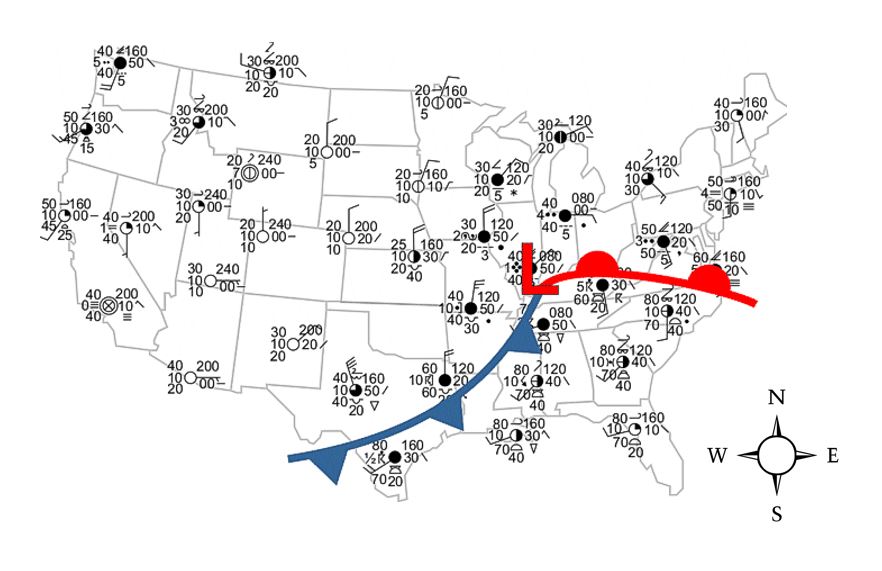
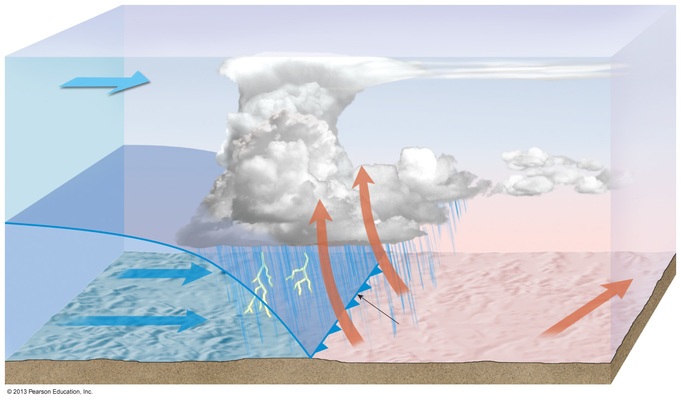
What type of storm front is this? 
a)
warm front
b)
cold front
c)
stationary front
d)
occluded front
2.
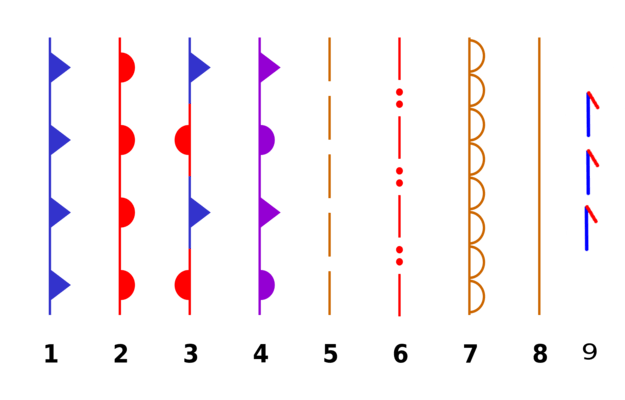
What does symbol # 3 mean?
a)
stationary front
b)
occluded front
c)
warm front
d)
cold front
3.
A front is
a)
where warm air is cooling at earth's surface
b)
a line where hot and cold air are separating
c)
a line where two different air masses meet
d)
where cold air is rising and forming rain clouds
4.
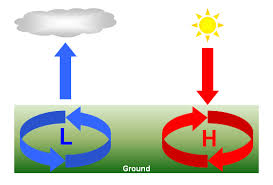
Which most likely produces clear, cool weather?
a)
zero air pressure
b)
stable air pressure
c)
a low pressure system
d)
a high pressure system
5.
_____________ air is more dense and tends to sink
a)
cold
b)
warm
c)
moist
d)
dry
6.
Which type of front is pictured?
a)
Cold front
b)
Warm front
c)
Occluded front
d)
Stationary front
7.
What symbol is this?
a)
warm front
b)
cold front
c)
stationary front
d)
occluded front
8.
Which system results in rainy or stormy weather?
a)
high pressure
b)
low pressure
c)
hurricane
d)
weather system
9.
Which system results in drier, fairer weather?
a)
high pressure
b)
low pressure
c)
hurricane
d)
weather system
10.
When a cold front is approaching, what happens?
a)
warm air is pushing under cold air causing humid weather and lower temperatures
b)
warm air is pushing under cold air causing humid weather and higher temperatures
c)
warm air rises, cools, and causes rain and thunderstorms
d)
cold air is pushed over warm air causing rain and thunderstorms
11.
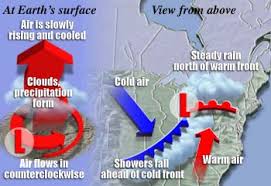
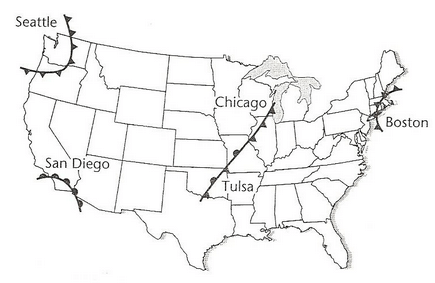
Which type of front is near Seattle?
a)
cold front
b)
warm front
c)
occluded front
d)
stationary front
12.
Which front is located near San Diego?
a)
cold front
b)
warm front
c)
occluded front
d)
stationary front
13.
Which type of front is located near Boston?
a)
warm front
b)
cold front
c)
stationary front
d)
occluded front
14.
What direction is the warm front moving on the map? 
a)
North
b)
South
c)
East
d)
West
15.
What direction is the cold front moving on the map? 
a)
Southwest
b)
Northwest
c)
Southeast
d)
Northeast
16.
Which front leads to steady rain for several days?
a)
warm front
b)
cold front
c)
stationary front
d)
occluded front
17.

Which one shows a warm front?

a)
b)
c)
d)
18.

Where do warm ocean currents come from

a)

the poles

b)

near the land

c)

the equator

d)

middle of the oceans

19.

What city will experience decreasing temperatures in the next day?

a)

Denver

b)

El Paso

c)

Memphis

d)

Los Angeles

20.

What city is most likely going to see temperatures rise?

a)

San Jose

b)

El Paso

c)

Jacksonville

d)

Chicago

21.

Where do cold ocean currents come from?

a)

cold ocean currents come from the southern hemisphere

b)

cold ocean currents come from the equator

c)

cold ocean currents come from the poles

d)

cold ocean currents come from the beach

22.

What does this symbol represent?

a)

Cold Front

b)

Warm Front

c)

Stationary Front

d)

Occluded Front

23.

What does this symbol represent?

a)

Cold Front

b)

Warm Front

c)

Stationary Front

d)

Occluded Front

24.

What does this symbol represent?

a)

Cold Front

b)

Warm Front

c)

Stationary Front

d)

Occluded Front

25.

What does this symbol represent?

a)

Cold Front

b)

Warm Front

c)

Stationary Front

d)

Occluded Front

26.

Low Pressures are associated with what type of weather

a)

fair weather

b)

cold weather

c)

warm weather

d)

rainy weather

27.

high Pressures are associated with what type of weather

a)

fair weather

b)

cold weather

c)

warm weather

d)

rainy weather

28.
Hot air rises because...
a)
it is less dense
b)
it is heavier
c)
it is more dense
d)
it contains Helium
29.
What type of weather usually goes with this symbol?
a)
Clear, sunny skies
b)
Cloudy skies
c)
Hot temperature
d)
Thunderstorms
30.
____________ air sinks/falls because it is ____________dense.
a)
Cold, More
b)
Warm, Less
c)
Cold, Less
d)
Warm, More
31.
____________ air rises because it is ____________dense.
a)
Cool, Less
b)
Warm, Less
c)
Cold, More
d)
Warm, More
32.

A(n) _____ is a large body of air that has properties similar to the part of Earth's surface over which it depends.

a)

tornado

b)

pressure system

c)

front

d)

air mass

33.
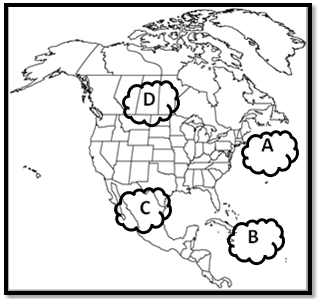
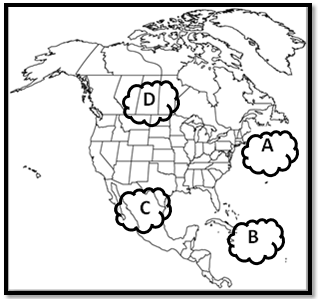
Which type of air would you find at air mass A?
a)
cold, dry
b)
warm, humid
c)
warm, dry
d)
cold, humid
34.

How do we characterize an air mass that forms near the poles?

a)

Dry

b)

Humid

c)

Warm

d)

Cold

35.

How do we characterize an air mass that forms over near the equator?

a)

Dry

b)

Humid

c)

Cold

d)

Warm

36.

How do we characterize an air mass that forms over land?

a)

Dry

b)

Humid

c)

Cold

d)

Warm

37.

How do we characterize an air mass that forms over the ocean?

a)

Dry

b)

Humid

c)

Cold

d)

Warm

38.
Which type of air would you find at air mass B?
a)
cold, dry
b)
warm, humid
c)
warm, dry
d)
cold, humid
39.
Which type of air would you find at air mass D?
a)
cold, dry
b)
warm, humid
c)
warm, dry
d)
cold, humid
40.

A humid and cold air mass would be a...

a)

Maritime polar

b)

Continental polar

c)

Maritime tropical

d)

Continental tropical

41.
A dry and cold air mass would be...
a)
Maritime polar
b)
Continental polar
c)
Maritime tropical
d)
Continental tropical
42.
A dry and hot air mass would be...
a)
Maritime arctic
b)
Maritime tropical
c)
Continental tropical
d)
Continental polar