
 Worksheets
DNA structure and scientists
Total questions: 24
Worksheet time: 39mins

Discovered that there was the same amount of A and T in a cell, and C and G in a cell, across many different species.
James Watson & Francis Crick
Rosalind Franklin
Maurice Wilkins
Linus Pauling
Erwin Chargaff

Provided clear x-ray crystallography images of DNA
James Watson & Francis Crick
Rosalind Franklin
Maurice Wilkins
Linus Pauling
Erwin Chargaff

Worked on DNA imaging techniques and published Franklin's x-ray crystallography image of DNA
James Watson & Francis Crick
Rosalind Franklin
Maurice Wilkins
Linus Pauling
Erwin Chargaff

Built models to determine that DNA was a double helix shape with base pairs A-T and G-C in rungs between the sugar/phosphate backbone of DNA.
James Watson & Francis Crick
Rosalind Franklin
Maurice Wilkins
Linus Pauling
Erwin Chargaff
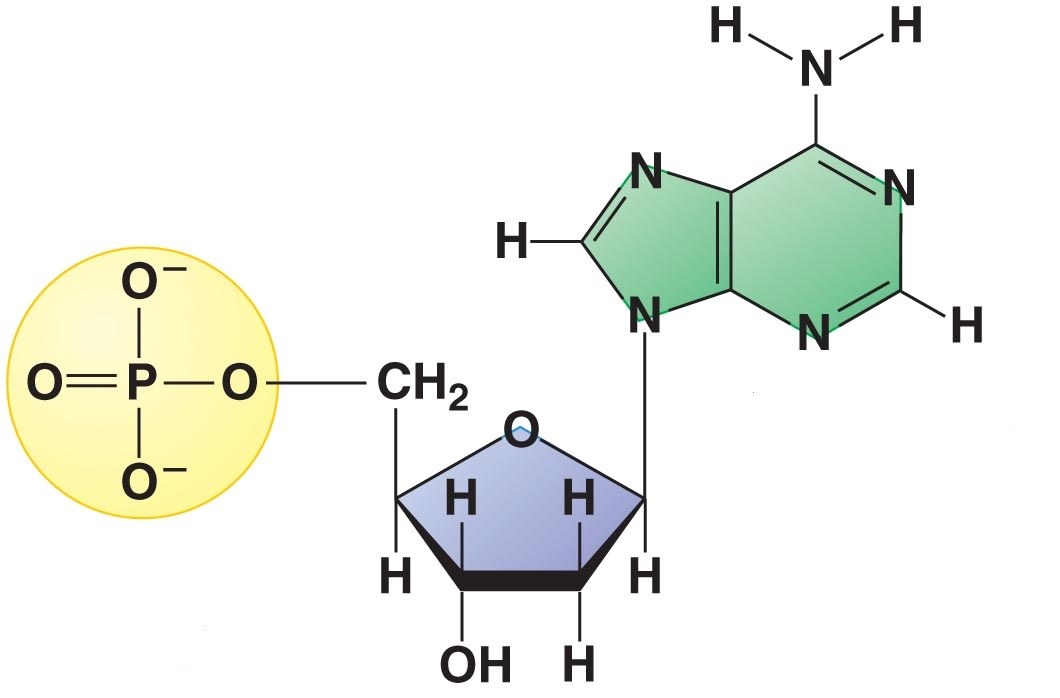
sugar, hydrogen, nitrogenous base
sugar, oxygen, nitrogenous base
sugar, phosphate, nitrogenous base

What SHAPE is DNA?
single strand
straight ladder
double helix (twisted ladder)
DNA has no shape

What makes up the SIDES (not the "middle") of a DNA ladder?
nitrogen bases
sugars & phosphates
genes & chromosomes
RNA

What makes up the rungs (steps) of a DNA ladder?
sugars & phosphates
nitrogen bases
sugars
genes & chromosomes

In DNA. what base always pairs with A (adenine)?
A (adenine)
T (thymine)
C (cytosine)
G (guanine)

If one strand of a DNA molecule has the following order of bases, what will be the correct order of bases on the complementary (matching) strand?
AATTGGCC
AATTGGCC
TTAACCGG
GGCCAATT
GACTGACT

Fill in the matching bases that would appear on the top strand of the DNA molecule pictured, in order.
A G T C A T G A
A G T C A T G A
T T T A A A C C
T C A G T A C T
C A T G A G A T

What is a section of DNA that codes for a specific protein called?
RNA
replication
gene
protein
CHALLENGE: Suppose a double-stranded DNA molecule was shown to have 15% ADENINE bases. What would be the expected percentage of GUANINE bases in that molecule?
15%
35%
85%
Not enough information to answer
Which of these scientists that studied DNA's structure did NOT earn a Nobel Prize for their efforts?
James Watson
Francis Crick
Maurice Wilkins
Rosalind Franklin



