wayground logo

Free Printable Worksheets

Font size

S
M
L
XL
Worksheets

Atomic structure practice quiz

Total questions: 23

Worksheet time: 32mins

Name
Class
Date
1.

Which statement about the atomic nucleus is most correct?

a)

The nucleus is made of protons and neutrons and has a negative charge.

b)

The nucleus is made of protons and neutrons and has a positive charge.

c)

The nucleus is made of electrons and has a positive charge.

d)

The nucleus is made of electrons and has a negative charge.

2.

Which atomic particles have approximately the same mass [atomic mass unit, AMU]?

a)

protons and neutrons

b)

protons and electrons

c)

neutrons and electrons

d)

proton, neutron and electron

3.

What information can you get from the atomic number of an element?

a)

The number of protons.

b)

The number of neutrons.

c)

the number of particles in the nucleus.

d)

the number of electrons only.

4.

The number "18" in the periodic table square shows:

a)

atomic mass.

b)

atomic number.

c)

elemental name.

d)

elemental symbol.

5.

The number "39.948" in the periodic table square shows:

a)

elemental name.

b)

atomic number.

c)

atomic mass.

d)

elemental symbol.

6.
How many neutrons does the isotope of lithium have?
a)
8
b)
3
c)
4
d)
5
7.
In a correctly written symbol what would be located in the "A" position?
a)
number of neutrons
b)
atomic number
c)
number of electrons 
d)
mass number
8.
What quantities vary between isotopes of an element?
a)
protons, electrons, and atomic mass
b)
protons, electrons, and atomic number
c)
neutrons and electrons
d)
neutrons and atomic mass
9.
How many neutrons does the isotope below have?     89 36Kr
a)
53
b)
36
c)
89
d)
125
10.
If X is the symbol for an element, which of the following two symbols represent    isotopes of the same element?     I. 7735X  II. 7733X  III. 8137X  IV. 8135 X
a)
I and II
b)
III and IV
c)
I and IV
d)
I and III
11.
Four isotopes of lead include lead-204, lead-206, lead-207, and lead-208.  The average atomic mass of lead is 207.2.  Which isotope of lead is likely to be the most abundant.
a)
204
b)
206
c)
207
d)
208
12.

In Rutherford’s experiment, where would your expect the most alpha particles to strike the screen?

a)

1

b)

2

c)

3

d)

Always random, cannot predict.

13.
Who believed that electrons were scattered amongst positively charged material.
a)
JJ Thomson
b)
Ernest Rutherford
c)
John Dalton
d)
Niels Bohr
14.
What was James Chadwicks most notable discovery?
a)
The nucleus contains protons. 
b)
The nucleus contains neutrons.
c)
Electron are not fixed.
d)
Protons are positive.
15.

How many protons does indium have?

a)

49

b)

66

c)

114

d)

115

16.

What were Ernest Rutherford's three contributions to atomic theory?

a)

Discovered that the atom is mostly empty space

b)

Discovered the nucleus- did the gold foil experiment

c)

Used the cathode ray tube in his discovery

d)

Discovered the electron

e)

Discovered that the proton had a positive charge

17.

Who discovered the mass of an electron?

a)

Joseph Priestly

b)

Henri Becquerel

c)

John Dalton

d)

Robert Millikan

e)

Antoine Lavoisier

18.
Ernest Rutherford discovered that atoms were mostly _________________. 
a)
negatively charged
b)
positively charged
c)
electrons
d)
empty space. 
19.

Discovered a positive stream of particles that led to the discover of the proton.

a)

Joseph Thomson

b)

John Dalton

c)

Eugen Goldstein

d)

Robert Millikan

20.

Which Scientist came up with the NUCLEAR model, that the nucleus is at the center of the atom?

a)

Dalton & Democritus

b)

Rutherford

c)

Thomson & Millikan

d)

Heisenberg & De Broglie

21.
Calculate the average atomic mass of silver.
a)
106.38649amu
b)
111.91896amu
c)
107.8677amu
d)
121
22.
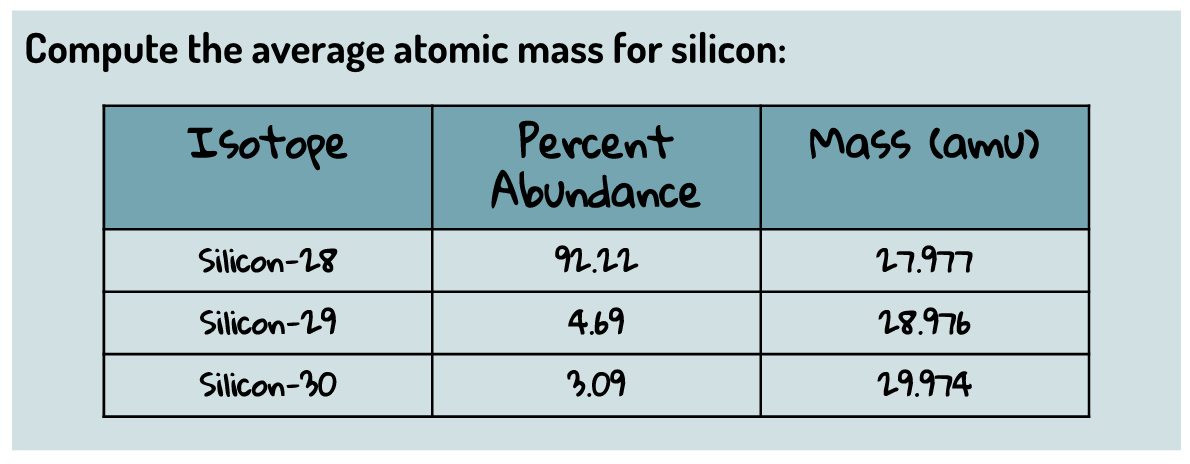
Compute the average atomic mass for silicon:
a)
27.977
b)
28.09
c)
28.976
d)
The average mass cannot be determined from provided information.
23.
A neutral atom of Carbon-13 has ________ electrons and _________ neutrons
a)
13, 13
b)
6, 7
c)
7, 7
d)
6, 6