
 Worksheets
Cells Test Review
Total questions: 62
Worksheet time: 51mins
The basic unit of all living things is a(an)
(a)
Which type of cell has no nucleus or membrane bound organelles?
Prokaryote
Eukaryote
Plant
Animal
Which organelle(s) are found only in plant cells, and not animal cells?
nucleus
chloroplast
Large central vacuole
cell wall
cell membrane
The cell (a) is a rigid structure that provides support for some cells.

Which part of the microscope is C?
Base
Stage
Slide
Objectives
Which part of the microscope is B?
Base
Stage
Slide
Objectives
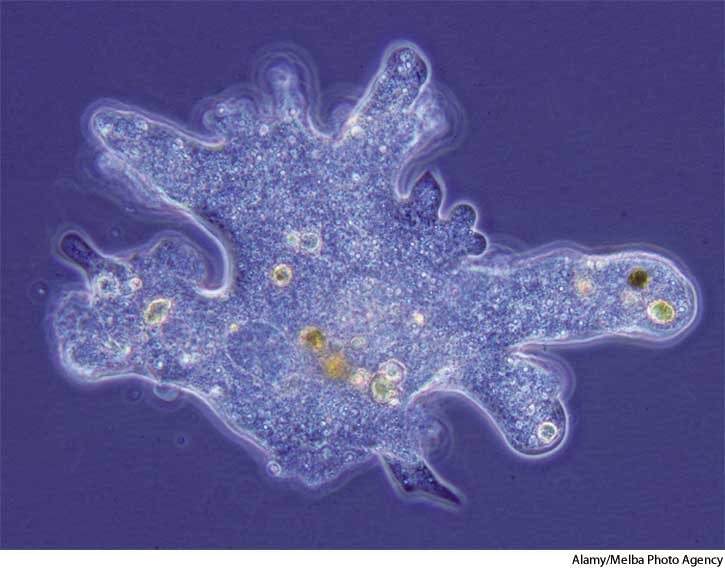
An Amoeba is a unicellular, animal-like protist that lives in ponds and streams. According to cell theory, where did this cell come from?
another pre-existing amoeba cell.
energy from sun that allowed the protist to reproduce.
a multicellular organism.
the nonliving environment.

Rocks are not living because
they never move
they aren't needed for humans
they are not made of cells
they don't break down

This cell is a(n)
prokaryote
eukaryote

This cell is a(n)
prokaryote
eukaryote

This cell is a prokaryote because it
contains a nucleus
has cytoplasm
contains no nucleus
has genetic material

This cell is a eukaryote because it
contains cytoplasm
has a nucleus
has no nucleus
has DNA

Animal, fungi, plant, and protista cells are all examples of which type of cell?
Eukaryotic
Prokaryotic
Both prokaryotic and eukaryotic

A cell biologist finds a cell without chloroplasts, but it still contains a nucleus, cell membrane, and a cytoplasm. What kind of cell is this?
Prokaryotic
Eukaryotic
Plant
Animal
What happened that allowed cells to be studied?
Cells increased in size.
Scientists began to work together.
Scientists became smarter.
The microscope was invented and improved.
What is a benefit of the development of the cell theory?
Cells have made microscopes improve.
There are less biologists today.
There is more diseases on Earth now.
Scientists now know much more about cells and bacteria, which allows them to better treat disease.
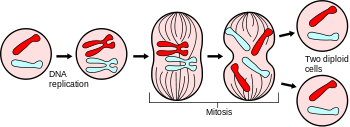
Which of the following controls movement of materials in and out of a cell?
Cell wall
Cell membrane
Cytoplasm
Nucleus

The jellylike substance that contains proteins, nucleic acids, minerals, ions, and organelles is what?
Prokaryote
Nucleus
Cytoplasm
Eukaryote
A student wanted to know if guinea pigs prefer living in the dark. The student placed one guinea pig in a cage with half the cage covered to simulate night time and half uncovered to simulate daylight and then watched to see if the guinea pig spent most of his time on the dark side or light side. What is wrong with this experiment?
The student should have at least three cages with a guinea pig inside to test the environmental conditions.
The student should take the guinea pig out at least twice a day so it can have company.
The student should add another guinea pig and watch what both of them do.
The student should also track how much food the guinea pig eats.

Some radish seeds were studied in this experiment. The seeds were placed in a dish lined with a moist paper towel. Choose all of the constants in this experiment.
Temperature of petri dishes
Type of seed
Number of seeds
Dish set up
Seed growth
Choose all the components of the cell theory.
All living things are made up of cells
Cells are made of organelles
Cells are the basic unit of life
All cells come from preexisting cells.
All cells are microscopic

Which of these is in order from least to most complex?
Cells - tissues - organs - organ systems
Cells - organs - tissues - organ systems
Organ systems - tissues - organs - cells
Tissues - organs - cells - organ systems
Eyepiece = 10X
Objective lens = 55X

Which part connects to the base and supports the microscope head?
back
spine
arm
handle

Which part supports the microscope?
base
bottom
stand
foot

The specimen slide is placed on the ___
platform
table
stage
base


What does "cells come from other cells" mean?
When cells move they need another cell to go with it.
Cells can be created out of thin air.
Cells are only created by other cells.
Animal cells come from plant cells.
The cell theory was not complete until Rudolph Virchow discovered that...
cells are alive.
there are two types of cells (prokaryotic/eukaryotic)
all cells come from preexisting cells.
cells are the basic building blocks of life.


What is a dependent variable?
an experimental subject that is purposefully not tested
the variable that responds to the manipulated variable
knowledge acquired by observation or experimentation
a method of testing a hypothesis using controlled conditions and clearly defined variables
What is an independent variable?
the variable that is manipulated to test a hypothesis
a theory that is proven with evidence, and widely accepted as true
the variable that responds to the manipulated variable
the variable that stays the same
What is a constant variable?
Responds to the independent variable
Directly tested (and changed) by the scientist
Intentionally kept the same by the scientist
Intentionally omitted by the scientist

Examine the graph. What is the independent variable?
People in a Store
Time of Day
Chicken Pot Pie
Examine the graph. What is the dependent variable?
People in a Store
Time of Day
Chicken Pot Pie
Describe the relationship of time and shopping patterns. The ___________________ is dependent upon the ___________________.
...time of day is dependent upon the number of shoppers.
...the number of shoppers is dependent upon the time of day.
Chicken Pot Pie

Convert from m to cm: 9 meters
900 cm
90 cm
0.9 cm
0.09 cm

Convert 8 kilometers to meters
800 m
80,000 m
8,000 m
.008 m


Scientists wanted to study the effect of different flower pollen sources on the lifespan of honey bees. They studied six different groups, each with access to a combination of two different flower types. All six groups were treated the same except for type of flower source. The table below shows the average lifespan for each control group in hours.
Which of the following statements are supported by the data?
Bees will exhibit the longest lifespan when feeding on sunflowers, rather than any flower whether in the study or not.
When paired with tulips, daisies will result in the shortest bee lifespan as compared to tiger lilies or sunflowers
Combining all five flowers will lead to the longest lifespan for the bees
None of these
Mr. Krabbs wants to make Bikini Bottoms a nicer place to live. He has created a new sauce that he thinks will reduce the production of body gas associated with eating crabby patties from the Krusty Krab. He recruits 100 customers with a history of gas problems. He has 50 of them (Group A) eat crabby patties with the new sauce. The other 50 (Group B) eat crabby patties with sauce that looks just like new sauce but is really just mixture of mayonnaise and food coloring. Both groups were told that they were getting the sauce that would reduce gas production. Two hours after eating the crabby patties, 30 customers in group A reported having fewer gas problems and 8 customers in group B reported having fewer gas problems.
Which people are in the control group?
Group A
Group B
Both Groups
There is no control group
Shaniya performed multiple trials in her experiment to ensure that her experiment was reliable and valid.
Repetition
Repercussion
Replication
Regurgitation
When scientists discover that current explanations do not fit the evidence they gained thorough observations and testing, what do scientists then do?
(Select 1 or more answers)
Reject (get rid of) the explanation that does not fit the evidence.
Modify (change) the explaination that does not fit the evidence.
Continue to accept the explanation that does not fit the evidence.
Ignore the new evidence that goes against the explaination.
Choose all of the tools used for measuring volume.


Which of the following is a correct statement about the 2 images.
The first image (left) is a graph and the second image is a data table (right).
The first image (left) is a data table and the second image is a graph (right).
They are both data tables.
They are both graphs.
How are viruses different than bacteria, fungi, and parasites?
Viruses are not living
Viruses reproduce quickly
Viruses can infect the cells of a variety of organisms

If you study for your test tomorrow, your score will be higher.
hypothesis
theory
law
Today I am...
In class
Remote

