
 Worksheets
Genetics Unit Exam 25-26
Total questions: 79
Worksheet time: 3hrs 35mins


How many chromosomes do humans have?
12
25
46
102
The genotype for a yellow plant is...
What is the phenotype for Tt?

In a genetics laboratory, two heterozygous tall plants are crossed. If tall is dominant over short, what are the expected phenotypic results?
100% Tall
50% Tall, 50% Short
75% Tall, 25% Short
25% Tall, 75% Short
What are punnett squares used for?
Predicting the possible offspring of two parents
Determining the alleles of a specific gene
Identifying dominant and recessive traits
Determining an individuals genotype
In guinea pigs, the allele for rough coat (R) is dominant to the allele for smooth coat (r). A rough coat male and a smooth coat female mate. They produce several offspring - 50% are rough coat and 50% are smooth coat. What are the genotypes of the parents?
RR x rr
RR x Rr
Rr x rr
Rr x Rr
What are different forms of a gene called?
Alleles
Chromosomes
Factors
Traits


Squidward has light blue skin, and his genotype for this trait is Bb. Which of the following would describe Squidward?
Purebred
Hybrid
Homozygous
Sex-linked

Lower case letter; this represents what is hidden when a dominant allele is present
recessive
homozygous
dominant
heterozygous

Which is homozygous dominant?
AA
Aa
aa
None of them

Which is homozygous recessive?
AA
Aa
aa
None of them
Traits that always overpower others are called
Inherited traits
Environmental traits
Dominant traits
Recessive traits
Weaker traits that can be hidden by others are called
Inherited traits
Environmental traits
Dominant traits
Recessive traits
The scientific study of how traits are inherited
Heredity
Genetics
Hybrid
Purebred
A single gene has 3 or more alternative forms. These are called
heterozygotes
multiple alleles
epistatic
polygenic


A calico cat shows both the traits for orange fur and black fur. What kind of allele expression is this?
Incomplete Dominance
Co dominance with X-inactivation
Independent assortment
Recessive inheritance
Complete a cross between A speckled flower and a red flower. Find the phenotype ratio.

Many genes determine 1 trait (ex: skin color)
Incomplete Dominance
Polygenic
Codominance
Multiple alleles
Most real-world characteristics are determined not just by genotypes, but also by environmental factors that influence how genotype is translated into phenotype. TRUE or FALSE
TRUE
FALSE

In the winter, the fur of this arctic fox will turn white. Is this due to genetics, the environment, or both?
genetics
environment
both

Two parents are carriers of a genetic disease. This means they are ____.
homozygous
homozygous dominant
homozygous recessive
heterozygous
How many alleles does a person carry for a trait?
1
2
3
4
How many alleles does a child get from each parent for a trait?
1
2
3
4
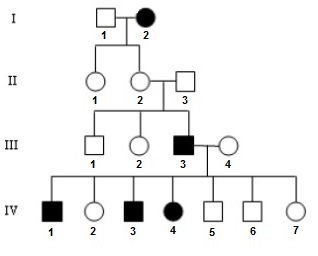
This pedigree represents the inheritance of hemophilia in this family. How many of the males have the hemophilia trait?
8
5
2
3
What type of genotype does each flower have?
Purple (P) is dominant to white (p).
Move label to bottom of square.
homozygous recessive
homozygous dominant
heterozygous dominant
Complete the following monohybrid punnett by labeling the each box with the correct genotype.
TT
Tt (top)
Tt (bottom)
tt
Let's pretend the color of cat fur can follow all 3 types of inheritance patterns.
If all 3 cats are HETEROZYGOUS, label the pattern of inheritance.
Incomplete dominance


(RRYY x rryy)
R = round seeds, r = wrinkled seeds Y = yellow seeds, y = green seeds
What percent will have Round and Yellow seeds?

Which best describes epistasis?
An allele that changes the genotype of another allele
A gene that changes the genotype of another gene
An allele that controls or masks the expression of another allele
A gene that controls or masks the expression of another gene

Labrador retriever's fur color is an example of epistasis. In this case the E gene controls the expression of the B gene. It a puppy was born with the genotype eeBB its fur color would be ________ and if it was born with the genotype EEbb it would be __________
yellow, yellow
yellow, black
chocolate, black
yellow, chocolate
Two genes interact with each other to influence flower color. The first gene controls the ability to make flower pigment. If pigment is made, the second gene codes for either Purple (P) or white (p) flowers.
Extranuclear inheritance
Epistasis
Linkage
Continuous variation
The mechanism behind X-inactivation is the production of
Epistatic effects
Barr bodies
Epigenetic effects
Y-chromosome shortening
True or False: Complex inheritance of traits follows inheritance patterns described by Mendel.
True
False
This is the pair of chromosomes that determines an individual's gender:
Autosomes
Epistasis
Gender Alleles
Sex Chromosomes
The other 22 pairs of chromosomes in the human body:
Sex Chromosomes
Autosomes
Chromosome Pairs
Karyotypes
True or False: The environment also has an effect on phenotype.
True
False
If a man with type O blood marries a woman with type AB blood, what are the chances that their child will have type O blood?
0%
25%
50%
75%

A family plans to purchase two Californian rabbits. Californian rabbits are white with black points (ears, nose, feet, and tail) and exhibit temperature-influenced color expression. The family finds a breeder who sells the two breeds of rabbits pictured, Californian and New Zealand.
The family purchases two eight-week-old Californian kits (baby rabbits) from this breeder. The family takes the kits home and places them outdoors (30°C) in a rabbit hutch. After a few weeks, both rabbits are white with gray points rather than black points. The family members wonder if they received the correct breed of rabbits.
The family starts to research the genetics of coat color in rabbits and learns that color expression in rabbit coats is primarily influenced by five different genes, all found on one chromosome. These five genes account for 144 different color variations found in rabbits.
In researching the genetics of Californian rabbit colors, the family learns that possible colors for the points include black and gray. The family then focuses its research on the c gene (color gene) and the d gene (dense-dilute gene).
This table summarizes the genetic patterns and phenotypes of the c gene and d gene.

Based on the rabbits’ expressed phenotype of gray points, a member of the family argues that the rabbits’ genotype for the c gene is cc.
In anticipation of a heat wave, the family members move the rabbits from their outdoor hutch (30 °C) to an air-conditioned room (20 °C) inside their home.
Several days after the rabbits were moved, their gray points turned black. The family decides to take the rabbits to a veterinarian who treats and also breeds Californian rabbits.
Refer to this table for genetic information about the c gene and d gene.
The family finds an online simulation that allows them to observe how temperature affects the rabbits’ point color, assuming that the rabbits have at least one copy of the Himalayan allele (Cʰ) . Depending on the air temperature, the Cʰ allele controls point color expression by interacting with the Cʰ gene.
This table shows the simulation results for expressed point color in rabbits with the allele.


Based on the simulation results and assuming that the rabbits inherited at least one Himalayan allele (Cʰ) , select the words from the menus that best complete the sentence.
Temperatures 30 °C and higher will act on the (a) of Californian rabbits and cause the expression of the (b) phenotype even if the rabbits inherited a dominant allele for the gene.
Which three questions should the family ask their veterinarian that would most likely help the family understand the genetic basis for the recent color change of the rabbits?
Is it possible for these rabbits to be heterozygous for the C gene, since the rabbits seem to express the Himalayan allele (Cʰ)?
Is it possible for these rabbits to be heterozygous for the d gene, since they now have black points rather than gray points?
Is it possible that the rabbits have eaten an unfamiliar food that has caused a change to their genetic make-up?
Is it possible that the rabbits have contracted a parasite and this is affecting the expression of the C gene?
Is it possible that the lower temperature of the room had an effect on the expression of the C gene?

