
NEW
Font size
 Worksheets
TRANSPORT IN MAMMALS
Total questions: 14
Worksheet time: 8mins
The majority of CO2 transport is in the form of
hydrogen carbonate (bicarbonate)
carbomino haemoglobin
CO2 in solution
What enzyme is required for CO2 to be combined with water to make carbonic acid?
carbonic anhydrase
carbonic acid
carbonase
Blood returning from the body enters the
right atrium
left atrium
left ventricle
right ventricle
What is the partial pressure of O2 at respiring tissues?
high
low

Carbonic anhydrase in the erythrocytes …
Catalyzes the removal of oxygen from the erythrocytes.
Catalyzes the conversion of carbon dioxide into water.
Catalyzes the reaction of carbon dioxide with water to form carbonic acid.
Catalyzes the increase in blood pH.
The ion found in the haem group is what
Mg2+
O2-
Fe2+
Fe3+
The Bohr Effect/Shift moves the oxygen saturation curve in what direction
up and left
down and right
down and left
up and right
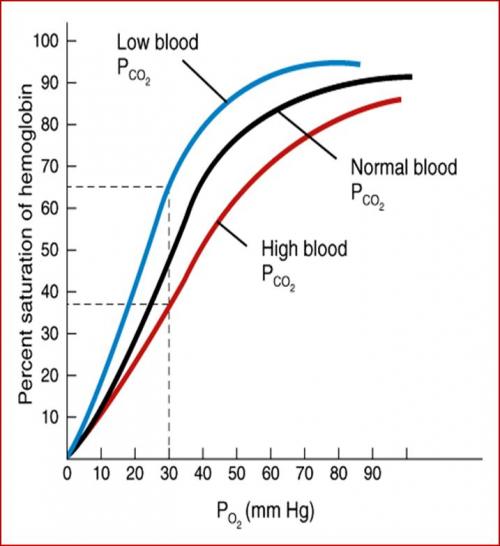
What colour line represents the oxygen saturation curve during intense exercise?
blue
black
red

Identify the leukocyte
eosinophil
basophil
monocyte
lymphocyte

What type of leukocyte is this?
eosinophil
neutrophil
lymphocyte
monocyte
fight allergic reactions, parasitic infections and inflammation in the body.
Basophil
Monocyte
Lymphocyte
Eosinophil
Neutrophil

