wayground logo

Free Printable Worksheets

Font size

S
M
L
XL
Worksheets

Isotopes and Radioactivity

Total questions: 25

Worksheet time: 14mins

Name
Class
Date
1.

Isotopes have the same ____________

a)

Mass number

b)

Number of electrons

c)

Number of neutrons

d)

All of these

2.

Which type of radiation can be stopped by a sheet of paper?

a)

Alpha

b)

Beta

c)

Gamma

d)

All three

3.

Which type of radiation has a positively charged particle?

a)

Alpha

b)

Beta

c)

Gamma

d)

All three

4.

Which type of radiation can be released during radioactive decay?

a)

Alpha

b)

Beta

c)

Gamma

d)

All three

5.

What element does X represent?

a)

Mg

b)

Si

c)

Fe

d)

Sr

6.

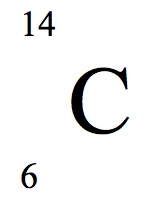
Which particle does this symbol represent?

a)

an alpha particle

b)

a beta particle

c)

a positron

d)

a photon

7.

Which particle is the nucleus of a helium atom?

a)

an alpha particle

b)

a beta particle

c)

a positron

d)

a photon

8.

How many protons does this isotope have?

a)

41

b)

28

c)

15

d)

13

9.

What is the mass number for this element?

a)

12

b)

14

c)

26

d)

38

10.

Two atoms have the same atomic number

a)

They must be isotopes of the same element

b)

They must have the same number of neutrons

c)

They must have the same average atomic mass

d)

They must have the same number of protons plus neutrons, but are not related to each other in any other way.

11.
Which particles make up the nucleus of an atom?
a)
protons and neutrons
b)
electrons and protons
c)
electrons, protons, and neutrons
d)
electrons and neutrons
12.
An element with a mass number of 11 and an atomic number of 5 has how many neutrons?
a)
11
b)
5
c)
6
d)
16
13.

An isotope of an element has the same number of _________, but a different number of _________.

a)

Protons, electrons

b)

Protons, neutrons

c)

Electrons, neutrons

d)

Neutrons, protons

14.
What makes something radioactive?
a)
elements with an atomic number above 81
b)
an unstable nucleus
c)
contaminated sewage
d)
It decays over time
15.
_______________ is the process by which unstable atoms emit radiation until they become stable.
a)
Radiation
b)
Chemical Reaction
c)
Radioactive Decay
d)
Isotopes
16.
Where does radioactivity have application in our lives?
a)
Medicine
b)
Energy (electricity)
c)
Agriculture
d)
All of the above
17.

Which of the following defines the Mass number of an atom?

a)

number of protons + number of electrons

b)

number of neutrons + number of electrons

c)

number of protons + number of neutrons

d)

number of electrons

18.
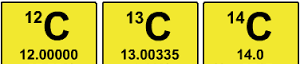
What do these isotopes of carbon all have in common?
a)
neutrons & mass number
b)
atomic number and neutrons
c)
atomic number and electrons
d)
protons, atomic number, and mass number
19.
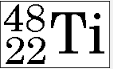
How many protons does this isotope of titanium have?
a)
48
b)
22
c)
26
d)
70
20.
In a correctly written symbol what would be located in the "A" position?
a)
number of neutrons
b)
atomic number
c)
number of electrons 
d)
mass number
21.
What quantities vary between isotopes of an element?
a)
protons, electrons, and atomic mass
b)
protons, electrons, and atomic number
c)
neutrons and electrons
d)
neutrons and atomic mass
22.
The photo above shows the isotopic notation for which isotope?
a)
Carbon 12
b)
Carbon 13
c)
Carbon 14
d)
Carbon 15
23.
How many neutrons does a Carbon 13 atom have?
a)
6
b)
5
c)
7
d)
8
24.
How many neutrons does a Calcium 48 isotope have?
a)
16
b)
20
c)
28
d)
12
25.

12 protons and 13 neutrons

a)

Mg-12

b)

Mg-13

c)

Mg-25

d)

Mg-24.305