
 Worksheets
Earth's Features Ch. 1
Total questions: 28
Worksheet time: 20mins
something scientists use to answer questions about the real world
sediment
observation
model
inference
to press together
compact
fossil
sediment
something you notice by using your 5 senses
rock layer
inference
observation
a person who studies the processes and materials that form the solid part of the Earth
fossil
geologist
model
sedimentary rock
small pieces of rock, sand, or clay
cement
sediment
fossil
compact
to stick together in the process of forming rock
rock
cement
rock layer
model
a clue about life from the past that is preserved in rock
fossil
geologist
compact
rock layer
a thick sheet of rock formed from the same material
compact
rock layer
rock
sediment
a type of rock that forms from sediment that compacts and cements over time
rock layer
sedimentary rock
fossil
something you figure out based on information that you already know
observation
inference
fossil
geologist
A fossil forms when an organism dies and is covered with sediment that turns into rock.
True
False
A sedimentary rock layer forms when sediment sinks and builds up in water, compacts under more sediment, and cements over time.
True
False
Most fossils form when living things die and are buried by _______________ that hardens into rock over time.
sediment
people
cement
ants

Which conditions might lead to fossil formation? (Choose 3)
Decomposition
Getting buried quickly by sediment
getting trapped in a tar pit
getting eaten by another animal
making a footprint in mud

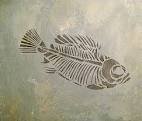
What inference could you make about the environment where this fossil formed?
It was under water.
It might have been a grassland.
It was snowy and cold.
It was a desert.
What do fossils teach us about?
Everything we need to know about a plant or animal.
They teach us about the past and the environment.
Everything single living thing will become a fossil when it dies.
That wooly mammoths are not extinct.

Which of the following is NOT an inference you can make by looking at this dinosaur fossil?
It has sharp teeth so it probably ate meat.
It had long legs so it probably ran fast.
It had a long tail which it probably used for defense.
It had claws so it was probably a great swimmer.
What observation could you make about the environment where this fossil formed?
It was under water.
It might have been a grassland.
It was a velociraptor.
It has 4 legs.
If scientists found this fossil, what could they observe?
that the animal had a tail and fins
that this fish lacked oxygen
what kind of animal ate this fish
that water once covered the area
Which of the following is the FIRST step in the formation of sedimentary rock?
The sediment at the bottom starts to compact, or press
together.
Sediment sinks through water and builds up on the bottom of
lakes, rivers, oceans, and other watery environments.
As the sediment compacts, all the tiny bits of sand and rock begin to cement, or stick to one another.
Over time, more and more sediment builds up and pushes down on the sediment below it.
Which of the following is the SECOND step in the formation of sedimentary rock?
The sediment at the bottom starts to compact, or press together.
Sediment sinks through water and builds up on the bottom of lakes, rivers, oceans, and other watery environments.
As the sediment compacts, all the tiny bits of sand and rock begin to cement, or stick to one another.
Over time, more and more sediment builds up and pushes down on the sediment below it.
Which of the following is the THIRD step in the formation of sedimentary rock?
The sediment at the bottom starts to compact, or press together.
Sediment sinks through water and builds up on the bottom of
lakes, rivers, oceans, and other watery environments.
As the sediment compacts, all the tiny bits of sand and rock begin to cement, or stick to one another.
Over time, more and more sediment builds up and pushes down on the sediment below it.
Which of the following is the FOURTH step in the formation of sedimentary rock?
The sediment at the bottom starts to compact, or press together.
Sediment sinks through water and builds up on the bottom of
lakes, rivers, oceans, and other watery environments.
As the sediment compacts, all the tiny bits of sand and rock begin to cement, or stick to one another.
Over time, more and more sediment builds up and pushes down on the sediment below it.
Which of the following is the FIFTH step in the formation of sedimentary rock?
The sediment at the bottom starts to compact, or press together.
The sediment compacts and cements to form a large, flat layer of sedimentary rock.
As the sediment compacts, all the tiny bits of sand and rock begin to cement, or stick to one another.
Over many years, that layer gets thicker as more sediment compacts and cements.
Which of the following is the SIXTH step in the formation of sedimentary rock?
The sediment at the bottom starts to compact, or press together.
The sediment compacts and cements to form a large, flat layer of sedimentary rock.
As the sediment compacts, all the tiny bits of sand and rock begin to cement, or stick to one another.
Over many years, that layer gets thicker as more sediment compacts and cements.

