
 Worksheets
Evolution/Natural Selection
Total questions: 20
Worksheet time: 20mins
What is natural selection?
inherited characteristic that increases chances of survival
organisms with traits well suited to their environment survive and reproduce at a greater rate
a growing population causes a scarcity of resources
differences in the DNA sequence
The process of choosing parent organisms for desired characteristics is called
natural selection
Artificial selection
random selection
genetic manipulation
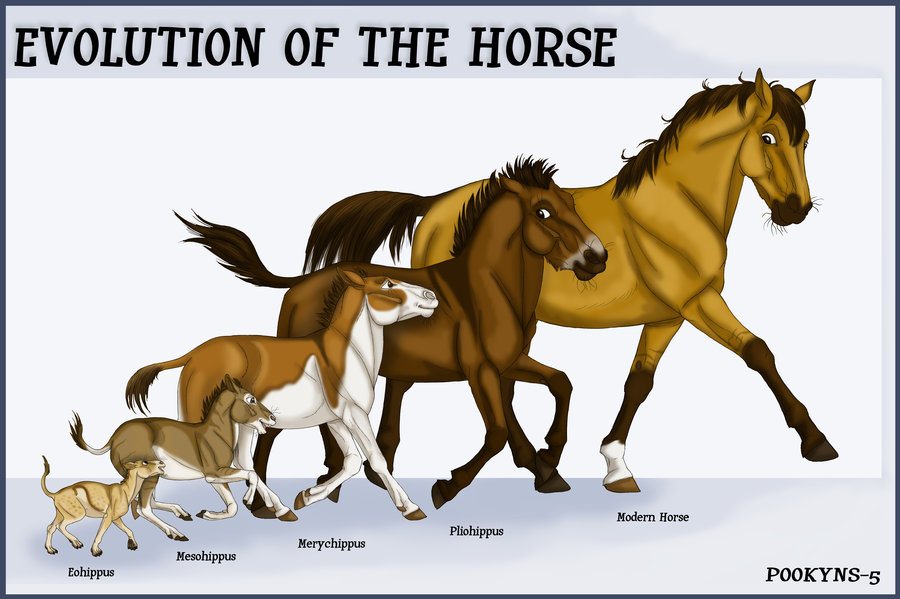

Evolved from different ancestors, but due to living in similar environments have a similar function.
Homologous structures
Analogous structures
Vestigial structures
All of the above
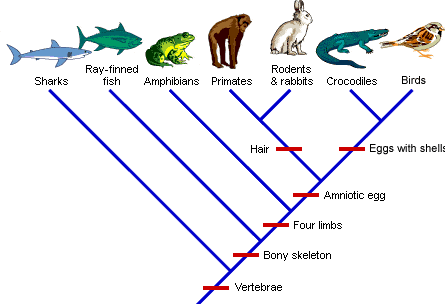

What characteristic do all the organisms on this cladogram share?
Being bi-pedal & having language
Complex brains
Fully binocular vision
Partial binocular vision & opposable thumbs
An anatomical feature that no longer seems to have a purpose in the current form of an organism
Homologous structure
Analogous structure
Vestigial structure
None of the above
Which of the following is an example of the founder effect?
Bald Eagles are hunted until near extinction, population recovers.
Small group of iguanas floats to an island, starts a new population.
Red fox pups are more likely to survive in a snowy environment if they are born white.
Farmer chooses seeds from largest apples to plant next year. This results in larger apples from year to year.

List the 4 closest human relatives based on this biochemical comparison.
What is an example of artificial selection?
Letting dogs choose their own mate
Letting plants pollinate on their own
Crossing a labrador and a poodle to create a labradoodle
When the Grand Canyon in Arizona formed, two populations of one squirrel species were separated by the giant canyon. This is an example of _____________ speciation.
Allopatric
Sympatric
Simple
Divergent
A speciation in which new species evolve from a single ancestral species while inhabiting the SAME geographic region.
Sympatric speciation
Allopatric speciation
Complex speciation
Divergent speciation
How do you "win" at natural selection?
survive
go extinct
survive & reproduce

Which animals have amniotic eggs?
Turtle and Tuna
Turtle and Leopard
Lancelet and Lamprey
Tuna and Slaamander

What number is the common ancestor of C and D
1
2
3
4
organism survive in its surroundings
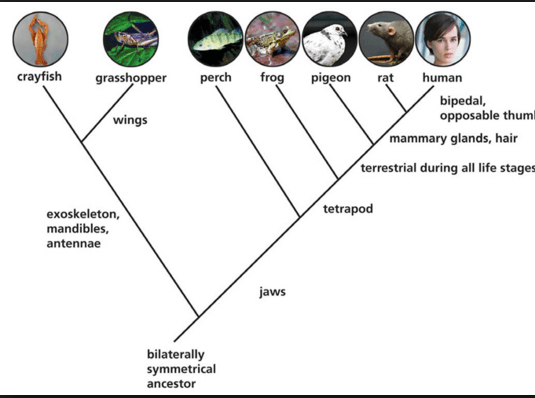
According to the cladogram, which organism is most distantly related to the human?
crayfish
pigeon
perch
frog

