
 Worksheets
origin of elements
Total questions: 25
Worksheet time: 1hrs 15mins
What is fusion?
A massive explosion that happens when all stars die.
A new star that has not ignited yet.
A nuclear process where 2 nuclei combine.
A nuclear process where a nuclei splits apart into 2 or more pieces.
After becoming a supergiant, a high mass star collapses in a massive explosion called what?
Quasar
Supernova
Nebula
Shockwave
Light elements are produced ...
during a supernova
in a protostar
in a black hole
in stars by fusion
Heavy elements are produced ...
in a neutron star
in a black hole
during a supernova
in stars by fusion
An example of a man-made element, an element not found in nature but produced in a lab.
2 - Helium
26 - Iron
92 - Uranium
117 - Tennessine

Identify the cosmic phase in which the given nuclear reaction occurs on.
Bigbang Nucleosynthesis
Stellar Formation and Evolution
Stellar Explosion

Identify the cosmic phase in which the given nuclear reaction occurs on.
Big Bang Nucleosynthesis
Stellar Formation and Evolution
Stellar Explosion

Identify the cosmic phase in which the given nuclear reaction occurs on.
Big Bang Nucleosynthesis
Stellar Formation and Evolution
Stellar Explosion

In the nuclear reaction represented, what particle is X?
Electron or Beta Particle
Helium or Alpha Particle
Gamma Ray
Positron

Which of the following statement describes the nuclear equation below?
The total atomic number in the reactant was reduced in the product
Helium is ejected from the nucleus of radium
Radium has undergone nuclear fusion
The element remains as it is in the product

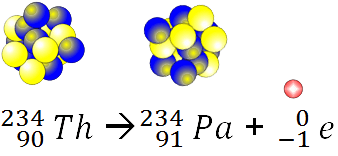
Which of the following is the missing particle in the nuclear decay?
Deuteron
Neutron
Beta Particle
Alpha Particle
Which of the following describes nuclear fission reaction
It is the splitting of heavy nuclei into lighter ones
It is the combining of light nuclei to form heavier ones
It results from series of alpha decays
It releases much less energy per atom than a chemical process
Which of the following elements are formed during stellar formation and evolution?
H, He, Li
Be to Fe
Elements heavier than Fe
None of these
Which of the following are formed during big bang nucleosynthesis?
H, He, Be
H, He, Li
H, He, Alpha
H, He, Fe
Which of the following is a helium nucleus
Alpha Particle
Beta Particle
Gamma ray
Positron
For seed nuclei with relatively few neutrons, neutron capture occurred so slowly that beta decay of the product isotope happened before it captured another neutron.
T-PROCESS
S-PROCESS
R-PROCESS
U-PROCESS
Some series of neutron capture occurred very fast that the seed nucleus turned into a relatively heavier nucleus before beta decay took place.
T-process
S-process
R-process
U-process
These are atoms of an element that have the same number of protons but different number of neutrons
Isotopes
Isomers
Isobars
Isotones
What is nucleosynthesis?
How the sun creates new hydrogen atoms out of dark matter
How helium atoms are broken down by nuclear fission to produce hydrogen
How a nucleus is produced during the big bang
How new elements are created in stars by combining the nuclei of atoms

Which particle has this symbol?
Alpha
Beta
Gamma


In the Sun, hydrogen atoms fuse together to form _________.
helium
mercury
oxygen
nitrogen
Plutonium (of mass number 240 and proton number 94) decays with the emission of alpha-particle. What is the new proton number and mass number of the new nucleus?
proton number = 92, mass number = 236
proton number = 92, mass number = 240
proton number = 91, mass number = 240
proton number = 91, mass number = 236

