wayground logo

Free Printable Worksheets

Font size

S
M
L
XL
Worksheets

IIT-JEE & NEET LEVEL - 9 (8-O)

Total questions: 100

Worksheet time: 2hrs 40mins
Name
Class
Date
1.
A car travels 90 meters due north in 15 seconds. Then the car turns around and travels 40 meters due south.  What is the magnitude and direction  of the car's resultant displacement?  
a)
40 metres, South
b)
50 metres, South
c)
50 metres, North
d)
40 metres, North 
2.
Which statement describes a vector?
a)
It has magnitude but no direction
b)
It has direction but no magnitude
c)
It has both direction and magnitude
d)
It has constant magnitude but no
 direction
3.
In practice A of the figure, What is  the magnitude of the  resultant displacement?
a)
5 km 
b)
8 km
c)
11 km
d)
15 km
4.
In practice A of the figure, what is the direction of the resultant displacement?
a)
63 degrees, South of East
b)
63 degrees, North of West
c)
27 degrees, North of West
d)
27 degrees, South of West
5.
In practice B of the figure, which displacement is the horizontal component?
a)
30 km, East
b)
30 km, West
c)
40 km, North
d)
40 km, South
6.
Is this a scalar quantity or a vector quantity?
Wind blowing at 20 knots
a)
Scalar
b)
Vector
7.
Is this a scalar quantity or a vector quantity?
A deer running 15 meters per second due west

a)
Scalar
b)
Vector
8.
If a boomerang is thrown 20 m in a straight line and returns exactly to the spot it was thrown what is its displacement?
a)
20m
b)
40m
c)
0m
d)
-20m
9.
If a car moves 12 km North, 19 km East, and 12 km South, what is its displacement?
a)
12 km
b)
19 km, East
c)
31 km
d)
43 km, East
10.
Which of these is not a vector quantity? 
a)
displacement 
b)
time
c)
velocity 
d)
acceleration
11.
Which of the following quantities are vectors?
a)
speed, velocity, acceleration
b)
velocity, acceleration, force
c)
force, acceleration, mass
d)
length, mass, time
12.
The _______ of two or more vectors is the sum of the vectors.
a)
components
b)
scalar
c)
resultant
d)
magnitude
13.
What is the net force?
100 N        230 N
<------        --------->
a)
30 N to the right
b)
230 N to the right
c)
130 N to the right
d)
This is a balanced force
14.
What is the SI unit of measurement for force?
a)
lbf
b)
Kilograms
c)
Newtons
d)
m/sec^2
15.
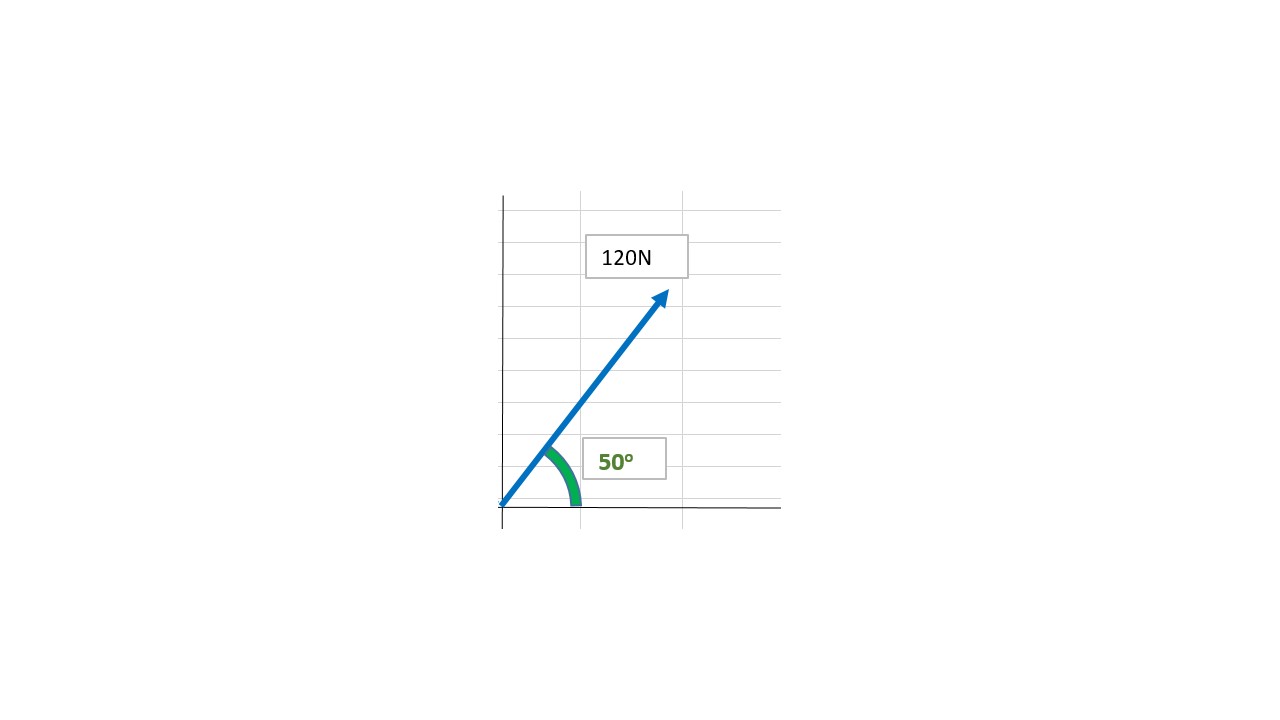
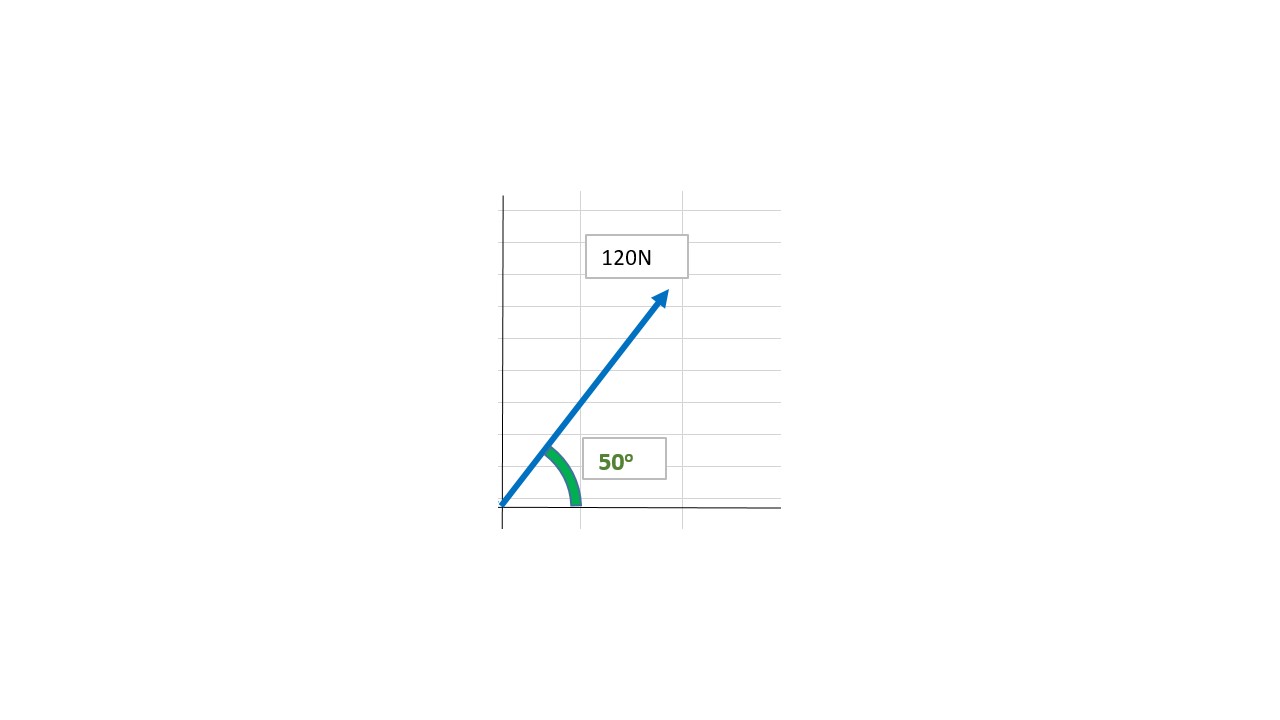
What is the x component of the vector given in the diagram?
a)
77N
b)
92N
c)
120N
d)
60N
16.
What is the y component of the vector given in the diagram?
a)
77N
b)
92N
c)
120N
d)
60N
17.
Velocity
a)
Vector
b)
Scalar
18.
Mass
a)
Vector
b)
Scalar
19.
Volume
a)
Vector
b)
Scalar
20.
To sort an organism into a group based on shared traits is called __________.
a)
Domains
b)
Taxonomy
c)
Genetics
d)
Classification
21.
Cells that have a nucleus are called ________.
a)
archaea
b)
bacteria
c)
eukaryotes
d)
fungi
22.
A scientific name consists of a ___________.
a)
domain and kingdom
b)
phylum and class
c)
family and order
d)
genus and species
23.
Which language is the primary language used to classify living things?
a)
Greek
b)
Latin
c)
Roman
d)
English
24.

Viruses can only reproduce inside a host cell.

a)

True

b)

False

25.

The two-name naming system used in modern classification of living organisms is called...

a)

cladogram

b)

binomial nomenclature

c)

genetics

d)

phylogeny

26.

A famous scientist first grouped organisms in two main groups: animals and plants. Who was this scientist?

a)

Woese

b)

Whittaker

c)

Linnaeus

27.

Nowadays we group organisms into 5 kingdoms. Who was the scientist that proposed this system?

a)

Woese

b)

Whittaker

c)

Linnaeus

28.

Which of the following is NOT one of the 5 kingdoms:

a)

Animal

b)

Plant

c)

Mammal

d)

Protoctist

e)

Fungi

29.

Which of the following organisms are ONLY unicellular?

a)

Animal

b)

Plant

c)

Fungi

d)

Bacteria

e)

Protoctist

30.

Which of the following have complex cell structure with nucleus?

a)

Animal

b)

Plant

c)

Bacteria

d)

Protoctist

e)

Fungi

31.

Which of the following are ONLY multicellular?

a)

Animal

b)

Plant

c)

Fungi

d)

Bacteria

e)

Protoctist

32.

Which is the only kingdom that can never have cell wall?

a)

Animal

b)

Plant

c)

Fungi

d)

Bacteria

e)

Protoctist

33.
Unicellular organism lacking a nucleus
a)
Prokaryote
b)
Eukaryote
34.
A specific term for an organism, made up of the genus and species
a)
taxonomy
b)
scientific name
c)
dichotomous key
d)
classification
35.
the process of grouping items based on their similarities
a)
classification
b)
dichotomous key
c)
scientific name
d)
taxonomy
36.
the science of describing, naming, and classifying organisms
a)
taxonomy
b)
classification
c)
scientific name
d)
dichotomous key
37.

organism that makes its own food

a)

autotroph

b)

heterotroph

c)

organism

d)

prokaryotes

38.

organism that does NOT have the ability to make its own food

a)

heterotroph

b)

autotroph

c)

organism

d)

eukaryotes

39.
Made up of more than one cell
a)
Unicellular
b)
Multicellular
c)
Prokaryotic
d)
Heterotroph
40.

Which property does this represent:

12 + 16 + 15 = 16 + 12 + 15

a)

Commutuative Property of Multiplication

b)

Distributive Property

c)

Commutative Property of Addition

d)

Associative Property of Addition

41.

Which property does this represent:  3(9+4)=39+343(9+4)=3\cdot9+3\cdot4  

a)

Commutative Property of Addition

b)

Distributive Property

c)

Associative Property of Multiplication

d)

Addition Property of Equality

42.

Which property does this represent:

(5 + 7) + 6 = 5 + (7 + 6)

a)

Associative Property of Addition

b)

Associative Property of Multiplication

c)

Commutative Property of Addition

d)

Distributive Property

43.

Which property does this represent:

7(x + 9)= 7x + 63

a)

Commutative Property of Addition

b)

Distributive Property

c)

Associative Property of Addition

d)

Associative Property of Multiplication

44.

What property allows this statement to be true?

ab = ba

a)

Associative Property of Multiplication

b)

Distributive Property

c)

Commutative Property of Multiplication

d)

Associative Property of Addition

45.

The following is an example of what property?
 (62)3 = 6(23)\left(6\cdot2\right)\cdot3\ =\ 6\cdot\left(2\cdot3\right)  

a)

Commutative Property of Multiplication

b)

Associative Property of Multiplication

c)

Associative Property of Addition

d)

Distributive Property

46.

 Which number is irrational?Which\ number\ is\ irrational?  

a)

9.6

b)

45\sqrt{45}

c)

3/8

d)

100\sqrt{100}

47.

A decimal that never ends or repeats is which type of number?

a)

Rational

b)

Irrational

48.

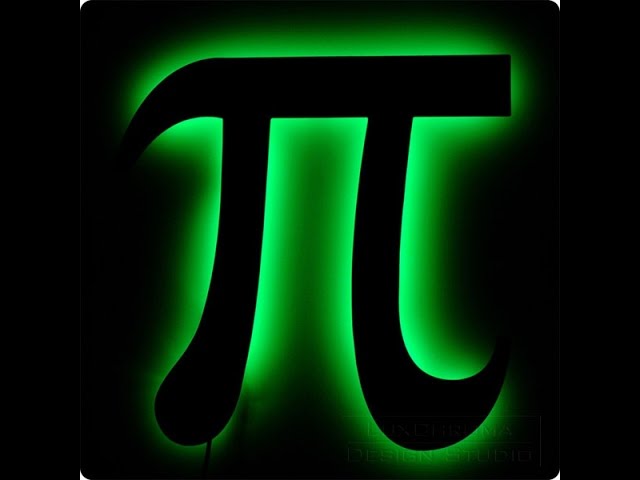
What type of number is π ?

a)

Rational

b)

Irrational

49.

Product of  20\sqrt{20}  and  5\sqrt{5}  is...

a)

Rational

b)

Irrational

50.

 Why is 2 irrational?Why\ is\ \sqrt{2}\ irrational?  

a)

The decimal ends.

b)

The decimal repeats.

c)

The decimal goes on forever.

d)

The decimal does not end and does not repeat.

51.
What is the multiplicative inverse of 2/3?
a)
-2/3
b)
3/2
c)
-3/2
d)
2/3
52.
What is the additive inverse of 2/3?
a)
-2/3
b)
3/2
c)
2/3
d)
-3/2
53.
3+0=3
is an example of which property?
a)
Multiplicative Inverse
b)
Additive Identity
c)
Multiplicative Identity
d)
Additive inverse
54.
This is an example of which property:
(2⋅3)4=2⋅3⋅4
a)
Associative
b)
Commutative
c)
Inverse
d)
Identity
55.
This is an example of which property:
(2⋅3)4=(3⋅2)4
a)
Associative
b)
Commutative
c)
Inverse
d)
Identity
56.
Which of the following is irrational?
a)
Square root of 81
b)
Square root of 9
c)
Square root of 144
d)
Square root of 12
57.
Is 8.27 rational or irrational?
a)
Rational
b)
Irrational
c)
Both
d)
None of the above
58.
What is the definition of an integer
a)
All positive and negative whole numbers
b)
Decimals or fractions that terminate for repeat
c)
All positive whole numbers
d)
0
59.

-14 could be classified as all of these EXCEPT?

a)

Integer

b)

Real

c)

Rational

d)

Whole

60.

Is the following question statistical or non statistical?

How many siblings does each Longview student have?

a)

Statistical

b)

Non Statistical

61.

What is the mean?

4, 5, 6, 7, 3, 4, 10, 1

a)

7

b)

4.5

c)

5

d)

8

62.

Find the mode:

3.8, 4.2, 4.0, 4.2, 4.2

a)

4.2

b)

3.8

c)

4.0

d)

4

63.
What is the median of this data set?
3 , 17 , 17 , 11 , 8 , 13 , 5 , 18
a)
11
b)
12
c)
13
d)
17
64.
Which interval has the highest frequency?
a)
9 - 10 books
b)
7-8 Books
c)
5-6 Books
d)
3-4 Books
65.

Find the average (mean) of these numbers:

5, 11, 2, 12, 4, 2

a)

4.1

b)

6

c)

4.5

d)

4

66.

What is the mean of this set of data?

2, 15, 7

a)

24

b)

3

c)

6

d)

8

67.
Find the median of these numbers:
2, 3, 4, 5, 5, 7
a)
4
b)
5
c)
4.5
d)
6
68.
If you score 76, 85, 97, and 83 on your math tests, what would your median score be? 
a)
84
b)
90
c)
85
d)
88
69.
A data set can have more than one median?
a)
True
b)
False
70.
A data set can have more than one mode
a)
True
b)
False
71.
At Donald's Donuts the number of donut holes in a bag can vary. Help Donald find the mode.
12,10,10,10,13,12,11,13,10
a)
13
b)
12
c)
11
d)
10
72.

Find the median, mode and range:

3, 5, 7, 9, 11, 8, 3

a)

median:7 mode:9 range:8

b)

median:6 mode:3 range:7

c)

median:7 mode:3 range:8

73.
What is the mode?
500, 600, 700, 800, 500, 600
a)
500 and 600
b)
700
c)
800 and 700
d)
500
74.
Find the median of the data set
9, 8, 7, 11, 7, 16, 3
a)
8
b)
7
c)
3
d)
2
75.
What is the mode?
3, 12, 12, 14, 15, 4, 12, 12, 16, 16 
a)
12
b)
16
c)
4
76.
Find the median from the given set of data.
1, 2, 3, 4, 2, 3, 2, 3
a)
2.5
b)
4
c)
5
d)
1
77.

What is the interquartile range (IQR) of this data?

a)

7

b)

12

c)

13

d)

8

78.

What is the range of this data?

a)

16

b)

4

c)

20

d)

18

79.

If 9 is the mode, what number could k be?

a)

1

b)

9

c)

3

d)

4

80.
Which consists of carbon atoms?
a)
graphite
b)
diamond
c)
fullerene
d)
all of these
81.
Which has every carbon atom covalently bonded to four other atoms?
a)
graphite
b)
diamond
c)
fullerene
d)
none of these
82.
Which is used as a cutting tool and in jewelry?
a)
graphite
b)
diamond
c)
fullerene
d)
none of these
83.

How many bonds will a C atom form?

a)

1

b)

2

c)

3

d)

4

84.

From which of the following substance pencil lead is formed?

a)

Charcoal

b)

Wood

c)

Lead

d)

Graphite

85.
Define the term allotropes
a)
Atoms with same proton number but different number of neutrons
b)
Atoms with same proton number but different mass number
c)
Atoms in different arrangement in structure
d)
Atoms in different arrangement and different physical form
86.
Which of the following is true about C60 ?
a)
Each carbon bonded covalently to 3 other carbon atoms in a hexagonal ball like structure
b)
Each carbon bonded covelently to 4 other carbon atoms in layers
c)
a giant lattice structure
d)
pentagonal in shape
87.

Carbon is arranged in what shape to make diamond?

a)

Triangle

b)

Hexagon

c)

Octahedron

d)

Tetrahedron

88.

Isomers have

a)

same structure and different formula

b)

different formula different structure

c)

same formula different structure

d)

same structure same formula

89.

Coal are of _____ types

a)

1

b)

4

c)

2

d)

3

90.
Which has a 3D hexagonal structure?
a)
graphite
b)
diamond
c)
fullerene
d)
none of these
91.
Which has every carbon atom covalently bonded to four other atoms?
a)
graphite
b)
diamond
c)
fullerene
d)
none of these
92.
Which has the formula C60?
a)
graphite
b)
diamond
c)
fullerene
d)
none of these
93.
What structure is shown in the diagram?
a)
Diamond
b)
Graphite
c)
fullerene
94.

From which of the following substance pencil lead is formed?

a)

Charcoal

b)

Wood

c)

Lead

d)

Graphite

95.

Which of these has the formula C60?

a)

graphite

b)

diamond

c)

fullerene

d)

none of these

96.

Which of the following statements about graphite and diamond is true?

a)

They have the same crystal structure

b)

They have the same degree of hardness

c)

They have the same electrical conductivity

d)

They can undergo the same chemical reactions

97.

A crystalline form of carbon is

a)

lampblack

b)

gas carbon

c)

sugar

d)

fullerene

98.

Diamond is used for

a)

making the electrodes of electric furnaces.

b)

making crucible for melting metals.

c)

cutting and drilling rocks and glass.

d)

making carbon brushes for electric motors.

99.

Atomic No. of Carbon,No. of Electron,No. of Proton,No of electron is

a)

12

b)

7

c)

6

d)

4

100.

Isomers have

a)

same structure and different formula

b)

different formula different structure

c)

same formula different structure

d)

same structure same formula