
NEW
Font size
 Worksheets
SSUSH 7 The Age of Jackson
Total questions: 36
Worksheet time: 24mins
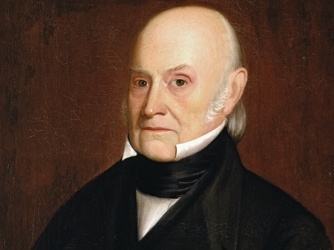

Congressional leaders such as Henry Clay tried to protect American manufacturing interests by which of the following ways?
Lowering the tariffs on southern factory owners
Forcing northern businesses to hire Americans
Implementing high tariffs on foreign goods
Establishing protective tariffs on agricultural goods
In 1832 the Supreme Court ruled that Georgia did not have legal authority over the Cherokees living in the state. President Andrew Jackson responded to this decision by-
filing another petition against the Cherokee Nation
ignoring the ruling and allowing Georgia to evict the Cherokee Nation
ordering state officials in Georgia to negotiate with the Cherokee Nation
asking Congress to pay reparations to the Cherokee Nation
What were innovations created as part of Clay's American System?
airplanes, buses, tunnels
cars, planes trains
canals, roads, steamboats, trains
canals, planes, cars, horses
Tariffs, National Bank, infrastructure improvement were all designed to aid in economic growth and expansion in what program designed by Clay?
Era of Good Feelings
Better Deal
Monroe Doctrine
American System
reformers who wanted to end slavery
abolitionists
prohibitionists
transcendentalists
suffragists
a secret network of people that helped slaves escape to the North
Temperance Movement
Secret Roads
Transcontinental Railroad
Underground Railroad

The 2nd Great Awakening was a____
Reform movement that only fought for equal rights for women.
Reform movement that only fought for improved prison conditions.
Relivious Revival that encouraged people to improve themselves and get involved in Reform Movements.
A loud alarm clock


Before the United States adopted the factory system, most manufactured goods were imported from England and other European countries.
True
False
The North Star was a newspaper that spread news of slavery and was written by
Harriet Tubman
Harriet Beecher Stowe
John Brown
Frederick Douglass
Which of these was the model for the Seneca Falls Declaration of Sentiments?
The Declaration of Independence
Preamble to the U.S. Constitution
Monroe Doctorine
Bill of Rights
How did Frederick Douglass emerge as an abolitionist leader?
He was a businessman who refused to do business in the South as a protest against slavery.
He was a politician who knew people in power and used his connections to fight against slavery.
He was an escaped slave who told the story of his life first as a speaker and then as an author.
He was a slaveowner who changed his mind about slavery and published the first anti-slavery newspaper in the United States.
What was the main goal of the women’s suffrage movement?
to give women the right to vote
to elect a woman president
to give women the right to own property
to give African Americans the right to vote
Which statement BEST describes the role the Seneca Falls Convention played in the women’s suffrage movement?
It was the convention that expanded women’s suffrage to other countries.
It was the convention that led to the Second Great Awakening.
It was the convention that first organized a movement toward women’s suffrage in the United States.
It was the convention that approved the 19th amendment.
How did the Second Great Awakening affect society in the 19th century?
The Second Great Awakening hurt movements focused on equality since this focus opposed church teachings.
The Second Great Awakening discouraged involvement in society by emphasizing that a person’s relationship with God was the only thing that mattered.
The Second Great Awakening encouraged obedience to governmental authority and playing the proper role in society since this was what God wanted.
The Second Great Awakening helped ignite reform movements by encouraging good deeds and working to improve conditions in the world.
What was Nat Turner known for ?
Nat Turner's slave rebellion
Killing whites
Died for blacks
Being racist
In retaliation for Nat Turner's slave rebellion, the white owners
Gave the rebels a stern lecture
Sentenced the rebels to prison for a year
Took mercy on the rebels and set them free
executed hundreds of black people
Which abolitionist wrote the Liberator Newspaper and worked for the immediate emancipation of all enslaved African Americans?
Frederick Douglass
Sojourner Truth
Harriet Tubman
William Lloyd Garrison
Susan B. Anthony

