wayground logo

Free Printable Worksheets

NEW

Font size

S
M
L
XL
Worksheets

Quarter 2 Super Review

Total questions: 26

Worksheet time: 26mins

Name
Class
Date
1.
An ionic bond forms when atoms ___________ electrons.
a)
gain
b)
share
c)
increase
d)
transfer
2.
Which type of bond has an equal sharing of electrons?
a)
Polar Covalent 
b)
Non Polar Covalent
c)
Ionic
d)
Metallic
3.
Which type of bond has an unequal sharing of electrons?
a)
Polar Covalent 
b)
Non Polar Covalent
c)
Ionic
d)
Metallic
4.
All chemical bonds involve two atoms sharing electrons.
a)
True
b)
False
5.

Why do atoms bond?

a)

They typically don't bond

b)

To add or take away energy levels

c)

To have a full valance shell.

d)

To have a full inner shell

6.

Ionic bonding is between a

a)

nonmetal and nonmetal

b)

metal and nonmetal

c)

metal and metal

d)

Depends on the situation

7.

Covalent bonding is between a

a)

nonmetal and nonmetal

b)

metal and nonmetal

c)

metal and metal

d)

It depends on the situation

8.

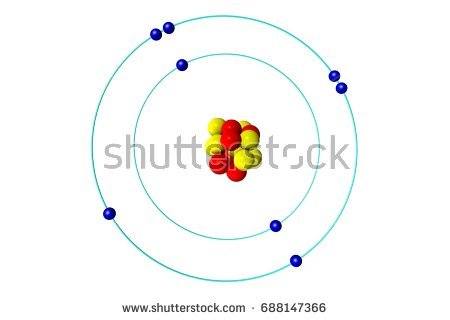
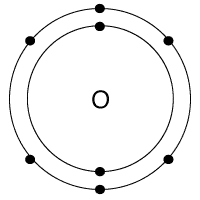
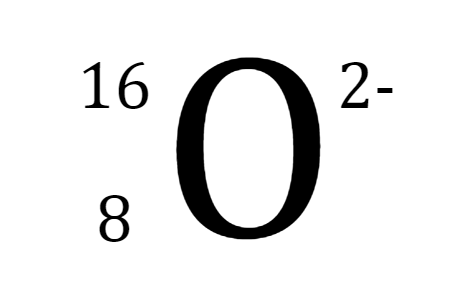
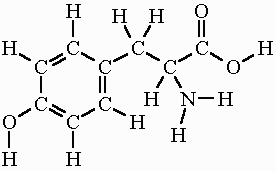
Which is the correct Lewis Structure for oxygen?

a)
b)
c)
d)
9.

What is the ionic formula for a bond between Calcium and Phosphorus?

a)

Ca2P3

b)

Ca3P2

c)

Ca2P5

d)

P5Ca2

10.
What is the name of the compound NO?
a)
nitrogen dioxide
b)
nitrogen monoxide
c)
dinitrogen trioxide
11.
The name of FeCl₂ is
a)
iron chloride
b)
iron (II) chloride
c)
iron (I) chloride
d)
iron dichloride
12.
The name of Cu₃N₂ is
a)
copper (III) nitride
b)
copper (II) nitride
c)
copper nitride
d)
tricopper dinitride
13.

Which is the correct molecular structure for carbon dioxide CO2?

a)
b)
c)
d)
14.

How many total valence electrons are participating in bonding in the molecule above?

a)

8

b)

4

c)

2

d)

3

15.
How many electrons should Helium have around its Lewis dot model?
a)
1
b)
2
c)
7
d)
8
16.
Which of the following is the correct LD Diagram for Hydrogen Cyanide? HCN?
a)
A
b)
B
c)
C
d)
D
17.
In this molecule, each CARBON makes how many bonds?
a)
1
b)
2
c)
3
d)
4
18.
What is the correct formula for this molecule?
a)
Si4F
b)
SiF4
c)
SiF
d)
Si4F4
19.
What type of IMF is present in all substances, regardless of polarity?
a)
London dispersion forces
b)
dipole-dipole forces
c)
ion-dipole forces
d)
hydrogen bonding
20.
Hydrogen bonding occurs in molecules when ___________________.
a)
a hydrogen atom forms a covalent bond with another atom.
b)
a hydrogen atom in a molecule forms a bond with any atom.
c)
a hydrogen atoms form an ionic bond with another atom on an adjacent molecule.
d)
a hydrogen atom bonded to F, O or N is attracted to an electron pair on a F, O or N atom on an adjacent molecule.
21.

Which of the following does NOT contain hydrogen bonding between molecules of the same type?

a)

NH3

b)

H2O

c)

CF4

d)

HOF

22.

What is the molecular geometry for this molecule?

a)

Trigonal planar

b)

Trigonal pyramidal

c)

Tetrahedral

d)

Linear

23.

What is the molecular geometry for this molecule?

a)

Bent

b)

Trigonal pyramidal

c)

Trigonal planar

d)

Linear

24.

Will this molecule be polar or nonpolar? PH3

a)

polar

b)

nonpolar

25.

What intermolecular forces would exist between molecules of HF?

a)

London Dispersion Forces

b)

Dipole-Dipole Forces

c)

Hydrogen Bonding

d)

All of the above

26.

In a polar covalent bond, the electrons gather around...

a)

The atom with the Greatest Electronegativity

b)

The atom with the Lowest Electronegativity

c)

Each atom Equally

d)

None of the Above