
 Worksheets
Cells in Living Things
Total questions: 22
Worksheet time: 12mins

Plants and animal cells are examples of ___ cells
prokaryotic cells
eukaryotic cells
Only eukaryotic cells have this? (Hint: Prokaryotic cells do not have this)
nucleus
DNA
cell membrane
ribosomes

A cell is
a living thing.
the basic unit of structure.
smallest functioning unit.
All of the above

A microscope is an instrument that
helps us see things far away
helps us see things up close
helps us see small objects by making small objects look larger.

An organelle
is a general structure in all cells.
is a tiny cell structure that carries out a specific function within the cell.
is a tiny cell structure that is placed in the cell to carry out a specific function.
a tiny musical instrument that plays specialized tunes.
Which of the following converts food into energy for the cell?
vacuole
mitochondria
cytoplasm
cell membrane
Which of the following, found ONLY in plant cells, provides structure and support?
cell wall
chloroplast
mitochondria
vacuole
protective layer around all cells, allows nutrients in and waste out
Cell Wall
Cell Membrane
Endoplasmic Reticulum
Ribosomes
Control center of cell, contains instructions for everything the cell does.
Ribosomes
Nucleus
Endoplasmic Reticulum
Mitochondria
stores materials such as food, water, and waste.
Ribosomes
Nucleus
Vacuole
Mitochondria
builds proteins, each cell contains thousands, found on ER and floating throughout cell
Ribosomes
Nucleus
Vacuole
Golgi Body
gel-like material, where organelles are located
Cytoplasm
Nucleus
Vacuole
Mitochondria
moves materials around in the cell, two types: smooth and rough
Cytoplasm
Nucleus
Vacuole
Endoplasmic Reticulum
packages proteins and moves them throughout the cell
Cell Theory
Golgi Body
Vacuole
Endoplasmic Reticulum
All living things are made up of cells, cells are the smallest unit of life, all cells come from preexisting cells.
Cell Theory
Golgi Body
Vacuole
Life
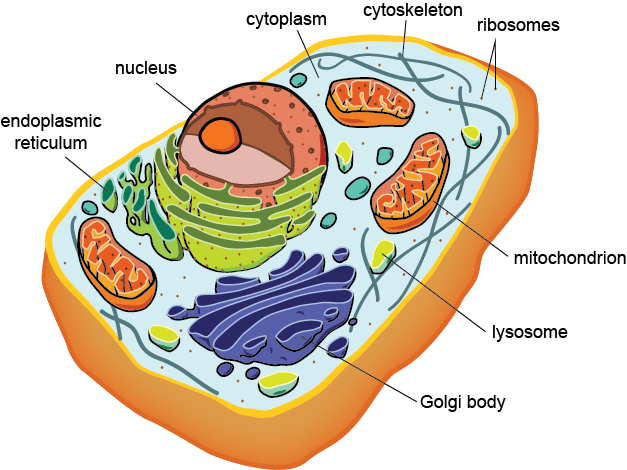
Which of the following statements is NOT part of the cell theory?
Cells are the basic unit of structure and function in all living things.
All cells are produced from other cells.
Cells are the basic unit of structure and function in all matter.
All living things are composed of cells.

What is one way in which all living things on Earth are alike?
All living things have hair.
All living things are made of cells.
The cells of all living things have chloroplast.
All living things can move.

