

wayground logo

Free Printable Worksheets

NEW

Font size

S
M
L
XL
Worksheets

ALL Landmark Supreme Court Cases BIG REVIEW

Total questions: 45

Worksheet time: 1hrs 23mins

Name
Class
Date
1.
In the Supreme Court case ____ v. ____, the court ruled that people who can't afford an attorney would have one appointed to them.
a)
Furman v. Georgia
b)
Brown v. Board
c)
Gideon v. Wainwright
d)
McCulloch v. Maryland
2.
Today if we are arrested, we are read our rights because of the ____v. ____ case.
a)
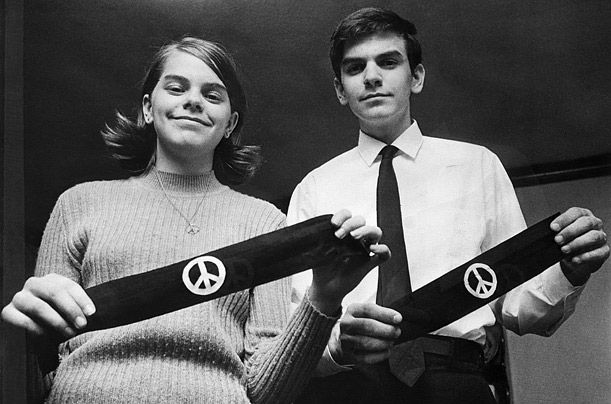
Miranda v. Arizona
b)
Plessy v. Ferguson
c)
The U.S. v. Richard Nixon
d)
Worcester v. Georgia
3.
The Supreme Court case ______ v. ______ established "Judicial Review".  This means that the Supreme Court had the final say on interpreting the Constitution.
a)
Marbury v. Madison
b)
Dred Scott v. Sandford
c)
The New York Times v. the U.S.
d)
Plessy v. Ferguson
4.
In _____ v. _____ the Supreme Court ruled that slaves were property, not citizens, and had no rights under the Constitution.  Also, that slavery couldn't be banned anywhere in the U.S.
a)
Korematsu v. U.S.
b)
Tinker v. Des Moines
c)
Dred Scott v. Sandford
d)
Miranda v. Arizona
5.
The ___ is the highest law in the United States.
a)
Declaration of Independence
b)
Articles of Confederation
c)
Monroe Doctrine
d)
Constitution
6.
Supreme Court cases that established that separate is equal, therefore making segregation legal.
a)
Plessy v. Ferguson
b)
Brown v. Board of Education Topeka, Kansas
c)
Washington D.C. v. Heller
d)
United States v Nixon
7.
Supreme Court case that established separate is NOT equal, therefore DESEGREGATING public schools.
a)
Plessy v. Ferguson
b)
Brown v. Board of Education
c)
Gideon v. Wainwright
d)
Bush v. Gore
8.
Miranda v. Arizona established the Miranda Warnings, which remind citizens of their ______ and ________ amendment rights.
a)
1st and 2nd 
b)
3rd and 4th
c)
5th and 6th
d)
7th and 8th
9.
Due to the decision of this case, law enforcement officers must inform you of your right to remain silent and right to a free attorney.  
a)
Gibbons v. Ogden
b)
Miranda v. Arizona
c)
Heart of Atlanta v US
d)
New York Times v US
10.

Which was an outcome of the U.S. Supreme Court decision in Brown v. Board of Education (1954)?

a)

Administrators may limit the content of student publications

b)

Public school districts that segregate deny equal protection.

c)

Students have a reduced expectation of privacy in school.

d)

Criminal defendants have the right to an attorney

11.

The Supreme Court’s decision in Plessy v. Ferguson reflected Americans’ approval of

a)

integration.

b)

relocation centers.

c)

segregation.

d)

woman suffrage.

12.

What happened in American schools after the 1954 U.S. Supreme Court decision in Brown v. Board of Education?

a)

States could continue segregation as long as facilities were separate but equal.

b)

Individuals of different races voluntarily stopped all forms of school segregation.

c)

The federal government ordered that states desegregate classes.

d)

Desegregation was ordered for only high schools.

13.
This case said the courts had to provide lawyers for those who can't afford one
a)
Mapp v. Ohio
b)
Terry v. Ohio
c)
Gideon vs. Wainwright
d)
Miranda v. Arizona
14.

The question whether the judges are invested with exclusive authority to decide on the constitutionality of a law has been heretofore a subject of consideration with me in the exercise of official duties. Certainly there is not a word in the Constitution which has given that power to them more than to the Executive or Legislative branches.

—Thomas Jefferson, 1815


Which constitutional principle is Jefferson referring to in this excerpt?

a)

Full faith and credit

b)

Popular sovereignty

c)

Federalism

d)

Judicial review

15.

In Marbury v. Madison, the Supreme Court established a principle that would eventually be used by all courts to —

a)

mediate disputes related to commerce between states

b)

overturn any impeachment that the court deems unsupported by evidence

c)

decide the outcome of contested election results

d)

strike down any law that the court deems unconstitutional

16.

A person's right to not answer questions when being asked by police is known as protection against:

a)

self-Incrimination.

b)

jurisdiction.

c)

appeal.

d)

brief.

17.
Which amendment gives you the right to an attorney?
a)
4th
b)
5th
c)
6th
d)
7th
18.

Which court case established Judicial Review?

a)

Plessy v. Ferguson

b)

In re Gault

c)

Tinker v. Des Moines

d)

Marbury v. Madison

19.

DECISION: According to the elastic clause of the Constitution, it is necessary and proper for Congress to create a national bank. Further, the supremacy clause, which places federal government above state governments, makes it unconstitutional for a state to tax the federal government.

a)

Marbury v Madison

b)

McCulloch v Maryland

c)

Gibbons v Ogden

d)

Worcester v Georgia

20.

The supremacy clause of the Constitution states that-

a)

state laws are higher than federal laws.

b)

federal and state laws are equal.

c)

federal laws are higher than state laws.

d)

the President has power over all other branches of government.

21.

McCulloch v Maryland served to __________the power of the federal government.

a)

limit

b)

expand

c)

dampen

d)

frustrate

22.
What gives Congress the power to do anything they think is necessary and proper to get their job done?
a)
John Marshall
b)
Elastic Clause
c)
John Adams
d)
Gibbons v. Ogden
23.
What gives the Supreme Court the power to reverse laws? 
a)
McCulloch v. Maryland
b)
Judicial Review
c)
Marbury v. Madison
d)
Interstate Commerce
24.
Which Supreme Court case decided if a state had the power to tax a federal agency?
a)
Marbury v. Madison
b)
McCulloch v. Maryland
c)
Fletcher v. Peck
d)
Gibbons v. Ogden
25.

What do you call trading across state lines?

a)

International Trade

b)

Highway Commerce

c)

Inner State Commerce

d)

Interstate Commerce

26.

The Supreme Court decision in McCulloch v. Maryland dealt with-

a)

freedom of speech

b)

equal protection under the law

c)

the supremacy of the national government

d)

the rights of labor unions

27.

What was the issue in Tinker v. Des Moines (1969)?

a)

The students and parents sued the school district claiming a violation of their first Amendment right of freedom of speech.

b)

The school district wanted to search the bags of the students.

c)

The parents did not want their children wearing black arm bands in school.

d)

The students felt that their freedom of religion was violated.

28.

Why did John & Mary Beth Tinker and Chris Eckhardt wear black arm bands?

a)

To Protest the war in Vietnam.

b)

They disagreed about taxes.

c)

To protest the 4th amendment.

d)

To support WWII veterans.

29.

What was the school's response to the students wearing the black arm bands?

a)

The school supported the students.

b)

They suspended the students.

c)

School officials made extras so other students could participate.

d)

The students were arrested without trial.
30.
Students have the right to free speech at school as long it doesn’t disrupt school activities.    (wearing black armbands in protest)
a)
In Re Gault
b)
District of Columbia v Heller
c)
Hazelwood v Kuhlmeier
d)
Tinker v Des Moines
31.
The police notified Gaults parents of his arrest by
a)
Calling them at work
b)
Letting them figure it out themselves
c)
Leaving a note on the kitchen counter
d)
Asking the older Sister to tell her parents when they got home.
32.
Did Gault have an attorney?
a)
Yes
b)
No
c)
Kids don't get one
d)
Judges can question the accused without an attorney
33.
At the age of 15 Gault faced a possible sentence of how many years?
a)
2
b)
4
c)
6
d)
8 months
34.
Which amendment protects Gault against self incrimination?
a)
8th
b)
9th
c)
 6th
d)
5th
35.
This case guaranteed certain rights for individuals being arrested
a)
Marbury vs. Madison
b)
Tinker vs. Des Moines
c)
Hazelwood vs. Kuhlmeier
d)
Miranda vs. Arizona 
36.
Voted against public prayer and Bible readings in school
a)
Board of Ed. v. Earls
b)
Engel v. Vitale
c)
Brown v. Board of Education
d)
Plessy v. Ferguson
37.

This decision resolved the election of 2000

a)

US vs. Nixon

b)

McCulloch vs. Maryland

c)

Bush vs. Gore

d)

Marbury v. Madison

38.
This Supreme court decision that declared the recount of votes in a presidential election unconstitutional.
a)
United States v. Nixon
b)
Miranda v Arizona
c)
Bush v. Gore
d)
Washington D. C. v Heller
39.
What building was broken into during the Watergate Break-in?
a)
The Capitol Building
b)
The White House
c)
Republican Headquarters
d)
Democratic Headquarters
40.
True or False:
Nixon was impeached from presedency. 
a)
True
b)
False
41.

Which statement most accurately depicts why president Nixon had to resign from office in 1974?

a)

He broke into the Watergate himself

b)

He pulled troops out of Vietnam in 1973

c)

He opened relations with China and the Soviet Union

d)

He led a criminal conspiracy from the White House, which mislead the nation

42.
During the investigation, the Supreme Court ordered Nixon to hand over what piece of incriminating evidence?
a)
Tape recordings
b)
Transcripts of his conversations
c)
Contracts of different CREEP members
d)
Receipts of the hotels Nixon had stayed
43.
In August 1974, Richard Nixon becomes the first president to do what?
a)
Resign
b)
Die while in office
c)
Flee the country
d)
Own a cat
44.

This case decided that principals have the right to edit school newspapers as long as he or she has a concern for the students safety

a)

Morse v. Frederick

b)

Tinker v. Des Moines

c)

Hazelwood v. Kuhlmeier

d)

In Re Gault

45.
This case decided that due process has to be followed in cases involving juveniles 
a)
Texas v. Johnson
b)
In Re Gault
c)
Gideon v. Wainwright
d)
Miranda v. Arizona
