
 Worksheets
2021 Evolution Review
Total questions: 38
Worksheet time: 44mins


How are bacteria becoming resistant to antibiotics?
bacteria does not become resistant to antibiotics.
by a random genetic mutation
by wishing they were resistant.
antibiotic resistance does not exist.


People are making antibiotic resistance worse by:
taking antibiotics only when they need them
putting antibiotics into our food and environment
not sharing antibiotics with others
carefully taking them according to the doctor's directions

What can we do to reduce the rate of development of antibiotic resistant strains of bacteria (choose all that aplly)
Always finish a course of antibiotics
Only take antibiotics when they are really needed
Take antibiotics whenever it is possible
Reduce the amount of antibiotics given to animals in the farming industry
Camouflage means:
A special dessert
When an animal looks like another animal
A way an animal can look like its surroundings
A __________________ is a random change in the genetic makeup of an organism.
Mutation
Adaptation
Natural Selection
Evolution
An inability to adapt to environmental changes can lead to death of all members of a species. This is called _______________________.
Expatriation
Examination
Extermination
Extinction
Organisms with traits that are best suited for their environments are likely to have a greater chance for survival. These helpful traits, which arise due to genetic mutations, are known as _____________________.
Mutation
Adaptations
Natural Selection
Evolution
Choose which scientist corresponds best with the statement:
survival of the fittest; those with naturally better traits survive to reproduce and pass off those traits to offspring
Darwin
Lamarck
Choose which scientist corresponds best with the statement:
acquired characteristics are inherited (example: a giraffe grows its neck longer to reach leaves and passes the longer neck to its offspring)
Darwin
Lamarck
The process in which organism with variations most suited to their local environment survive and leave more offspring.
Natural Selection
Acquired Adaptation
Common Descent
Phenotype
What do we call differences among inherited traits?
Variation
Adaptation
Evolution
Speciation
Who would have stated "acquired traits" such as a giraffe needing a long neck so they stretch it over time
Darwin
Lamarck
Which of the following gave Charles Darwin the idea of evolution?
wikipedia
mans attempt to destroy mankind
finches in the Galapagos island
have the ability to interbreed.
____________ is the development of new species when a two groups can no longer interbreed with one another.
Competitive
Speciation
Isolation
mutation
The 8 levels of classification, most broad to most specific.
Genus, Family, Order, Class, Phylum, Kingdom, Species
Domain, Species, Kingdom, Genus, Phylum, Family, Class, Order
Domain, Kingdom, Phylum, Class, Order, Family, Genus, Species
Order, Kingdom, Species, Domain, Phylum, Family, Class, Genus
To put similar organisms into groups
taxonomy
classification
dichotomous key
phylum
the science of grouping and naming organisms
taxonomy
classification
dichotomous key
phylum
Classifying organisms based off their habitat/how they move was developed by
Aristotle
Linnaeus
Classifying organisms based off their body structure, size, shape color, method of obtaining food. (Use of scientific names)
Aristotle
Linnaeus
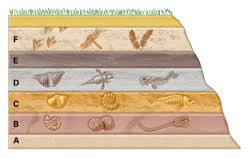
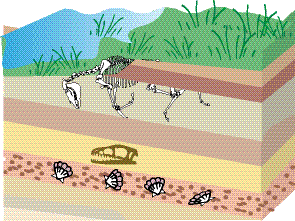
The Law of Superposition helps scientists to determine what?
The absolute age of rock layers
The absolute age of fossils
The relative age of rock layers
the super powers of rocks

Mass Extinction is best defined as....
Complete loss or death of a species
an abnormally large amount of species die out simultaneously or within a short period of time
Change in global or regional climate patterns
Change in climate during which glaciers covered much of the Earth
These fossils provide evidence of the ACTIVITIES of ancient organisms.
petrified fossils
trace fossils
molds
amber
How old do Paleontologists believe the Earth is?
2020 years old
3.6 million years old
4.6 billion years old
4.6 thousand years old

