
Font size
 Worksheets
DNA, RNA, and Proteins
Total questions: 35
Worksheet time: 36mins

The enzyme that works to unzip DNA's double helix to begin replication is
DNA polymerase.
RNA polymerase.
DNA ligase.
DNA helicase.

DNA replication results in two DNA molecules,
each with one new strand and one original strand.
one with two new strands and one with two original strands.
each with two new strands.
each with two original strands.

Since DNA replication results in 2 new strands of DNA, one side of original DNA, and one new strand, it is referred to as
semi-permeable.
semi-conservative.
semi-replicative.
semi-transcriptive.

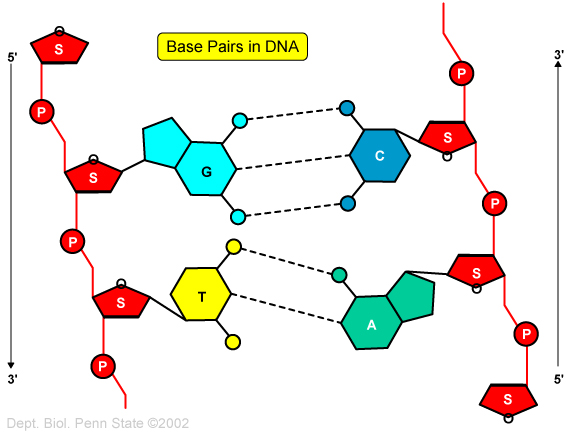
According to Chargaff's rules, which nucleotide is always paired with Adenine in a DNA molecule?
Thymine
Guanine
Cytosine
Uracil

According to Chargaff's rules, which nucleotide always pairs with Cytosine in a RNA molecule?
Uracil
Thymine
Guanine
Adenine

According to Chargaff's rules, which nucleotide always pairs with Adenine in an RNA molecule?
Thymine
Uracil
Cytosine
Guanine

Nitrogen bases with only 1-ring are called
purines
pyrimidines
nucleotides
nucleosomes

Nitrogen bases with 2 rings are called
purines.
pyrimidines.
nucleotides.
nucleosomes.

Which of the following are pyrimidines?
cytosine
guanine
adenine
thymine


Where does transcription take place?
mitochondria
ribosome
nucleus
cytoplasm


Protein synthesis (Translation) is important because it __________.
Converts mRNA into a protein
Copies the genetic information in DNA
Produces RNA from DNA molecules
Recycles tRNA molecules for reuse
Where does protein synthesis (translation) take place?
in the nucleus
in the cytoplasm on ribosomes
in the chloroplasts
in the mitochondria

Mutations are
changes in DNA
changes in RNA
changes in amino acids
changes in tRNA
Which of the following is true about mutations?
Mutations are always harmful.
Mutations are always helpful.
Mutations can be helpful, harmful, or neutral.
Mutations always have no effect on the protein.

Which of these chromosomal mutation diagrams shows a deletion mutation?
A
B
C
D
The anticodon is a triplet code found on
DNA
rRNA
tRNA
mRNA

Hox genes are a series of genes that control
the lac operon.
the burning of glucose in mitochondria.
the replication of DNA.
the sequential development of an animal's basic body plan.

When the lac repressor protein binds to the ____, the lac operon is turned off.
anticodon
promoter
operator
intron

Many DNA molecules contain sequences called _____ that are not involved in coding for proteins and are edited out of the complementary RNA molecule copy before it is used.
introns
exons
anticodons
nucleosomes

