wayground logo

Free Printable Worksheets

Font size

S
M
L
XL
Worksheets

Bonding Review

Total questions: 70

Worksheet time: 3hrs 37mins

Name
Class
Date
1.
What is a valence electron?
a)
The sum of neutrons and protons.
b)
The # of electrons in the last shell.
c)
A type of bond.
d)
A popular compound.
2.
Ionic bonds are between...
a)
Metal and Non-metal
b)
Non-metal and Non-metal
c)
Metal and Metal
3.
Atoms are most stable when their outer shell is complete.
a)
true
b)
false
4.
How are ionic bonds formed?
a)
Transfer of electrons
b)
Sharing of electrons
5.
Why do elements bond?
a)
To be friends
b)
To create a new element
c)
To become stable
6.

Anions

a)

Gain electrons, has an overall positive charge

b)

Lose electrons, has an overall positive charge

c)

Lose electrons, has an overall negative charge

d)

Gain electrons, has an overall negative charge

7.

Cations

a)

Gain electrons, has an overall positive charge

b)

Lose electrons, has an overall positive charge

c)

Lose electrons, has an overall negative charge

d)

Gain electrons, has an overall negative charge

8.

Which of the following is the correct ionic formula for calcium sulfide?

a)

Ca2S2

b)

CaS

c)

S2Ca2

d)

SCa

9.

Name the compound from it's formula: BaI2

a)

Iodine barium

b)

Iodine bariumide

c)

Barium iodine

d)

Barium iodide

10.

If an oxygen atom has 8 protons (+) and 10 electrons (-), what is it's charge?

a)

O-10

b)

O+8

c)

O-2

d)

O+10

11.
Magnesium bromide is an ionic compound with the chemical formula MgBr₂.  What does the "2" tell you?
a)
There are 2 bromide ions for every magnesium ion
b)
Bromide has a 2- charge
c)
Bromide has a 2+ charge
d)
There are 2 magnesium ions to every bromide ion
12.

In the chemical formula for an ionic compound, which item is written first?

a)

positive ion (cation)

b)

negative ion (anion)

c)

subscript

d)

it's alphabetical

13.
Elements in Group 1 lose one electron to form ions with a _________________ charge.
a)
1+
b)
2+
c)
0
d)
1-
14.

Calcium Chloride is an ionic compound, made up from Ca2+ ions and Cl- ions. Which is the correct formula for this compound?

a)

CaCl3

b)

CaCl

c)

CaCl4

d)

CaCl2

15.

Which of the below is an ionic compounds?

a)

Ni

b)

MgCl2

c)

H2O

d)

CH4

16.

Magnesium Hydroxide is an ionic compound made up from Mg2+ and OH- ions. Which is its correct formula?

a)

MgOH

b)

MgOH2

c)

Mg(OH)2

d)

MgO

17.
An ionic bond results due to the __________ attraction between 2 oppositely charged ions.
a)
delocalized
b)
weird
c)
electrostatic
d)
ionization
18.

What is the total charge of an ionic compound?

a)

positive

b)

negative

c)

neutral

19.

Nitrogen, N, will form which of the following ions?

a)

N

b)

N-3

c)

N-5

d)

N+5

20.
How do the following two elements bond together?
Al3+  O2-         
a)
AlO
b)
Al2O3
c)
Al3O6
d)
Al3O2
21.
Name the following ionic compound: LiNO3
a)
lithium nitrate
b)
lithium III nitrate
c)
lithium nitride
d)
lithium oxide
22.
Name the following ionic compound: MgSO4
a)
magnesium sulfoxide
b)
magnesium sulfide
c)
magnesium sulfate
d)
magnesium oxide
23.
Name the following ionic compound: BeCl2
a)
beryllium chlorine
b)
beryllium II chloride
c)
beryllium chloride
d)
beryllium dichloride
24.
The chemical formula of lead (IV) nitrate is
a)
PbN₄
b)
PbNO₃₄
c)
Pb(NO₃)₄
d)
Pb₃NO₄
25.

When naming a monatomic anion, you change the ending of the element to ________.

a)

-ate.

b)

-ite.

c)

-ide.

d)

-ine.

26.
The chemical formula for an ionic compound of potassium and oxygen is
a)
KO.
b)
K2O.
c)
K2O2.
d)
KO2.
27.

What is the basis of a metallic bond?

a)

the attraction of neutral metal atoms.

b)

the attraction between protons and neutrons.

c)

the attraction between positive metal ions and interlocking electrons.

d)

the attraction between positive metal ions and free moving electrons.

28.

Why do metals conduct electricity?

a)

They are shiny

b)

The electrons are delocalised and able to move

c)

The electrons are held tightly within the lattice

d)

The electrons are shared between two metal ions

29.

Why are metals malleable?

a)

They are shiny

b)

The electrons are held tightly within the lattice structure making it strong

c)

The electrons are delocalized and able to move between the atoms

d)

The electrons are shared between two metal ions and this holds the atoms together

30.

Which of these are considered properties of metals? (choose ALL that apply)

a)

brittleness

b)

low melting point

c)

malleability

d)

ductility

31.
A mixture of two or more metals is called:
a)
mixture
b)
solution
c)
compound
d)
alloy
32.
Why are alloys generally used to make everyday objects?
a)
Alloys are often stronger and less active than pure metals.
b)
Alloys have higher melting point than pure metals.
c)
Alloys are less expensive to produce than pure metals.
d)
Alloys have ionic bonds instead of metallic bonds.
33.

What do we call electrons that move freely in a metallic bond?

a)

sea of electrons

b)

lone electrons

c)

unpaired electrons

d)

covalent electrons

34.

What type of alloy is shown?

a)

Substitutional

b)

Interstitial

c)

Pure metal

35.

What type of alloy is shown?

a)

Substitutional

b)

Interstitial

c)

Pure metal

36.

Name S2-

a)

Sulfate

b)

Sulfite

c)

Sulfur

d)

Sulfide

37.

Name CO32-

a)

Carbon oxygen

b)

Carbon trioxide

c)

Carbonate

d)

Carbon

38.

Name Zn2+

a)

Zinc ion

b)

Zinc

c)

Sink

d)

Silver ion

39.
How do covalent bonds form?
a)
Donating & receiving valence e- between atoms.
b)
Opposite slight charges attract each other between compounds.
c)
Scientists are still not sure how they form.
d)
Sharing valence e- between atoms.
40.
Which of the following is NOT formed by a covalent bond?
a)
K2S
b)
H2O
c)
I2
d)
CO2
41.
Covalent bonds are between...
a)
Metal and Non-metal
b)
Non-metal and Non-metal
c)
Metal and Metal
42.
phosphorus trichloride
a)
KCl3
b)
PCl3
c)
K3Cl
d)
P3Cl
43.

dinitrogen pentoxide

a)

N2O5

b)

NO5

c)

N5O2

d)

N2O6

44.

P₄S₁₀

a)

tetrapotassium decasulfide

b)

phosphorus decasulfide

c)

tetraphosphorus decasulfide

d)

phosphorus (X) sulfide

45.
In a polar covalent bond, electrons are shared ___________.
a)
equally
b)
unequally
c)
between non-metals with similar electronegativities
d)
between a metal and a non-metal
46.
Which of the following is the correct Lewis structure for water?
a)
A
b)
B
c)
C
47.
Electronegativity is a measurement of the ability of a nucleus to...
a)
attract bonding electrons
b)
attract other nuclei
c)
attract elenece in the non-valence energy levels
48.
How many electrons are represented by a single straight line in a Lewis structure?
a)
1
b)
2
c)
4
d)
6
49.
The most electronegative atom in the periodic table is:
a)
Fluorine
b)
Helium
c)
Neon
d)
Francium
50.
In this Lewis structure, the symbol above F means...
a)
electrons are being transferred to Fluorine
b)
electrons are less attracted to F than H
c)
electrons are more attracted to F than H
d)
Fluorine has formed a cation
51.

Use your knowledge to predict what the following compound is classified as.

a)

polar covalent

b)

nonpolar covalent

c)

ionic

d)

metallic

52.

Use your knowledge to predict what the following compound is classified as.

a)

nonpolar covalent

b)

polar covalent

c)

ionic

d)

metallic

53.

Use your knowledge to predict what the following compound is classified as.

a)

non-polar covalent

b)

polar covalent

c)

ionic

d)

metallic

54.

How many total valence electrons does the Lewis structure for NO3 - have?

a)

23

b)

20

c)

18

d)

24

55.

What is the correct structure for BF3?

a)

Option A.

b)

Option B.

c)

Option C.

d)

Option D.

56.

What is the correct Lewis structure for NH3?

a)
b)
c)
d)
57.

Which is the correct Lewis structure for carbon dioxide?

a)
b)
c)
d)
58.

Which of the following elements are an exception to the octet rule and require less than 8 valence electrons?

a)

H

b)

Li

c)

B

d)

C

59.
VSEPR theory is to
a)
determine the number of bonding and lone pairs electrons
b)
determine the number of ECC
c)
determine the shape and geometry of molecule
d)
determine the lewis structure of molecule
60.
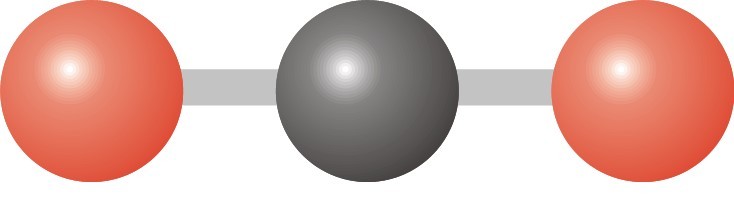
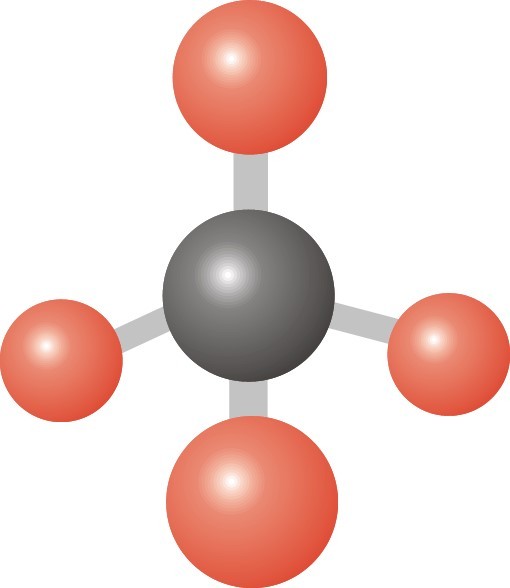
Which molecule would have this shape?
a)
BF3
b)
CH4
c)
PCl5
d)
CO2
61.
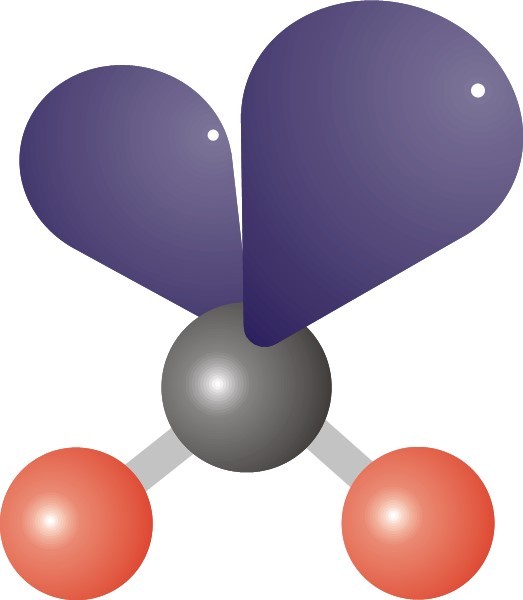
What molecule could this be? 
a)
BF3
b)
CH4
c)
H2O
d)
CO2
62.
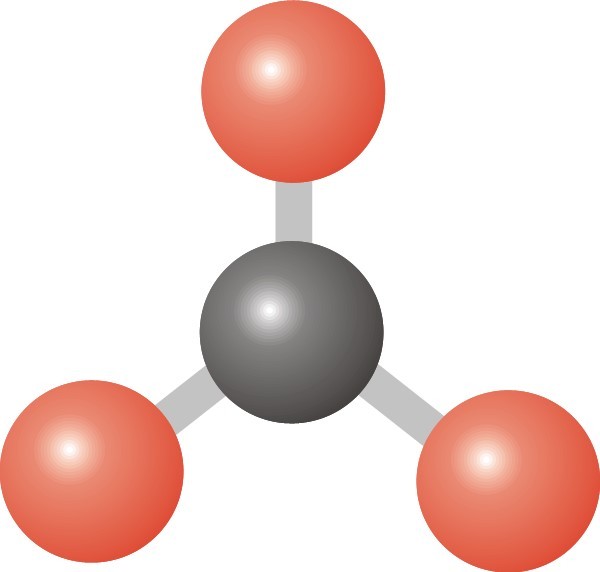
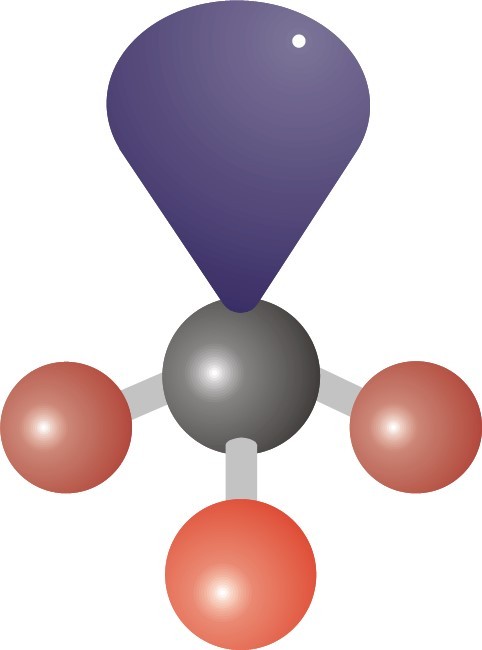
Who could this molecule be?
a)
CH4
b)
CO2
c)
PCl5
d)
BF3
63.
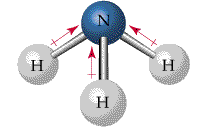
Who could this be? 
a)
CO2
b)
NH3
c)
H2S
d)
CH4
64.
Who could this be?
a)
H2O
b)
NH3
c)
CO2
d)
CH4
65.
What molecular shape is the structure shown here? (BCl3)
a)
linear
b)
trigonal planar
c)
tetrahedral
d)
trigonal pyramidal
66.
What molecular shape is the structure shown here? (H2O)
a)
tetrahedral
b)
trigonal planar
c)
bent
d)
trigonal pyramidal
67.
What molecular shape is the structure shown here? (NH4+)
a)
linear
b)
trigonal planar
c)
tetrahedral
d)
trigonal pyramidal
68.

Which sample has hydrogen bonding?

a)

H2S

b)

CH4

c)

NH3

d)

HI

69.

________________________ have the strongest intermolecular forces of attraction.

a)

Dipole- Dipole

b)

London Dispersion

c)

Hydrogen Bonds

70.

Intermolecular forces for: CO2

a)

Dispersion Force

b)

Dipole dipole

c)

Hydrogen bonding