
 Worksheets
AP World History Unit 5 Part 2 Review Guide 2026
Total questions: 51
Worksheet time: 30mins

Which of the following is considered an impact of Industrialization during the 18th and 19th centuries?
Increased competition between industrialized nations
Rise of global inequalities
Transformation of society.
All of the above
How did the move from farm to factories change peoples lives?
land owners had to share their land
urbanization was a myth
cities grew as people moved to work in factories
the cottage industry thrived


Who fought in the Sino-Japanese War?
China and Japan
Russia and Japan
Britain and Japan
United States and Japan
• Sino-Japanese War 1894–1895
• Russo-Japanese War 1904–1905
• Annexation of Korea 1910
These events in the history of Japan reflect its
resistance to trade
vulnerability to attack by neighbors
emergence as an imperialistic country
abundance of natural resources
Why did the British colonize India?
They wanted to trade with India
They needed raw materials/natural resources
They wanted markets inside of India
All the above
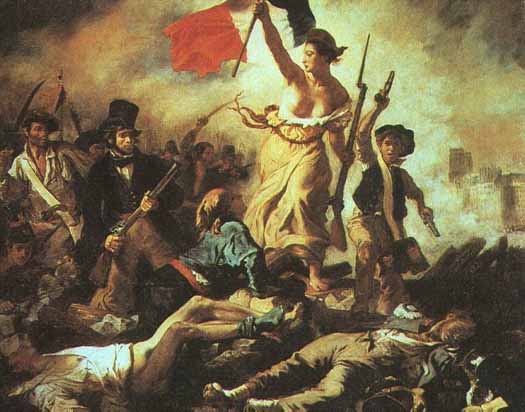
The Haitian Revolution was influenced mainly by which revolution?
French
American
Spanish American
Russian

Statement of revolutionary ideals adopted by France's National Assembly.
Declaration of the Rights of Man and of Citizen
Declaration of Independence
Constitution
Articles of Confederation
Adam Smith would most likely agree with which statement?
Revolution is the only solution to economic problems.
Five-year plans are necessary in order to industrialize.
All nations would benefit from an agricultural economy.
Government should follow a laissez-faire policy.
Laissez-faire capitalism as attributed to Adam Smith called for
heavy taxation of manufacturers
strict government control of the economy
minimal government involvement in the economy
government investments in major industries
What does the idea of ‘the invisible hand’ in Smith’s Wealth of Nations refer to?
the tendency of free markets to regulate themselves by means of competition, supply and demand, and self-interest
Protectionism
The idea of French Physiocrats
How did industrialization affect colonies like India and Egypt?
It led to decline in these countries' share of global manufacturing
It led to increase in these countries' share of global manufacturing
What was the major disappointment in the direct aftermath of the abolition of slavery and the emancipation of the Russian serfs?
Brought immediate political equality
The beginning of World War II
Both the Russian serfs and former slaves were still exploited in many ways.
None of the above


The Tanzimat reforms in the Ottoman Empire,
reorganized
education
established railways and telegraph systems
resulted in a constitution based on
European prototypes
Occurred between 1839 and 1876
All of the above

What was Japan's response to foreign interference in the nineteenth century?
Adapt to Western politics and culture (Meiji Restoration)
Isolate themselves further by resisting and fighting
Became allies with the Chinese to become the dominant power in the region
Adapt to the ideas of the islanders and tribal people to resist
Which movement in the 1700s promoted reason, liberty, and self determination?
The Scientific Revolution
The Renaissance
The Enlightenment
The American Revolution

Industrialism in Egypt differed from Industrialism in England in that
It was driven more by the state then independent capitalists
It was driven more by independent capitalists than the state
In did not involve foreign intervention
Machines were adapted much less in production

Commander Perry is connected to
the opening of Japan for trade
the attack on China during the Opium wars
Russia's rapid growth as a power
the defeat of the Napoleon
The ideas of the Enlightenment challenged the long-term assumptions about sovereignty, and instead proposed that
true government stems from religious authority
the best form of government is a democracy.
governments are bound to the will of the people
all government is inherently unjust; humans are better off living in a state of nature
The Tanzimat reforms that began in the 1830's included restructuring and limiting
the power of the religious elite
the role of the Sultan
ownership of the land
secular legal codes
The major reason Janissaries resisted modernization of the military was because
they did not support the Sultans reforms
they had weak leadership within the corps
they saw it as a threat to their special privileges
Egyptian troops had not had success with a modernized military
Which of the following characterizes the relations of the Asian powers with European influence during the nineteenth century
Japan and China limited European influence
India and Japan were militarily controlled by European powers
Japan was able to limit European influence, but China was not
India and China both became part of the British empire
The 1st Industrial Revolution focused on factories and steam power. The 2nd Industrial Revolution focused on all of the following except:
Oil
Electricity
The steam engine
Steel
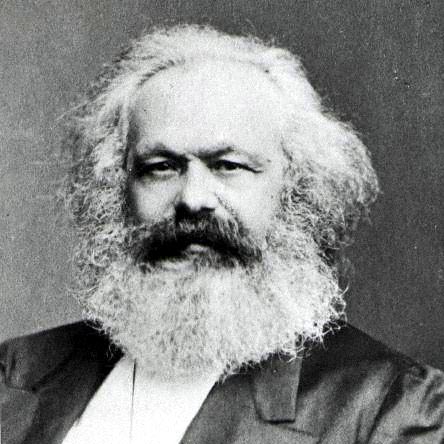
Which of the following best characterizes 18th century France just prior to the Revolution of 1789?
The economic status of the peasantry was improving dramatically
The aristocracy’s power had eroded completely
The privileges of the clergy were declining
The French monarchy was experiencing a deepening financial crisis
The participation of the bourgeoisie in legislative affairs was increasing dramatically


Adam Smith in The Wealth of Nations describes
Utopian Communist communities
Democratic Republicanism
Laissez Faire Economics
Mercantilism as an ideal economic system
Which TWO nations unified due to nationalistic movements?
Italy
America
Germany
France

Capitalism is
An economic system in which the means of production are privately owned and money is invested to make profits.
An economic system in which the means of production are owned by the public (government) and operate for the welfare of all.
Japan's modernization was successful primarily because of
The adoption of Western technology and ideas and the limitation of foreign influence
limits on individual rights and a strong centralized state
overseas conquest and the creation of an imperial army and navy
the decentralized of the Meiji Restoration
Bolivar's "Letters from Jamaica" focused on gaining rights in Latin America for:
All landowning men
Creoles
Slaves
Which of the following nations promoted their own industrialization in response to western industrialization? (select ALL correct answers; Hint 3 are right)
Japan
China
The Ottoman Empire
Italy
As countries embraced Adam Smith's capitalism laissez faire policies, what new forms of business were promoted? (Hint ONE is Wrong; select all other correct answers)
corporations
monopolies
socialism
transnational businesses

Russia's industrial process can best be described as
evolving organically by Russian middle class investors
directed by outside colonial powers
rapid because of the maintenance of serfdom
directed by the state through ministers like Sergei Witte
A 19th century Conservative believes in
money as a measure of wealth
that there should me no attempt to help the poor
the status quo
in an eventual social revolution of the proletariat
What is laissez faire economics?
An economic policy where the government imposes many regulations
The development of an economy based on accumulated capital by governmentsThe development of an economy based on accumulated capital by governments
An economic system with private transactions and no government interference
The development of an economy based on accumulated capital by the people

