
 Worksheets
Mitosis and Meiosis
Total questions: 30
Worksheet time: 18mins

In mitosis, the end product is...
2 haploid cells
2 diploid cells
4 haploid cells
4 diploid cells

In meiosis, the end product is...
2 haploid cells
2 diploid cells
4 haploid cells
4 diploid cells

Sperm and Egg cells are produced using which process?
Mitosis
Meiosis
Binary Fission
None of these
As a result of meiosis, the haploid number of chromosomes in a human sex cell (egg or sperm) is:
46
92
30
23

Another name for a sex cell is a:
Gamete
Embryo
Somatic cell
Muscle cell

CROSSING OVER INCREASES
LIFE SPAN
GENETIC VARIATION
THE NUMBER OF OFF-SPRING
ALL ARE TRUE

CROSSING OVER TAKES PLACE DURING
PROPHASE II
PROPHASE I
INTERPHASE
METAPHASE I

A male shark has 40 chromosomes in each of its sperm cells. How many would be present in its body cells?
20
40
80
160

If the diploid number of carrots is 18, the haploid number is
18
9
27
36

If an intestinal cell in a butterfly contains 24 chromosomes, a butterfly egg would contain
3
6
12
24

Which part of meiosis is shown in this image?
telophase II
telophase I
metaphase II
prophase I
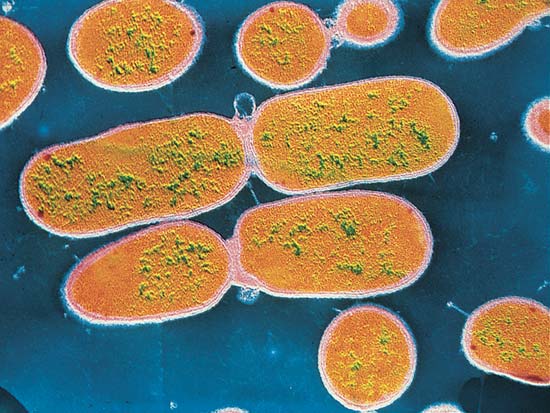


Asexual reproduction like mitosis produces
Two offspring cells with the same genetic material as the parent cell.
Two offspring cells with half genetic material as the parent cell.
Four offspring cells with the same genetic material as the parent cell.
Four offspring cells with half the genetic material as the parent cell.

A mode of reproduction in which an organism arises from two organisms and inherits half of its DNA from each parent
Sexual Reproduction
Asexual Reproduction
Cloning
Fragmentation

An octopus egg cell contains 16 chromosomes. How many chromosomes will be in a diploid body cell?
32
8
16
46

These puppies belong to the same parents, but do not resemble either of the parents or each other. What is a possible reason for this
They reproduced sexually.
They reproduced asexually.
They grew up in different environments.
They have been produced at different times.

It important for gametes to be haploid cells so that...
when fertilization takes place, the resulting zygote will have the correct number of chromosomes.
just kidding; it's not that important.
they don't become cancer cells.
the organism can reproduce asexually.


Fruit fly body cells have 8 chromosomes. After mitosis you would expect the resulting fruit fly daughter cells to have… chromosomes.
16
8
46
4
In mitosis the two resulting cells are
Different from the starting cell and identical to each other
Identical to the starting cell and different from each other
Different from the starting cell and different from each other
Identical to the starting cell and identical to each other



