Wayground logo

Free Printable Worksheets

Font size

S
M
L
XL
Worksheets

Third Summative Test (Social Studies 4)

Total questions: 32

Worksheet time: 8hrs 0mins

Name
Class
Date
1.
Which of these characteristics best describes a capitalist economy?
a)
Everything is shared equally among the citizens
b)
Factories, equipment, and other means of production are all privately owned
c)
The middle class must work in agriculture or industry
d)
The government redistributes all of the resources to the citizens  
2.
The Cold War was a hostile but non-violent struggle for power between which two countries?
a)
The United States and Germany
b)
The Soviet Union and Germany
c)
The United States and Japan
d)
The United States and The Soviet Union
3.
A system that uses a command economy,  a single political party system, and a philosophy of equal sharing.
a)
capitalism
b)
antisocialism
c)
communism
d)
imperialism
4.
What is an agreement among nations to defend one another?
a)
World War I
b)
nationalism
c)
alliance
d)
isolationism
5.
Which war was the first to attribute to the spread of Communism, but no war was actually fought?
a)
Vietnam
b)
Korea
c)
Cold War
d)
Afghanistan
6.

a natural barrier separating Europe and Asia

a)

Pyrnees Mountains

b)

Alps

c)

Ural Mountains

d)

Aegean Sea

7.

common European currency

a)

loire

b)

euro

c)

Mount Blanc

d)

Eurasia

8.

Which of the following was NOT an achievement of the Sumerians?

a)

cuneiform

b)

alphabet

c)

wheeled cart

d)

boat sail

9.

What geographic feature(s) was/were extremely important to Sumerian farming?

a)

Taurus and Zagros mountains

b)

Syrian Desert

c)

Sinai Peninsula

d)

Tigris and Euphrates rivers

10.

What was the role of priests in Sumerian civilization?

a)

Lead the economy

b)

Introduce new technology

c)

Communicate with gods

d)

Run farms

11.

How did a steady food supply affect the development of Sumerian cities?

a)

It allowed people to stay in one place to create a civilization

b)

It made it more difficult for people to travel.

c)

It ruined the quality of the land.

d)

It made living in cities unnecessary.

12.

Why were people in the Fertile Crescent able to trade with others in the area?

a)

They had extra food

b)

They ate everything they grew

c)

They spent all their time farming

d)

They lived close to one another

13.

Who were the first group of people to live in Mesopotamia?

a)

Akkadians

b)

Babylonians

c)

Assyrians

d)

Sumerians

14.

Which group of people held power first in Mesopotamia?

a)

priests

b)

farmers

c)

scribes

d)

soldiers

15.

The early people of Mesopotamia used what form of technology to control the flooding of the rivers?

a)

chariot

b)

irrigation canal

c)

bow and arrow

d)

boat

16.

What is a large temple found in Sumerian cities intended to be used for worship of the gods?

a)

pyramid

b)

ziggarat

c)

irrigation canal

d)

bronze sculpture

17.
What was the main religion of the Sumerians?
a)
Monotheism
b)
Christianity
c)
Polytheism
d)
Judaism
18.

What is the term for a city whose ruler controls all the surrounding territory?

a)

City-State

b)

Nation-state

c)

Villiage

d)

Culture

19.

What is a Pharaoh?

a)

emperor

b)

King only

c)

God only

d)

God and king

20.

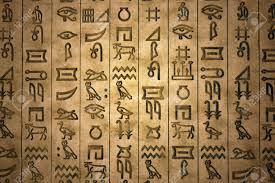
What is this system of writing called?

a)

calligraphy

b)

Hieroglyphs

c)

Cuneiform

d)

Alphabet

21.
What happened to wealthy Egyptians after they died?
a)
They were mummifed
b)
They were buried in a casket
c)
They floated down the Nile River
d)
They were burned
22.
Egypt is in
a)
Antrartica
b)
Asia
c)
Africa
d)
Europe
23.
Which of the following beliefs was central to Egyptian religion?
a)
the afterlife
b)
the pyramids
c)
the pharaohs
d)
the heavens
24.
Why were tombs filled with art, jewelry, and other treasures?
a)
The tombs served as museums.
b)
The tombs were the private storage rooms fo the pharaoh.
c)
Egyptians believed tombs to be the safest places in the kingdom.
d)
Egyptians believed the dead (ka) enjoyed such materials in the afterlife.
25.
In the Egyptian social order, which class was a part of the bureaucracy which helped the pharaoh run the government and temples?
a)
nobles
b)
scribes
c)
craftspeople
d)
servants
26.
One of Egypt’s most important defenses against enemy invaders was
a)
the large city walls
b)
its natural envioronment
c)
their superior weapons
d)
the protection of gods
27.
What is the name of the important river found in Egypt?
a)
Tigris
b)
Amazon
c)
 Nile
d)
Euphrates
28.
The Egyptians built the pyramids to 
a)
Keep people employed.
b)
Give thanks to the Nile. 
c)
Make use of their machines.
d)
Bury their pharaohs. 
29.
The earliest written communication was through _______________, or picture symbols.
a)
alphabet
b)
pictographs
c)
scribes
d)
epics
30.
Among the contributions of the Sumerians to modern society was the _____________, and the first vehicles to use it, such as carts and wagons.
a)
wheel
b)
axle
c)
tires
d)
automobile
31.

Compare and contrast Ancient Mesopotamia and Ancient Egyptian in terms of geography, culture, and/or politics. (10 points)

4 lines
32.

Compare and contrast Western and Eastern Europe in terms of geography, culture, and/or politics. (10 points)

4 lines