
 Worksheets
The Trans-Atlantic Slave Trade through African Independence
Total questions: 30
Worksheet time: 15mins
Which European country was the first to trade with Africans?
Portugal
Spain
Germany
France
Which European country was a significant colonizer in Africa?
Great Britain
Finland
Greece
Sweden
Who was absent during the discussions at the Berlin Conference of 1885?
Representatives of African nations
Wealthy European businessmen
European heads of state
European ambassadors and diplomats
Which European country colonized Egypt?
Great Britain
Netherlands
Portugal
Spain
Which African country was never colonized?
Ethiopia
Egypt
South Africa
Nigeria
Which European nation was the first to engage in the slave trade with West and Central Africa?
Portugal
Italy
France
Spain
What is the Middle Passage?
Part of the transatlantic slave trade that transported slaves across the Atlantic to America
Part of the European colonization where European countries divided Africa for conquest
Part of the trans-Saharan slave trade that transported slaves across the Sahara
Part of the salt-for-gold trade where the Soninke people levied a tax
In 1957, a leader named Kwame Nkrumah convinced the British to allow the colony of Gold Coast to vote on independence. What is this place called now?
Ghana
Madagascar
Togo
Benin
How did the conquerors justify the enslavement of African people?
They believed that non-Christian black people were not truly human.
They believed that hard work was good for the slaves.
They believed that they would one day free the slaves.
They believed that life as a slave was better than life in Africa.
Which cash crop was the main motivation for the enslavement of people to work in the Caribbean?
Sugarcane
Tobacco
Wheat
Pineapple
Approximately what percentage of slaves died during the Middle Passage?
20%
50%
75%
90%
What was an impact of the Atlantic slave trade on Africa?
Corrupt leaders were sold to Europeans so that a new generation could take control
Many families were separated
A large percentage of young men and women were abducted.
Weapons traded for people exacerbated conflicts among Africans

The effects of the Atlantic slave trade affected not only the slaves, but also...
the economy and history of the world
the amount of sugar sold
the number of slaves sold
the number of slaves killed

When did the Atlantic slave trade begin?
1400s
1500s
1600s
1700s

What did Africans believe would happen if they committed suicide or died of hunger?
Their souls would go to heaven
Their souls would return to Africa
Their souls would find peace.
Their souls would become part of the ship

How did the Atlantic slave trade affect the future of Africa?
Africa's economy collapsed
African villages ceased to exist
Africa's population increased
Africans were regarded as equal to Europeans

How was the enslavement of Africans justified?
They claimed that Africans were biologically inferior
They claimed that Africans were biologically superior
They claimed that Africans were cannibals
They claimed that Africans were vegetarians

From which country did South Africa gain its independence?
Great Britain
France
Germany
Portugal

Under the apartheid regime, what could a black person do?
work as a laborer
marry a white person
attend university
protest against the government

Even after the end of apartheid, what problems remained?
Laws that treat whites better than blacks
Income inequality between blacks and whites
An unfair tax system
Blacks forced to live in certain areas

What did F.W. de Klerk do for South Africa?
He started apartheid.
He imprisoned Nelson Mandela.
He fought for South Africa's independence.
He helped to end apartheid.

What should a black South African do during apartheid?
carry a passbook
see a doctor
vote for government officials
attend a white school

Who was the first black president of South Africa?
F.W. de Klerk
Nelson Mandela
Jomo Kenyatta
Kwame Nkrumah
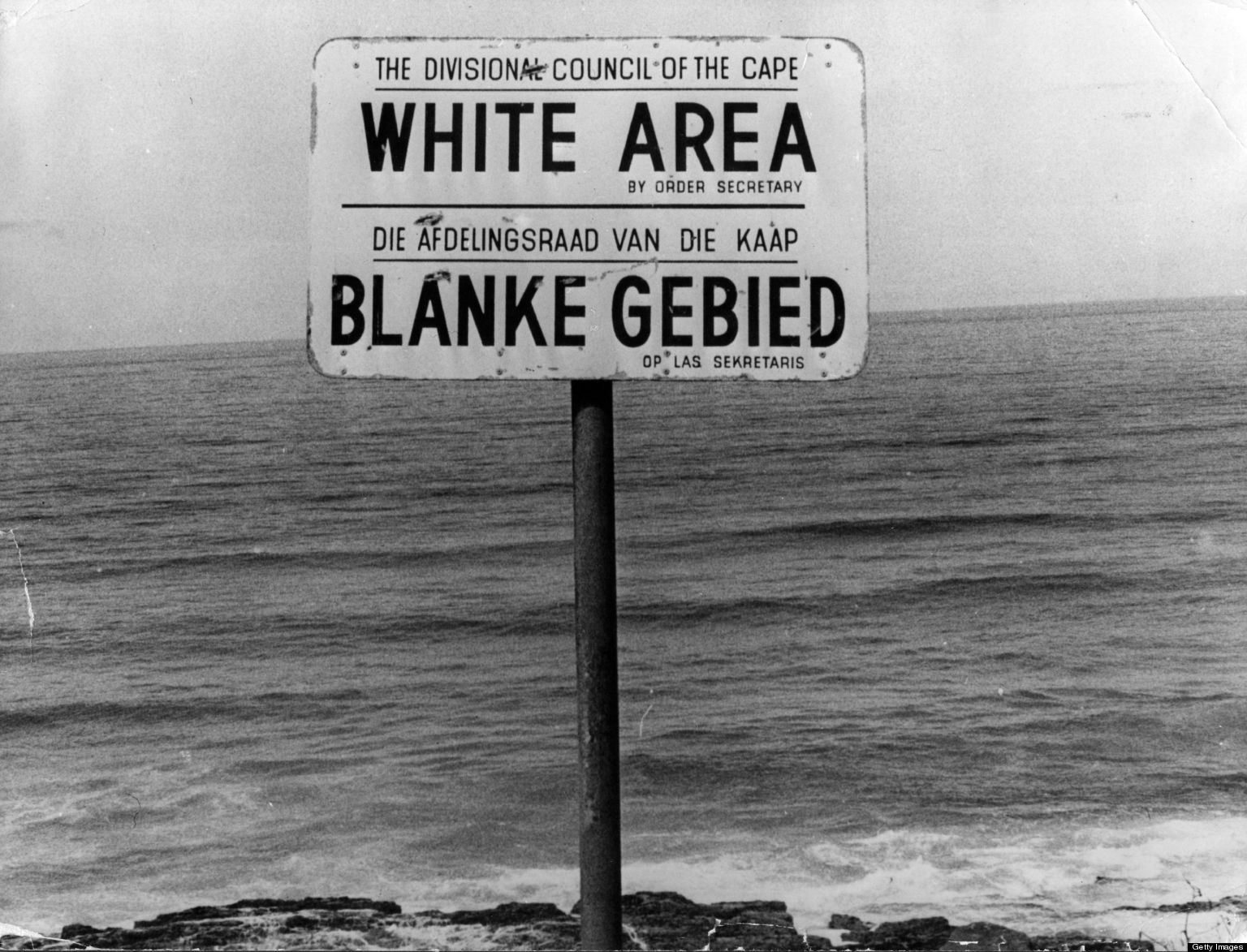
In which African country could you see this sign in 1975? (Click on the text to view the image)
Namibia
Egypt
United States
South Africa
What does the Afrikaans term Apartheid mean?
A state of being apart
Separate but equal
Equality for all
Racism

What is the goal of the African National Congress (ANC)?
Attract more Europeans to the country to oppress black people
Promote racial segregation
Unite South Africans to fight for the equality of black South Africans
Expel Europeans from their homeland

What percentage of South Africans were black when the country became independent?
25%
40%
50%
70%

What was Nelson Mandela's attitude towards people who supported the apartheid laws in South Africa?
he believed they should be punished for their actions
he wanted to unite all races in South Africa
he wanted to hand these leaders over to the United Nations
he deported these leaders from the country
What did Kisa De Klerk and Nelson Mandela share together?
Mandela's release
Nobel Peace Prize
Mandela was elected President
Mandela's new marriage
Who was the first Prime Minister and President of Ghana?
Kwame Nkrumah
Nelson Mandela
Robert Mugabe
Mohandes Gandhi

