wayground logo

Free Printable Worksheets

Font size

S
M
L
XL
Worksheets

IIT-JEE & NEET LEVEL - 13 (8-O)

Total questions: 100

Worksheet time: 2hrs 40mins

Name
Class
Date
1.
This is the branch of biology that deals with the relations of organisms to one another and to their physical surroundings.
a)
Physics
b)
Ecology
c)
Chemistry
d)
Psychology
2.
What is the term used to describe all living things in an ecosystem?
a)
Biotic Factors
b)
Abiotic Factors
c)
Environmental Factors
d)
Population
3.
What is the term used to describe all non-living things in an ecosystem?
a)
Biotic Factors
b)
Abiotic Factors
c)
Environmental Factors
d)
Population
4.
These are organisms that creates their own food such as plants and trees.
a)
Population
b)
Community
c)
Producers
d)
Consumers
5.
These are a group of organisms that belong to the same species.
a)
Population
b)
Community
c)
Producers
d)
Consumers
6.
These are different groups of organisms that belong to the same species (Example: rats, rabbits, snakes)
a)
Population
b)
Community
c)
Producers
d)
Consumers
7.
When a plant is eaten by a grasshopper, the grasshopper is called
a)
Producer
b)
Primary consumer
c)
Secondary consumer
d)
Tertiary consumer
8.
When a plant is eaten by a caterpillar and the caterpillar is eaten by a frog, the frog belongs to
a)
Producer
b)
Primary consumer
c)
Secondary consumer
d)
Tertiary consumer
9.
When the animal dies, what do you call those organisms that break them down?
a)
Producers
b)
Decomposers
c)
Consumers
d)
None of the choices
10.
What do you call those organisms that feed on dead plants and animals? An example of these are mushrooms
a)
Bacteria
b)
Grass
c)
Virus
d)
Fungi
11.
Which among the following can feed on deers?
a)
boar
b)
tiger
c)
horse
d)
squirrel
12.
Which of the following can feed on snakes?
a)
frog
b)
chicken
c)
eagle
d)
cow
13.

Where does the food chain START?

a)

with consumers that eat grass

b)

with the sun giving energy to producers

c)

with the sun giving energy to consumers

d)

with consumers eating other consumers

14.

Which of the following is not part of the classification community?

a)

Fox

b)

Tree

c)

Sun

d)

Bear

15.
An individual living thing is a/an __________.
a)
habitat
b)
ecosystem
c)
organism
d)
population
16.
The place where an organism lives is its _________.
a)
habitat
b)
abiotic
c)
ecosystem
d)
community
17.
All of the nonliving parts of an ecosystem are _______.
a)
biography
b)
biotic
c)
abiotic
d)
biology
18.
All of the living and nonliving things in an area that interact with each other are called a/an ______.
a)
community
b)
habitat
c)
population
d)
ecosystem
19.
Carnivores, herbivores, omnivores, and scavengers are all examples of __________.
a)
producers
b)
consumers
c)
decomposers
d)
abiotic factors
20.

What happens to the amount of available energy in the pyramid as it moves up through the different levels?

a)

it increases

b)

it decreases

c)

it remains the same

d)

it decreases, then increases

21.
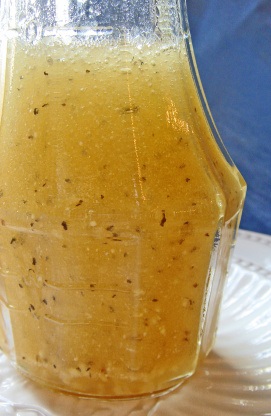
Italian Salad Dressing is a . . .
a)
heterogeneous mixture
b)
homogeneous mixture
c)
Pure Substance
d)
Compound
22.
Are made from a combination of 2 or more elements...
a)
Molecules
b)
Pure Substances
c)
Compounds
d)
Elements
23.
A mixture that is NOT evenly distributed is called ....
a)
Compounded
b)
Homogenous
c)
Heterogenous
d)
Salty
24.

Lead is an element. What word below describes an element?

a)

pure substance

b)

compound

c)

heterogenous mixture

d)

homogenous mixture

25.

What kind of substance is table salt (NaCl)?

a)

compound

b)

homogenous mixture

c)

heterogenous mixture

d)

pure substance

26.

Gold is an element. What would be another name you could call Gold?

a)

compound

b)

pure substance

c)

heterogenous mixture

d)

homogenous mixture

27.

The chemical symbol for Iron is Fe. What type of substance is Iron?

a)

pure substance

b)

compound

c)

heterogenous mixture

d)

homogenous mixture

28.

Dirt, grass, rocks can all be seen in soil. What type of mixture is soil?

a)

compound

b)

heterogenous mixture

c)

homogenous mixture

d)

pure substance

29.

Which elements are in baking soda (NaHCO)?

a)

Na, H, C, O

b)

NA, h, c, o

c)

na, hco

d)

homogenous mixture

30.

Are made from a combination of 2 or more elements in a constant ratio...

a)

Atome

b)

Mixture

c)

Compounds

d)

Elements

31.
A combination that can be separated by physical processes is a .....
a)
Atom
b)
Compound
c)
Element
d)
Mixture
32.
A mixture that is NOT evenly distributed is called ....
a)
Compounded
b)
Homogenous
c)
Heterogenous
d)
Salty
33.
A substance in which all the atoms are the same
a)
colloid
b)
homogeneous mixture
c)
solution
d)
element
34.
A mixture in which different materials can be identified easily
a)
element
b)
heterogeneous mixture
c)
homogeneous mixture
d)
solution
35.

Anything that has mass and volume is...

a)

Weight

b)

Volume

c)

Mass

d)

Matter

36.

Which type of matter is made of only 1 type of atom and can be found on the periodic table?

a)

Element

b)

Compound

c)

Homogeneous Mixture

d)

Heterogeneous Mixture

37.

Which type of matter has two or more substances that can be separated by physical means. Each of the substances can be seen.

a)

Homogeneous Mixture

b)

Diatomic Element

c)

Compound

d)

Heterogeneous Mixture

38.

Which type of matter is two or more substances that can be separated by physical means? It has a uniform appearance.

a)

Heterogeneous Mixture

b)

Compound

c)

Pure Substance

d)

Homogeneous Mixture

39.
This picture represents: 
a)
Element
b)
Compound
c)
Mixture of Elements
d)
Mixture of Compounds
40.
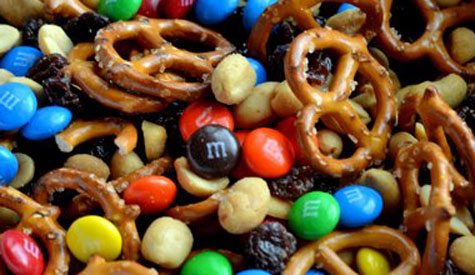
What type of mixture is this?
a)
homogenous mixture
b)
chemical
c)
heterogeneous mixture 
d)
solid mix
41.
What  is the formula to calculate heat energy required to raise the temperature of any substance?
a)
Q = m Cp ∆T
b)
Q = m Cp
c)
Q =  ½ m v
d)
m = Q Cp
42.
There are four cups of hot cocoa. The cup sizes are shown. The temperature of the cocoa in each cup is 25 degrees celsius. Which cup has the MOST thermal energy?
a)
Large cup (Trenta)
b)
Small cup (Tall)
c)
Venti
d)
All three are the same temperature so they have same thermal energy
43.
What would be the effect on the particles if more heat is supplied to the system?
a)
They would slow down
b)
They would stop moving
c)
They would speed up
d)
There would be no effect
44.
The specific heat is the amount of energy needed to raise the temperature one degree Celsius of 1 gram of a substance.
a)
True
b)
False
45.
Using the heat equation, what would the formula look like if we were solving for change in temperature?
a)
Q m = ∆T Cp
b)
Q / (m Cp)  =  ∆T
c)
Q m / Cp  =  ∆T
d)
m c Q  =  ∆T
46.
What is the symbol for Thermal Energy?
a)
Q
b)
T
c)
m
d)
Cp
47.
The symbol for specific heat is .......
a)
Cp
b)
Q
c)
m
d)
T
48.
Heat transfers from ______ objects to cold objects. 
a)
Cold
b)
Hot
c)
Convection
d)
Radiation 
49.
What type of heat transfer happens in liquids and gases?
a)
Conduction
b)
Convection
c)
Radiation
50.
Touching hot sand is.... 
a)
Conduction
b)
Convection
c)
Radiation 
51.

What is heat?

a)

a form of light

b)

a form of energy

c)

a measure of how old or cold something is

52.

What is temperature?

a)

a form of heat

b)

a form of energy

c)

a measure of how old or cold something is

d)

something to measure how hot or cold an object is

53.

Which is NOT a heat source?

a)

the Sun

b)

iron

c)

oven

d)

pot

54.

What happens when something gains heat?

a)

it becomes hotter

b)

it becomes colder

55.

What happens when something gains heat?

a)

it becomes hotter

b)

it becomes colder

56.

What happens during heat gain?

a)

the object will expand

b)

the object will contract

57.

Which of the following shows heat gain?

a)

water turning into ice

b)

shivering in a cold room

c)

ice cream melting under the sun

d)

hot bowl of soup became room temperature

58.
A jacket is a good example of an . . .
a)
Insulator
b)
Investigator
c)
Insider
d)
Interrogator
59.
Thermal energy always moves from ___________ to __________.
a)
Hot to Hot
b)
Cold to hot
c)
Warmer to cooler
d)
Cooler to warmer
60.
Why does warm air rise and cool air sink?
a)
Warm air is less dense than cooler air.
b)
Warm air is more dense than cooler air.
c)
Warm air weighs less than cooler air.
d)
Warm air weighs more than cooler air. 
61.
Find the median of these numbers:
2, 3, 4, 5, 5, 7
a)
4
b)
5
c)
4.5
d)
6
62.
If you score 76, 85, 97, and 83 on your math tests, what would your median score be? 
a)
84
b)
90
c)
85
d)
88
63.
A data set can have more than one median?
a)
True
b)
False
64.
A data set can have more than one mode
a)
True
b)
False
65.
What is the range?
a)
average
b)
biggest-smallest
c)
the middle #
d)
# happening the most
66.

What is the mode?

a)

the number that occurs the most often

b)

the average

c)

the largest number minus the smallest number

d)

the middle number

67.
What is the mode of the dot plot?
a)
8
b)
9
c)
1
d)
2
68.

The dot plots show the heights of sunflowers grown in two different plots on a farm.

Which plot has the higher mean height?

a)

Plot A

b)

Plot B

69.

For Zip Adventures, what percent of the data falls between 50 and 60?

a)

25%

b)

50%

c)

75%

d)

100%

70.

If this data was collected in June (30 days), how many days were there between 20 and 50 participants for Treetop Tours?

a)

23 days

b)

15 days

c)

8 days

d)

30 days

71.
a)
1
b)
2
c)
3
d)
4
72.
a)
Exponential, because the number of bacteria grow at a constant rate
b)
Linear, because the number of bacteria grow at a constant rate
c)
Exponential, because the number of bacteria grow at a varied rate
d)
Linear, because the number of bacteria grow at a varied rate
73.

What is the mean of this set of data?

2, 15, 7

a)

24

b)

3

c)

6

d)

8

74.
What is the range in gas mileage for cars?
a)
2
b)
3
c)
4
d)
6
75.
What is the range?
a)
average
b)
biggest-smallest
c)
the middle #
d)
# happening the most
76.
Find the range.
5, 15, 10, 20, 15, 10, 15
a)
5
b)
10
c)
15
d)
13
77.

What is data?

a)

Information coming from observations, counts, measurements or responses.

b)

The science of collecting, organising, analysing, and interpreting data in order to make decisions.

c)

A numerical description of a population characteristic.

d)

A numerical description of a sample characteristic.

78.

Identify Mode from the following data:

22,38,56,56,56,62,85,99

a)

22

b)

56

c)

85

d)

99

79.

Hypothesis testing is an important step in

a)

descriptive statistics

b)

inferential statistics

c)

both

d)

none of the two

80.

In a bell shaped normal distribution curve

a)

mean,median and mode will be the same

b)

mean is greater than median

c)

mean is less than median

d)

mode is zero

81.

Determine which is perfect square?

a)

54

b)

36

c)

21

d)

43

82.

determine which is square root of 144

a)

11

b)

10

c)

12

d)

14

83.

 32213232^2-13^2  

a)

855

b)

456

c)

988

d)

856

84.

 529\sqrt{529}  

a)

43

b)

28

c)

15

d)

23

85.

 92=189^2=18  True or false?

a)

True

b)

False

86.

 144-\sqrt{144}  

a)

12

b)

-12

c)

-72

d)

none of the above (imaginary number) 

87.

 62-6^2  = ? 

a)

36

b)

-36

c)

12

d)

-12

88.

 (6)2\left(-6\right)^2  = ?

a)

12

b)

-12

c)

-36

d)

36

89.

 (1681)  = ?\sqrt{\left(\frac{16}{81}\right)}\ \ =\ ?  

a)

 827\frac{8}{27}  

b)

 89\frac{8}{9}  

c)

 49\frac{4}{9}  

d)

 43\frac{4}{3}  

90.

Solve for x when  x3=18x^3=\frac{1}{8}  

a)

2

b)

 164\frac{1}{64}  

c)

 13\frac{1}{3}  

d)

 12\frac{1}{2}  

91.
23 = ?
a)
5
b)
8
c)
6
d)
9
92.
32 = ?
a)
6
b)
5
c)
9
d)
8
93.
72= ?
a)
49
b)
14
c)
7
d)
9
94.
33 = ?
a)
27
b)
9
c)
6
d)
15
95.
√25
a)
5
b)
50
c)
15
d)
3
96.
∛216
a)
6
b)
72
c)
108
d)
4
97.
∛1
a)
1
b)
3
c)
4
d)
2
98.
What is the square root of 361
a)
12
b)
15
c)
17
d)
19
99.
112
a)
132
b)
144
c)
121
d)
22
100.
–√25
a)
5
b)
-5
c)
±5
d)
None