wayground logo

Free Printable Worksheets

Font size

S
M
L
XL
Worksheets

IIT-JEE & NEET LEVEL - 8 (7-T)

Total questions: 100

Worksheet time: 2hrs 40mins

Name
Class
Date
1.

Which one of following is not sense organ?

a)

Hand

b)

teeth

c)

Eye

d)

Nose

2.

which of the following is not part of nose?

a)

Nasal cavity

b)

Nostril

c)

Nerve

d)

Palate

3.

Which of below options are internal organs

a)

Lungs

b)

Bones

c)

Liver

d)

Brain

e)

Kidneys

4.

An human skeleton, a framework of bones,contains

a)

208 bones

b)

22 bones

c)

206 bones

d)

200 bones

5.

What is the energy source needed for photosynthesis to occur.

a)

sugar

b)

water

c)

sunlight

d)

A Drake soundtrack

6.

What is the plant organelle called that performs photosynthesis

a)

Chloroplast

b)

Mitochondria

c)

Nucleus

d)

DNA

7.

What color is chlorophyll

a)

purple

b)

red

c)

blue

d)

green

8.

Carbon Dioxide enters the plant through openings on the underside of their leaves called

a)

Stomata

b)

Chloroplasts

c)

Autotrophs

d)

Chlorophyl

9.

Tongue is the fleshy sense organ and it helps to sense different tastes.which of the below options is not taste.

a)

Sour

b)

Sweet

c)

Water

d)

Bitter

e)

Salty

10.
Which organ of the excretory system stores urine until the body is ready to eliminate it?
a)
ureters
b)
urethra
c)
urinary bladder
d)
urea
11.
Under normal conditions, which of the following substances is found in urine?
a)
blood cells
b)
protein
c)
glucose
d)
urea
12.
Which excretory organ eliminates water and some chemical wastes in perspiration?
a)
lungs
b)
skin
c)
liver
d)
kidneys
13.
What function do the kidneys perform?
a)
eliminate carbon dioxide
b)
supply oxygen to body cells
c)
remove urea and excess water
d)
play a role in gas exchange
14.
The process of removal of the body’s wastes is called
a)
gas exchange.
b)
respiration.
c)
excretion.
d)
filtration.
15.
Using the picture, what is the structure of A?
a)
ureter
b)
kidney
c)
urinary bladder
d)
urethra
16.
Using the picture, what is the function of structure A?
a)
Carries urine away from the kidneys
b)
Stores urine
c)
Eliminates urea, excess water, and some other materials
d)
Carries urine away from body and eliminates it
17.
Using the picture, what is the function of structure C?
a)
Carries urine away from the kidneys
b)
Stores urine
c)
Eliminates urea, excess water, and some other materials
d)
Carries urine away from body and eliminates it
18.
Use the diagram, what is structure B?
a)
urethra
b)
kidney
c)
ureter
d)
urinary bladder
19.
Use the diagram, what is structure C?
a)
urethra
b)
kidney
c)
ureter
d)
urinary bladder
20.
Use the diagram, what is structure D?
a)
urethra
b)
kidney
c)
ureter
d)
urinary bladder
21.

A green powder is heated & a gas is given off while it turns to a black solid. This describes

a)

Physical Change

b)

Chemical Change

c)

Change in State

d)

Change in Temperature

22.

A Chemical Change is also known as what?

a)

Physical Change

b)

Physical Property

c)

Chemical Reaction

d)

Chemical Property

23.
Anything made by combining two or more different things is called ___
a)
a solvent
b)
a solution
c)
a chemical change
d)
a mixture
24.
The science of different kinds of matter, and how that matter can change, is called ___
a)
physics
b)
baking
c)
chemistry
d)
biology
25.

A ______ change can be undone and generally refers to a change of state.

a)

Reversible

b)

Irreversible

26.

An _______ change cannot be undone because the change is permanent and generally creates a new substance.

a)

Reversible

b)

Irreversible

27.

Reversible changes are also called

a)

Physical changes

b)

Chemical changes

28.

Irreversible changes can also be called

a)

Physical changes

b)

Chemical changes

29.

Burning is an example of (a)   change.

30.

Fuels are _____ that are very good at burning.

a)

Substances

b)

Cars

31.

Water can't be used on

a)

Wood.

b)

Paper.

c)

Flammable liquids, like oil.

32.

Which type of change is this?

a)

Reversible

b)

Irreversible

33.

Which type of change is this?

a)

Reversible

b)

Irreversible

34.

Which type of change is this?

a)

Reversible

b)

Irreversible

35.

Dissolving sugar in water is ..............

a)

desirable change

b)

Chemical change

c)

Physical change

d)

none of these

36.

Condensation of steam is not a chemical change.

a)

False

b)

True

c)

None of these

37.

Which of the following is evidence of a physical change?

a)

New substance

b)

Shape Change

c)

Light produced

d)

Gas released.

38.

It is an example of

a)

Chemical Change

b)

Physical Change

c)

Reversible Change

d)

Periodic Change

39.

Burning of candle flame and melting of wax are example of

a)

Physical Change

b)

Chemical Change

c)

Desirable Change

d)

Fast Change

40.

Earthquakes are example of

a)

Fast Change

b)

Slow Change

c)

Desirable Change

d)

Chemical Change

41.
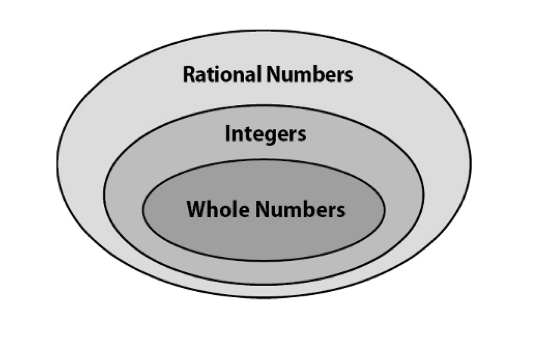
Where would you place -6?
a)
In the whole number circle because it's a whole number, integer, and rational number.
b)
In the integer circle because it's an integer and rational number only.
c)
In the rational circle because it's only a rational number.
d)
I'm not sure because I don't know what rational means.
42.
Does the graphic organizer correctly group the numbers?
a)
Yes
b)
No
43.
A rational number can be written as a fraction.
a)
True
b)
False
44.
Numbers like -3, -2, -1, 0, 1, 2, 3 are called
a)
whole numbers
b)
integers
c)
rational numbers
d)
natural numbers
45.
0.8 is a rational number
a)
True
b)
False
46.
0 is a whole number
a)
True
b)
False
47.
-9 is an integer
a)
True
b)
False
48.
6 is a rational number
a)
True
b)
False
49.
Classify the Number: -23
a)
Rational
b)
rational, integer
c)
integer
d)
rational, whole
50.
How would 5/9 be classified?
a)
rational 
b)
whole and integer
c)
only integer
d)
only whole
51.
Solve
a)
6.15
b)
- 61.5
c)
55.5
d)
not here
52.
Solve
a)
4.74
b)
5.74
c)
.74
d)
not here
53.
Solve
a)
.2352
b)
23.52
c)
235.2
d)
not here
54.
Solve
a)
1   3/4
b)
28/45
c)
15/32
d)
not here
55.
A worker in a silver mine descends 60 feet. Use an integer to represent the change in the worker's position.
a)
60
b)
−60 feet
c)
60 feet
d)
−60
56.
Integers are ____________ rational.
a)
always 
b)
sometimes 
c)
never
57.
0.33333 is considered a ________ decimal
a)
repeating
b)
terminating
58.
A fraction is which type of number?
a)
Rational
b)
Irrational
c)
Integer
d)
Whole
59.
Order from greatest to least: -12, 15, -1, 3, 
a)
15, 3, -1, -12
b)
15, 3, -12, -1
c)
-1, -12, 3, 15
d)
-12, -1, 3, 15
60.
Which number is farthest from 0?
a)
-6
b)
-4
c)
3
d)
5
61.
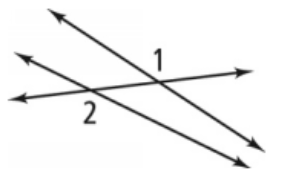
What kind of lines are shown?
a)
parallel lines
b)
perpendicular lines
c)
straight lines
d)
open lines
62.
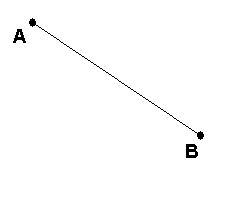
What does the image show?
a)
a line
b)
a line segment
c)
a ray
d)
a point
63.
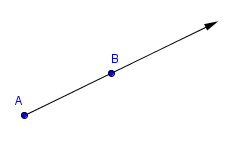
What does the image show? 
(The whole thing, not just the points)
a)
a ray
b)
a line
c)
a line segment
d)
a point
64.
What does this image show?
a)
parallel lines
b)
perpendicular lines
c)
intersecting lines
d)
line segments
65.
What type of angle is this? 
a)
acute
b)
obtuse
c)
right
66.

 1 \angle1\  and  2\angle2    are __.

a)

Alternate Interior Angles

b)

Alternate Exterior Angles

c)

Same-side Interior Angles

d)

Corresponding Angles

e)

None of these

67.

 1 \angle1\  and  2\angle2    are __.

a)

Alternate Interior Angles

b)

Alternate Exterior Angles

c)

Same-side Interior Angles

d)

Corresponding Angles

e)

None of these

68.

 8\angle8  and  6\angle6   are __.  

a)

Alternate Interior Angles

b)

Alternate Exterior Angles

c)

Same-side Interior Angles

d)

Corresponding Angles

e)

None of these

69.

 1 \angle1\  and  2\angle2    are __.

a)

Alternate Interior Angles

b)

Alternate Exterior Angles

c)

Same-side Interior Angles

d)

Corresponding Angles

e)

None of these

70.

What does the image show?

a)

a line

b)

a line segment

c)

a ray

d)

a point

71.

What does the image show?

a)

a line

b)

a line segment

c)

a ray

d)

a point

72.

What does the image show?

a)

a right angle

b)

an acute angle

c)

an obtuse angle

73.

What does the image show?

a)

a right angle

b)

an acute angle

c)

an obtuse angle

74.

What does the image show?

a)

a right angle

b)

an acute angle

c)

an obtuse angle

75.

What does the image show?

a)

perpendicular lines

b)

intersecting lines

c)

parallel lines

76.

What does the image show?

a)

perpendicular lines

b)

intersecting lines

c)

parallel lines

77.

What does the image show?

a)

line MN, NM

b)

line segment MN, NM

c)

ray MN, NM

78.

An angle whose magnitude lies between 180⁰ and 360⁰ is called_______

a)

Obtuse Angle

b)

Acute angle

c)

Reflex angle

d)

Complete angle

79.
α and β are supplementary angles.  If α = 130⁰, then β = _______
a)
50⁰
b)
40⁰
c)
-40⁰
d)
None of the above
80.
a)
Adjacent Angles
b)
Linear Pair of angles
c)
Corresponding angles
d)
Alternate Angles
81.

What is the energy source needed for photosynthesis to occur.

a)

sugar

b)

water

c)

sunlight

d)

A Drake soundtrack

82.

What is the plant organelle called that performs photosynthesis

a)

Chloroplast

b)

Mitochondria

c)

Nucleus

d)

DNA

83.

What color is chlorophyll

a)

purple

b)

red

c)

blue

d)

green

84.

What is made by plants during photosynthesis that can be used for energy by both plants and animals

a)

Salt

b)

Tacos

c)

Sugar (glucose)

d)

Carbon Dioxide

85.

Reactants (ingredients) needed by the plant to do photosynthesis include sunlight and

a)

Sugar and oxygen

b)

oxygen and water

c)

Autotrophs

d)

Carbon Dioxide and water

86.

Carbon Dioxide enters the plant through openings on the underside of their leaves called

a)

Stomata

b)

Chloroplasts

c)

Autotrophs

d)

Chlorophyl

87.

Gas that you are breathing in right now that is made from plants

a)

Carbon Dioxide

b)

Water

c)

Oxygen

d)

Glucose

88.

What organelle in your cells releases energy from sugars (glucose), made by the plant

a)

Chloroplasts

b)

Nucleus

c)

Vacuole

d)

Mitochondria

89.

What gas do animals breath out that plants can use for photosynthesis

a)

oxygen

b)

Nitrogen

c)

Hydrogen

d)

Carbon Dioxide

90.
What type of sugar molecule is produced by plants during photosynthesis?
a)
Oxygen
b)
Starch
c)
Glucose
d)
Water
91.
Organisms that are able to take inorganic raw materials and convert them into organic products to use for food are called
a)
Autotrophs
b)
Heterotrophs
c)
Decomposers
d)
Consumers
92.

Heat always travels from...

a)

Warm to cool

b)

Cool to warm

c)

Warm to warm

d)

Cool to cool

93.

A hot air balloon rising is an example of ...

a)

conduction

b)

convection

c)

radiation

d)

connection

94.

A snowman melting in the sun

a)

convection

b)

conduction

c)

radiation

d)

connection

95.

Eggs cooking in a frying pan

a)

convection

b)

conduction

c)

radiation

d)

connection

96.

Eggs cooking in a frying pan

a)

convection

b)

conduction

c)

radiation

d)

connection

97.

Heating a kettle on a hot stove (burner)

a)

convection

b)

conduction

c)

radiation

d)

connection

98.

A stove top will cook your food because of ___________.

a)

convection

b)

conduction

c)

radiation

d)

connection

99.

Thermal energy that is transferred from one substance to another.

a)

heat

b)

temperature

c)

thermal energy

d)

radiation

100.

Warming up near a campfire is an example of ...

a)

conduction

b)

convection

c)

radiation

d)

connection