
 Worksheets
chemistry form 4 chapter 2
Total questions: 41
Worksheet time: 23mins
Which of the following defines matter?
Anything that has mass and takes up space.
Anything that has density.
Mass over volume.
It doesn't matter.
The electron is the basic unit of matter.
True
False
In any given atom, there is an equal number of protons and neutrons.
True
False
An element's atomic number gives us which of the following:
Protons and neutrons
Neutrons and electrons
Protons and electrons
Number of orbitals
How is the atomic structure held together?
Gravity
Magnetic forces
Electric forces
Magic
The mass number of an element gives us which of the following:
Protons + Neutrons
Protons + Electrons
Electrons + Neutrons
Jimmy + Neutron
What is the BEST way to find the number of neutrons in an atom?
Look at the atomic structure
It is the same as the number of electrons
Subtract the atomic number from the mass number
Neutrons are not real
Chlorine has an atomic number of 17 and has 18 neutrons. What is it mass number?
35
18
17
1
An atom can only hold up to 2 electrons in its innermost orbital.
True
False
Which of the following best describes the octet rule?
Atoms are most stable with 8 electrons in its valence shell
Atoms are most stable with 8 orbitals
Atoms are most stable with 8 protons
Atoms are most stable with 8 electrons in its innermost shell
Subatomic particle with a negative charge
proton
electron
neutron
nucleus
Subatomic particle with no charge
proton
neutron
electron
nucleus
Subatomic particle with a positive charge
proton
neutron
electron
isotope
The smallest unit of matter that retains the identity of a substance
atom
isotope
proton
nucleus
electrons located on the last shell or energy level of an atom
isotopes
valence electrons
plasma
element
each of two or more forms of the same element that contain equal numbers of protons but different numbers of neutrons
isotope
cohesion
molecule
compound
The nucleus of an atom consist of:
electrons
protons and electrons
protons and neutrons
neutrons and electrons
Which of the following is NOT an example of matter?
water
air
cake
sunlight


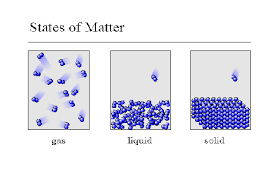

Particles of a liquid
are tightly packed together and stay in a fixed position.
are free to move around one another but still touch.
How many total hydrogen atoms are found in 2H2O?
5
4
2
0
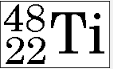
Isotopes of an element have a different number of...
Protons
Neutrons
Electrons
Mass
An atom has 12 protons and 13 neutrons in its nucleus. Which is the correct symbol?


Who discovered neutrons?
Neils Bohr
J.J. Thompson
James Chadwick
Ernest Rutherford
Fill in the blanks.
Natural Abundance is the _ _ _ _ e _ _ _ _ _ of isotopes present in a natural sample of element.
(a)

Relative Atomic Mass (RAM) can be calculated from the natural abundance of an element containing isotopes using the following formula (Refer Image)
Fill in the blanks.
Relative Atomic Mass is the percentage _ u _ of the Natural Abundance isotopes from an element.
(a)
A patient is diagnosed with a damage in the thyroid gland.
Which isotope is used to treat the patient?
Copper-64
Cobalt-60
Carbon-14
Iodine-131
Uranium-235 and Uranium-238 are isotopes.
Which statement is correct?
Uranium-235 is a non-metal and Uranium-238 is a metal
Both have the same number of neutrons
Uranium-235 is denser than Uranium-238
Both have the same number of electrons

