wayground logo

Free Printable Worksheets

Font size

S
M
L
XL
Worksheets

Atomic Structure Review

Total questions: 42

Worksheet time: 35mins

Name
Class
Date
1.

Subatomic particles with a negative charge

a)

Electrons

b)

Neutrons

c)

Protons

d)

Quarks

2.
Subatomic particles with a positive charge
a)
neutrons
b)
atomic mass
c)
protons
d)
isotopes
3.
Subatomic particles that are neutral in charge
a)
Neutrons
b)
Protons
c)
Nucleus 
d)
Electrons
4.
This is how you find the number of neutrons in an atom. 
a)
Subtract the atomic number from the atomic mass
b)
Subtract the atomic mass from the atomic number 
c)
Add the atomic mass to the atomic number 
d)
Divide the atomic mass by the atomic number 
5.
How many protons does an Oatom have?
a)
8
b)
24
c)
16
d)
When is lunch? 
6.

Found orbiting outside the nucleus, this subatomic particle has a negative charge.

a)

Neutron

b)

Proton

c)

Electron

d)

Idontknowatron

7.
If an atom has 3 electrons, how many protons does it have?
a)
1
b)
2
c)
4
d)
3
8.
What is the mass number?
a)
the number of protons
b)
the number of protons and neutrons
c)
the number of neutrons
d)
the number of protons and electrons
9.
Which is an electron?
a)
A
b)
B
c)
C
10.
What is found in the nucleus of atoms?
a)
Protons and electrons.
b)
Protons, neutrons, and electrons.
c)
Protons and neutrons.
d)
Neutrons and electrons.
11.
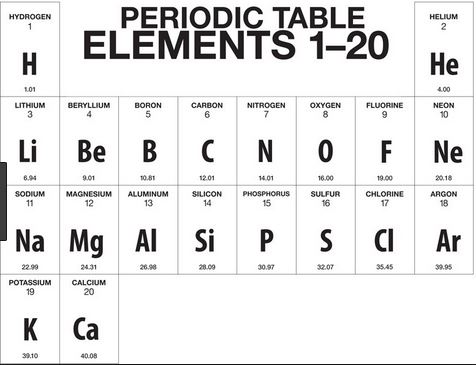
What is the name of this element?
a)
Helium
b)
Hydrogen
c)
Argon
d)
Silver
12.

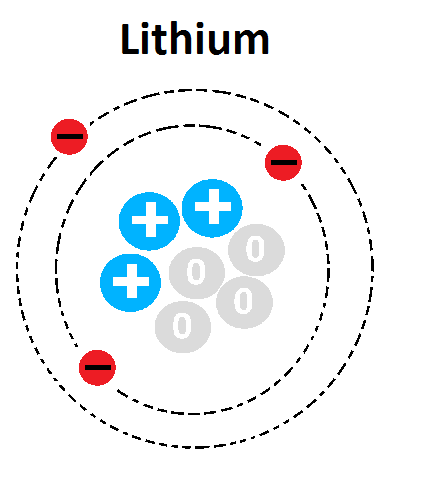
What element is represented in this Bohr Model?

a)

Carbon

b)

Hydrogen

c)

Aluminum

d)

Lithium

13.
What is the mass number of this atom?
a)
1
b)
3
c)
4
d)
7
14.
What group does this element belong to?
a)
Group 1: Alkali metals
b)
Group 18: Noble Gases
c)
Group 2: Alkaline-Earth Metals
d)
Group 17: Halogens
15.
How many valence electrons?
a)
2
b)
3
c)
5
d)
10
16.

In a Lewis Dot Model, how many dots would you put around carbon, a group 14 element?

a)

4

b)

6

c)

8

d)

18

17.

This could be the dot diagram of

a)

Mg

b)

Cl

c)

C

d)

O

18.

This is a correct dot diagram for neon (Ne)

a)

true

b)

false

19.

How many electrons should sodium, atomic number 11, have around its Lewis dot model?

a)

1

b)

2

c)

3

d)

4

20.

How many valence electrons does Aluminum Have?

a)

1 Valence electron

b)

2 Valence electron

c)

3 Valence electron

d)

4 Valence electron

e)

5 Valence electron

21.

How would you draw a Lewis dot diagram for Magnesium?

a)
b)
c)
d)
22.
Valence electrons are: 
a)
Electrons farthest away from the nucleus
b)
Electrons closest to the nucleus
c)
Electrons that just come and go - they don't stay with the atom
23.
Ions are: 
a)
atoms with a positive or negative charge
b)
atoms with no charge
c)
atoms with ONLY a positive charge
d)
atoms with ONLY a negative charge
24.
When an atom loses a valence electron, it becomes a(n) _____________ ion.
a)
positive
b)
negative
c)
neutral
d)
polyatomic
25.
Negative ions form when atoms _________ valence electrons.
a)
lose
b)
gain
c)
share
26.
all matter is made of what 
a)
energy 
b)
atoms 
c)
electrons 
d)
compounds 
27.
The positive particles of an atom are 
a)
electrons 
b)
positrons 
c)
neutrons 
d)
protons 
28.
an atom with atomic number 6 would have how many protons 
a)
6
b)
12
c)
3
d)
cannot be determined 
29.
Particles in an atom that are neutral and have no charge are 
a)
negatrons 
b)
electrons 
c)
neutrons 
d)
protons 
30.

Cations are ions with what kind of charge?

a)

positive

b)

negative

c)

neutral

31.

What type of elements form cations?

a)

metals

b)

nonmetals

c)

metalloids?

32.

Which of the following elements would form a cation? Choose all that apply.

a)

lithium (Li)

b)

Iron (Fe)

c)

Carbon (C)

d)

Hydrogen (H)

e)

Silver (Ag)

33.

How many electrons would beryllium lose when forming a cation?

a)

1

b)

2

c)

3

d)

4

34.

Which of the following will form an anion?

a)

Titanium

b)

Iron

c)

Calcium

d)

Sulfur

35.

Which of the following will form an anion?

a)

Oxygen

b)

Cobalt

c)

Strontium

d)

Cesium

36.
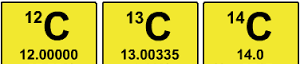
What do these isotopes of carbon all have in common?
a)
neutrons & mass number
b)
atomic number and neutrons
c)
atomic number and electrons
d)
protons, atomic number, and mass number
37.
How many neutrons does the isotope of lithium have?
a)
8
b)
3
c)
4
d)
5
38.
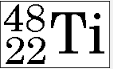
How many protons does this isotope of titanium have?
a)
48
b)
22
c)
26
d)
70
39.
What quantities vary between isotopes of an element?
a)
protons, electrons, and atomic mass
b)
protons, electrons, and atomic number
c)
neutrons and electrons
d)
neutrons and atomic mass
40.
How many neutrons in C-14?
a)
6
b)
7
c)
14
d)
8
41.
Isotopes are atoms of the same element with different #’s of __________ & therefore different __________.
a)
n0 ;  atomic #’s
b)
p+ ; atomic #’s
c)
e- ; atomic masses
d)
n0 ; atomic masses
42.
How many neutrons does an atom of the isotope Neon-22 have?
a)
12
b)
10
c)
22
d)
20