
 Worksheets
Ecology and Population Ecology
Total questions: 54
Worksheet time: 14hrs 30mins


Which of the following are density dependent factors?
competition for resources
predation
disease
natural disasters
Which of the following are examples of a density independent factors?
forest fire
seasonal cycles
storms
disease
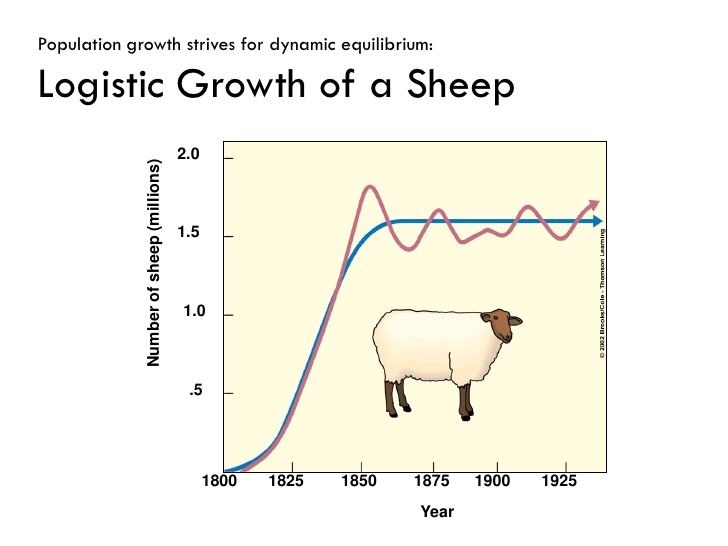
What point on the graph does the population slow down tremendously due to limiting resources as it approaches the carrying capacity?
A
B
C
D
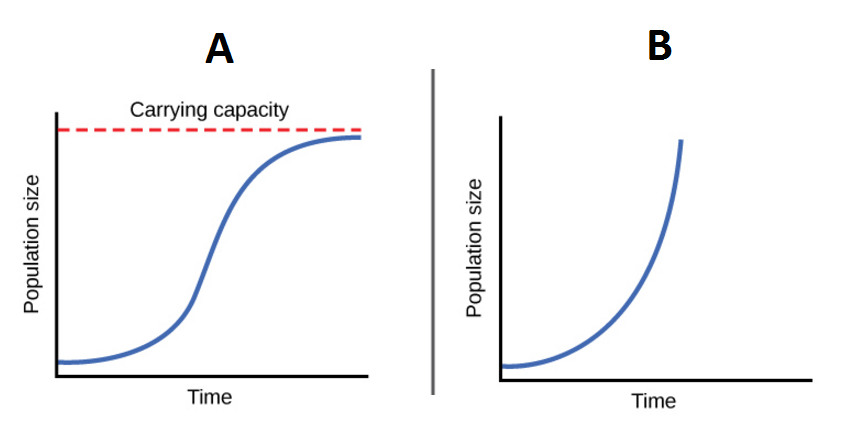
What type of growth model is shown in image A?
Exponential
Logistic
At carrying capacity, a population __________.
increases rapidly
increases slowly
decreases slowly
is in dynamic equilibrium


Which of these organisms is the secondary consumer?
Owl
Mouse
Grass
Grasshopper
Place the levels of environment in the correct order.
biome, biosphere, population, organism, ecosystem,community
organism, ecosystem, biosphere, population, community, biome
organism, population, community, ecosystem, biome, biosphere
population, community, organism, biome, ecosystem, biosphere
How much energy is transferred between trophic levels?
25%
20%
10%
90%

The removal of which of the following groups would cause an immediate decrease in the amount of energy flowing through the system?

The arrows represented most likely indicate
What converts nitrogen gas into a usable form for plants and animals?
bacteria
rain
fungi
car exhaust
What process occurs when dead plant and animal matter decomposes and nitrogen is released back into the atmosphere?
Assimilation
Fixation
Ammonification
Denitrification
Dead plants, animals, and animal waste are converted to ammonium by _____________________
plant roots
lightning
bacteria and fungi decomposers
denitrifying bacteria
Which nitrogen cycle process is occurring when plant roots absorb ammonium ions and nitrate ions for use in making molecules such as DNA, amino acids, and proteins?
nitrogen fixation
nitrification
denitrification
ammonification
assimilation
Which nitrogen cycle process is occurring when bacteria convert ammonium to nitrite and then into nitrate?
nitrogen fixation
nitrification
denitrification
ammonification
assimilation
Which nitrogen cycle process is occurring when nitrogen in plant or animal protein is converted to ammonium?
nitrogen fixation
nitrification
denitrification
ammonification
assimilation
Which of these nitrogen cycle processes converts atmospheric nitrogen to a soil form of nitrogen that is usable by plants?
nitrogen fixation
nitrification
denitrification
ammonification
assimilation
The reverse of photosynthesis - Sugars are used for metabolism and change “fuel” back into CO2.
Diffusion
Weathering
Decomposition
Respiration
Too much phosphorus in waterways (rivers, lakes) can lead to___________.
eutrophication
Nothing
Death
diseases
An algal bloom is the rapid growth of a population of
fungi
protozoans
algae
Once inorganic phosphate has been released by weather of rocks, which of the following might be it's next step in the phosphorus cycle?
it can become part of surface water and runoff into the ocean, and eventually become new rock at the bottom of the ocean through the process of sedimentation
it can become part of the soil and be taken up by plant roots and used to make lipids, ATP, nucleic acids and other cellular molecules
it can become part of groundwater and leech into the ocean, and eventually become new rock through the process of sedimentation
all of the answers are possible pathways for phosphorus
What is the original, and primary reservoir of inorganic phosphate (PO43-)in terrestrial ecosystems?
live plants and animals
groundwater
the atmosphere
rocks
Why is phosphorus important to biology?
it works alongside the nitrogen cycle to fertilize plants
it is the primary component of mountains, which serve as habitats for animals
it enhances decomposition of organic matter
it is a component of many biological molecules, such as nucleic acids, some lipids, ATP, and bony structures
Nitrogen and carbon are cycled on a global scale. Why does phosphorus cycling tend to occur more locally?
it primarily involves the weather of rocks, which are mostly stationary
it only involves land animals that cannot swim across oceans to transport the nutrient
it occurs in areas where cloud formation is low, so it rarely gets trapped in water vapors
all of the answers are correct



