Wayground logo

Free Printable Worksheets

Font size

S
M
L
XL
Worksheets

Ancient Greece

Total questions: 54

Worksheet time: 54mins

Name
Class
Date
1.
A great city in Greece, that had an Oligarchy type of Government, taught boys to be good soldiers, and took what they needed from neighbors.
a)
Sparta 
b)
Athens 
2.
A great city in Greece that had a Democracy for government, traded with other city-states, and participated in the assembly.
a)
Athens 
b)
Sparta 
3.
A Government by the people
a)
Democracy
b)
Oligarchy 
c)
Monarchy
d)
Tyranny 
4.
A Government with the power in the hands of a few wealthy people.
a)
Oligarchy 
b)
Tyranny
c)
Monarchy
d)
Democracy
5.
A single ruler who passes their reign on to their son
a)
Monarchy
b)
Oligarchy
c)
Tyranny
d)
Democracy
6.
A military leader seizing military power illegally
a)
Tyranny
b)
Oligarchy
c)
Monarchy
d)
Democracy
7.
They could own property, they went to school like the boys did, they live. The same simple life as the men
a)
Sparta Women
b)
Athens Women 
8.

True or false. Greece's natural barriers made it difficult for people to interact and form one large, unified country.

a)

True

b)

False

9.

The word "philosophy" comes from the Greek word meaning . . .

a)

lunch

b)

love of wisdom

c)

Sparta

d)

Zeus

10.
Which of the following is true about the empire of Alexander the Great?
a)
The empire was smaller than his father's.
b)
The empire was limited to the land around the Mediterranean.
c)
The empire included land in Asia, Europe, and Africa.
d)
The empire was along trade routes
11.
Greece was surrounded by water on 3 sides.  What is this landform called?
a)
an island
b)
a peninsula
c)
a port
d)
a natural harbor
12.
Who was given credit for unifying all of the Greek city-states?
a)
Homer
b)
Alexander
c)
Philip II
d)
Darius
13.
What does "Hellenistic" mean?
a)
a period of great achievements
b)
Greek-like
c)
an agreement
d)
rule by the people
14.
What was the religion of ancient Greece?
a)
Polytheism
b)
Judaism
c)
Hinduism
d)
Christianity
15.
Which was a result of the conquests of Alexander the Great?
a)
Greek culture was spread through North Africa and Asia.
b)
Gold and salt trade expanded throughout West Africa.
c)
Representative democracy was adopted.
d)
Islamic culture was spread throughout Europe.
16.
What is another name for a Greek city-state?
a)
Polling Place
b)
Acropolis
c)
Polis
d)
Oligarchy
17.
what is a hilltop in a Greek city state called? 

(It housed a fort and a temple to the city-state's local god or goddess)
a)
Agriculture
b)
Thermopylae
c)
Acropolis
d)
Ephor
18.
What is the name for thinkers who reflect on the meaning of life?
a)
Soldiers
b)
Philosophers
c)
Ephors
d)
Helots
19.
What was the large open area where city life was centered around called?
a)
Agora
b)
Acropolis
c)
Democracy
d)
Mall
20.
Which of the following describes Spartan women?
a)
They were treated harshly, almost like slaves.
b)
They mostly fought as soldiers alongside men.
c)
They were trained to build up their bodies and were allowed to own land.
d)
All of the above. 
21.
In Athens, wealthy boys…
a)
went to school to learn reading, writing, arithmetic, music, and physical education
b)
studied warfare and were placed in the army. They could retire at age 60.
c)
became farmers and grew food for the wealthy.
d)
were taught astronomy, geometry, and science.
22.

Which statement correctly describes a boys life in Athens and Sparta.

a)

Athenians went to school; Spartans served in the military

b)

Athenians studies combat; Spartans played sports

c)

Athenian boys lived in barracks; Spartans lived at home

d)

Athenian boys became citizens at 30; Spartans never became citizens.

23.

Greek civilization began in an area dominated by...

a)

mountains and lakes

b)

seas and mountains

c)

rivers and plains

d)

deserts and forests

24.

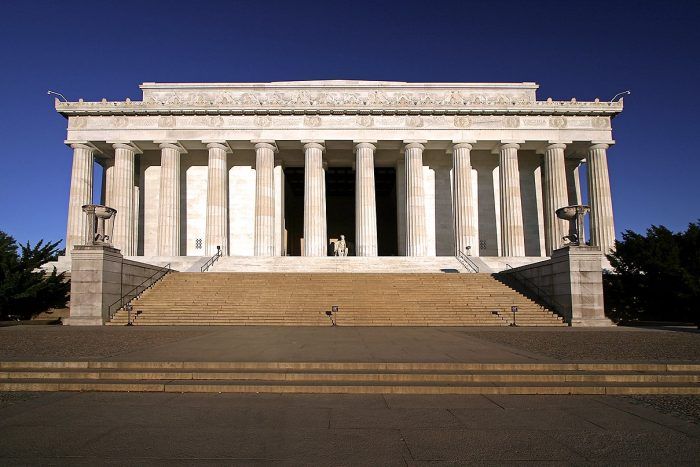
Which would be an example of Greek architecture?
a)
b)
c)
d)
25.

Who is the Greek god of the seas?

a)

Zeus

b)

Hades

c)

Poseidon

d)

Hermes

26.

Greece is made up of hundreds of islands

a)

True

b)

False

27.
If you wanted to visit Athens, where would you go?
a)
Western Asia, by the Caspian Sea
b)
Northern Europe, by the Baltic Sea
c)
Southern Europe, by the Mediterranean
d)
Western Europe, by the Atlantic Ocean
28.
If you wanted to debate with an Athenian philosopher, where would you go?
a)
The Parthenon
b)
The Festival of Dionysus
c)
The Temple of Athena
d)
The agora
29.
?
a)
Agora 
b)
Crete 
c)
Sparta 
d)
Parthenon 
30.
Macedonian king who conquered most of the known world. 
a)
Plato 
b)
Aristotle 
c)
Socrates 
d)
Alexander the Great 
31.
Land and jobs were scarce in Ancient Greece, so they set up ...
a)
colonies
b)
the internet
c)
farms
d)
all of the above
32.
The two main crops the Ancient Greeks grew were:
a)
corn & beans
b)
squash & quinoa
c)
olives & grapes
d)
bananas & coconut
33.
stories of the Ancient Greeks' gods & goddesses were called ________
a)
parables
b)
myths
c)
epics
d)
lullabies
34.
The great philosophers of Ancient Greece were:
a)
Socrates
b)
Plato
c)
Aristotle
d)
all three (Socrates, Plato, and Aristotle)
35.
The polis was different than a modern day city because it functioned like a _________
a)
tiny country
b)
tiny state
c)
tiny village
d)
tiny town square 
36.
What word best describes the land of the Greek peninsula?
a)
rocky and mountainous
b)
flat
c)
desert
d)
rolling plains
37.
The ruler of all the Greek gods was... 
a)
Poseidon.
b)
Ares.  
c)
Zeus.
d)
Athena.  
38.
What does the word "Democracy" mean?
a)
"rule by the government"
b)
"rule by the many"
c)
"rule by the wealthy"
d)
"rule by the people"
39.

Five hundred citizens in this city-state formed a council.

a)

Athens

b)

Sparta

40.

a set of promises about patient care that new doctors make when they start practicing medicine

a)

Hippocratic oath

b)

Stoicism

c)

Socratic method

d)

Oracle

41.
What was the most famous war for Ancient Greece?
a)
Vietnam War
b)
Civil War
c)
World War 1
d)
Trojan War
42.
Which term describes the blending of Greek culture with Persian, Indian, & Egyptian influences?
a)
Classical
b)
Arabesque
c)
Hellenism
d)
Gothic
43.
Which philosopher was a tutor for Alexander the Great when he was a boy?
a)
Aristotle
b)
Plato
c)
Socrates
d)
Sappho
44.
One of the most famous ancient Greek poets who wrote the Iliad was...
a)
Homer.
b)
Athena.
c)
Sandburg. 
d)
Pericles
45.
Alexander the Great expanded his empire through military conquests.  How far east did his empire reach?
a)
A. Egypt
b)
B. Rome
c)
C. the Indus River
d)
D. China
46.
In which field did Pythagoras make important contributions?
a)
A. literature
b)
B. architecture
c)
C. mathematics
d)
D. philosophy
47.

This type of Greek column is known as:

a)

Doric

b)

Ionic

c)

Corinthian

d)

Hellenistic

48.
According to the ancient Greeks, the gods and goddesses lived...
a)
in Athens.
b)
on Mount Olympus.
c)
in Sparta.
d)
in Turkey.
49.
What type of government is run by the richest and most powerful citizens?  
a)
Democracy
b)
Monarchy
c)
Oligarchy
d)
Theocracy
50.
The games held every four years at a festival to honor Zeus were called
a)
Goodwill Games
b)
Marathons
c)
Olympics
d)
Triathlons 
51.

Unfolded between the 5th and 4th centuries BC, when art, philosophy and politics reached their greatest height.

a)

The Hellenistic Period

b)

The Classical Period

c)

The Archaic Period

52.

The era when the Greek culture dominated the ancient world.

a)

The Hellenistic Period

b)

The Archaic Period

c)

The Classical Period

53.

What is the name of the city where the founders of a colony came from?

a)

Acropolis

b)

Metropolis

c)

Agora

d)

Polis

54.

What is the name of this type of column?

a)

Corintian

b)

Doric

c)

Ionic