
 Worksheets
Charles Darwin and Natural Selection
Total questions: 20
Worksheet time: 22mins
have the ability to interbreed.

Lamarck’s ideas about evolution include the concept that differences among the traits or characteristics of organisms arise as a result of:
continual increases in population size.
the actions of organisms as they use or fail to use certain body structures.
an unchanging local environment.
the natural variations already present within the population of organisms.

The economist Thomas Malthus suggested that
in the human population, people die faster than babies are born.
without certain checks on population size, there would soon be insufficient food for the growing human population.
in the 1700s, England needed more housing.
the majority of a species’ offspring die.
According to Darwin’s theory of natural selection, individuals who survive are the ones best adapted for their environment. Their survival is due to the
possession of adaptations developed through use.
possession of favorable, inherited adaptations that maximize fitness.
lack of competition within the species.
choices made by plant and animal breeders.
READ CAREFULLY!!!!
Charles Darwin’s theory of evolution by natural selection explains each of the following EXCEPT how...
species can become extinct.
inherited traits are passed from parent to offspring.
species descend from common ancestors.
evolution takes place in the natural world.
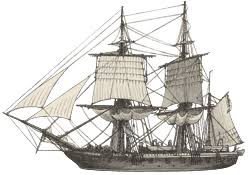
What was the name of Darwin's boat?
Indefatiguable
Bugle
Sloop John B
Beagle

Who created the theory of evolution?
Charles Darwin
Charles Derwin
Charlie Darwin
Chris Darwin
1. The process in which humans choose parent organisms looking to obtain desired characteristics is called:
natural selection
Artificial selection
random selection
genetic manipulation
What is an example of artificial selection?
Letting dogs choose their own mate
Letting plants pollinate on their own
Crossing a labrador and a poodle to create a labradoodle
Which statement is true contrasting (differences) natural selection and artificial selection?
In natural selection, traits benefit humans and in artificial selection, the traits benefit the species
In natural selection, traits benefit the species and in artificial selection, the traits benefit humans
In natural and artificial selection, the process takes hundreds of years to occur
In natural and artificial selection, nature determines what traits will be passed down to offspring.


Which of the following is a term for a group of similar organisms that can reproduce fertile offspring?
individual
population
species
fossil

The difference in the physical traits of individuals within the same population is called a(n)
change
adaption
species
variation

Identify the observation that supports the following conclusion of the theory of natural selection: "Small variations within species can confer advantages to certain individuals that allow them to survive & reproduce"
Monkeys and orangutans are found on Borneo, while other islands are home to tree kangaroos but no monkeys.
Individuals within a given species are not exactly alike.
Animals have distinct geographic ranges, but more similar species tend to live closer to each other.
Fossils of extinct animals turn up where similar animals live today.
Scientists create both scientific theories and scientific laws as they make observations and conduct experiments about the natural world. Which of the following statements most accurately compares the difference between scientific theories and scientific laws
science laws are based on evidence while science theories are not
science theories involve only biology, while laws involve all types of science
science theories involve mathematical equations, while science laws are based on observations
science theories are ideas that explain the why of natural events, while science laws predict how or what will happen in a natural event.

