
 Worksheets
Periodic Table Trends Isotopes
Total questions: 15
Worksheet time: 11mins


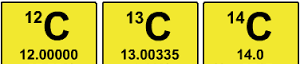
Isotopes are atoms of the same element with different #’s of __________ & therefore different __________.
neutrons ; atomic numbers
protons ; atomic numbers
electrons ; atomic masses
neutrons ; atomic masses
Four isotopes of lead include lead-204, lead-206, lead-207, and lead-208. The average atomic mass of lead is 207.2. Which isotope of lead is likely to be the most abundant?
204
206
207
208
How do you calculate mass number?
Mass x percent
Protons + Electrons
Protons + Neutrons
Neutrons + Protons + Electrons
What isotope has 26 protons and 30 neutrons?
Iron-56
Zinc-56
No way to tell

The diagram shows the atomic notations of three atoms. Choose a pair of chlorine isotopes.
P & R
P & Q
Q & R
Which of the following best describes the role of the neutron in the atom?
determines the type of element
helps determine the charge on an ion
acts like the "glue" that helps hold the nucleus together

Which statement describes the trend in the number of neutrons for the stable isotopes of period 2 on the periodic table?
neutron numbers are often far less than proton numbers in stable isotopes
neutron numbers are usually exactly equal to proton numbers for the stable isotopes
neutron numbers are sometimes equal to or often a little larger than proton numbers for the stable isotopes

What pattern appears to occur in this graph comparing neutron and proton numbers for stable isotopes?
the larger the proton number, the more likely there will be more neutrons than protons for the stable isotopes
the larger the proton number, the more likely there will be equal neutrons to proton numbers for the stable isotopes
the larger the proton number, the more likely there will be less neutrons than protons for the stable isotopes

Which line is actually a 1:1 line?
green line
red line

