
 Worksheets
P2 Sankey Diagrams and Efficiency
Total questions: 20
Worksheet time: 40mins
True or False. Energy cannot be created or destroyed, rather it is transformed from one energy type to another.
True
False
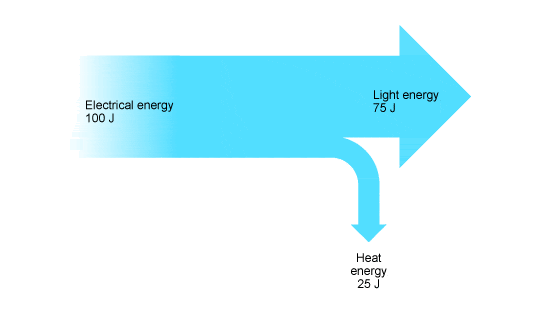
What is this diagram called?
Stankey Diagram
Sankey Diagram
Smelly Diagram
Some sort of Diagram
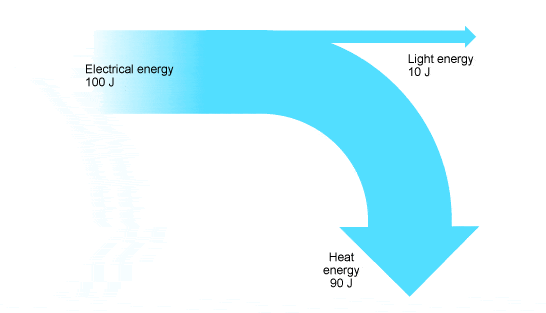


What type of device might this Sankey be about?
A very efficient LED light bulb
A very inefficient incandescent light bulb
A coal power plant
A wind turbine


Identify the energy transfer
electrical to chemical to light
kinetic to potential
chemical to electrical to light
light to sound

Identify the energy transfer
chemical to kinetic
solar to electrical
thermal to light
electrical to light

When you eat food, your body gains ___________ energy.
electrical
chemical
thermal
light

What type of energy can be sensed by the eyes?
sound
thermal
electrical
light
What word or words describes kinetic energy?
Energy of position
stored energy
movement
not moving
Fire is an example of what two energies?
Electrical and Sound
Mechanical and Sound
Light and Thermal
Chemical and Elastical
Which of these equations is correct?
efficiency = total energy transferreduseful energy transferred
efficiency = useful energy transferredtotal energy transferred
energy = efficiency ×100%
efficiency = total energy tranferredwasted energy transferred

Which bulb is the most efficient?
Filament bulb
LED light
CFL lamp
A kettle uses 100J of electrical energy to produce 7J of sound energy and 93J of thermal energy. How efficient is the kettle?
100%
7%
93%
95%
A washing machine uses 250J of electrical energy to produce 125J of useful energy. How efficient is it?
5%
50%
55%
100%
A hairdryer uses 300J of energy to produce 60J of sound energy and 240J of thermal energy. Calculate it's efficiency.
80%
90%
20%
100%
An iPhone charger coverts 75J of electricty in to 50J of charge and 25J of thermal energy. How efficient is the charger?
10%
100%
33%
67%

