
NEW
Font size
 Worksheets
Agriculture in Action LC1 Review!
Total questions: 20
Worksheet time: 15mins
Involves two parents and produces offspring different from parents
external fertilization
sexual reproduction
internal fertilization
asexual reproduction
A reproductive process that involves two parents that combine genetic material to produce a new organism, which differs from both parents.
external fertilization
asexual reproduction
sexual reproduction
internal development
Type of reproduction that makes an identical copy of a parent cell
sexual reproduction
asexual reproduction
internal fertilization
external fertilization
Which of the following is a Homozygous Dominant Genotype?
Yy
XX
zz
Why do scientist use Punnett Squares?
A tool scientist use to to see alleles
A tool scientist use to see which alleles are dominant
A tool scientist use to determine possible genotypes for offspring
Which of the following is a homozygous recessive genotype?
HH
dd
Aa
Which of the following is a heterozygous genotype?
Gg
UU
pp
In a Punnett Square, 1 box is equal to 25%. How much are 3 boxes equal to?
25%
50%
75%
100%
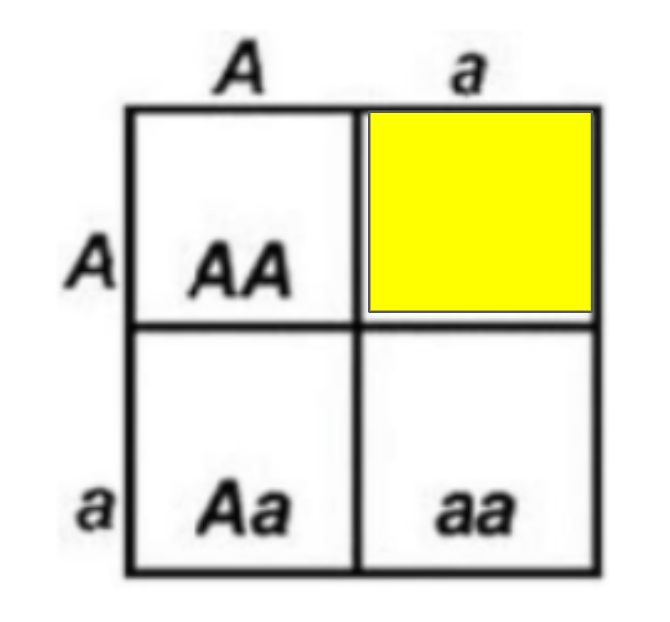
Fill in the Yellow Box
AA
Aa
aa
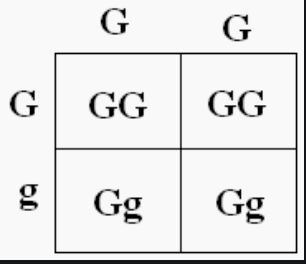
The punnett square is used to tell the color of a frogs skin. "G" means green skin and "g" means brown skin. What is the chance the baby frogs will have brown skin?
0%
25%
50%
100%
Mutations can benefit humans because they can:
Cause illness
Make an organism more suited to live in its environment.
Make organisms live shorter lives
Cause organisms to grow extra limbs.
True or false, mutations create genetic diversity?
True
False

