
 Worksheets
Forces and Motion End of Topic Quiz
Total questions: 27
Worksheet time: 22mins
Because of inertia, a moving object will keep ________ unless acted on by an unbalanced force.
at rest
moving
in one spot
inertia

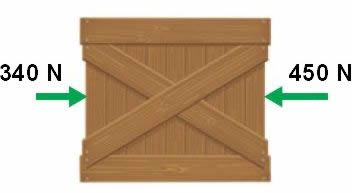
What happens when unbalanced forces act on an object at rest?
the object remains at rest
the object accelerates in an unpredictable direction
the object begins accelerates in the direction of the net force
the object begins moving opposite to the direction of net force
A 20 kg bike accelerates at 10 m/s2. what was the force
25 Newtons
20 Newtons
200 Newtons
10 Newtons
A parachutist of mass 75 kg jumps from a plane at a height of 4 000 m above sea level.
The parachutist falls through a distance of 2 400 m during the first 60 seconds. Calculate the average speed of the parachutist during this time.
20 ms-1
40 ms-1
67 ms-1
80 ms-1

The graph shows the vertical speed of a parachutist. At which point did they open the parachute?
A
B
C
D
When a parachute canopy is opened more drag is created because:
It has a large mass
It has a large surface area
It is travelling at terminal speed
The person is now vertical
Weight is calculated by
mass X gravity
mass X velocity
acceleration X velocity
What is mass?
the amount of matter in an object
how heavy an object is
how fast an object falls
how big an object is
Stopping distance =
the distance after the brakes have been pressed
the distance while someone thinks about braking
the distance while someone thinks about braking + the distance after the brakes have been pressed
the distance to the object is that you need to stop for
Thinking distance is...
Your reaction time
The distance travelled between seeing an object you need to stop for and pressing the brakes
The time taken between seeing an object you need to stop for and pressing the brakes
The distance travelled while the brakes are pressed and stopping
Braking distance is...
The time take to stop after the brakes have been pressed
The distance travelled between seeing an object you need to stop for and pressing the brakes
The time taken between seeing an object you need to stop for and pressing the brakes
The distance travelled while the brakes are pressed and stopping

A trampoline increases __________________, which in turn decreases _____________________.
force / time
mass / weight
time / force
acceleration / velocity
A car travelling 10 m/s crashes into a wall. The driver hits her head against the steering wheel. The collision takes 0.1 second and the mass of her head is 5 kg. What is the force on her head. Write the answer in newtons.
(a)

