wayground logo

Free Printable Worksheets

NEW

Font size

S
M
L
XL
Worksheets

Forensics Anthropology

Total questions: 38

Worksheet time: 28mins

Name
Class
Date
1.
The arm and leg bones can be used to determine forensic height
a)
true
b)
false
2.
The pelvis of a female is _____ as compared to a male.
a)
wide and circular
b)
wide and heart-shaped
c)
narrow and circular
d)
narrow and heart-shaped
3.
You notice a skull that has a rough and bumpy surface.  What sex this this characteristic typically associated with?
a)
Male
b)
Female
4.
a)
vertebrae
b)
tibia
c)
pelvis
d)
femur
5.
Why does an infants skeleton contain a higher number of bones?
a)
They are born with many bones that have not fused completely
b)
They are mutant ninja bebes
c)
They are born with bones that eventually turn into cartilage
d)
all of the above
6.
How many bones are in the skeleton of an infant?
a)
206
b)
None, they are all cartilage
c)
450
d)
150
7.
The material that wraps the ends of the bones to protect them and keep them from scraping together is call
a)
ligaments
b)
periosteum
c)
cartilage
d)
tendons
8.
The subpubic angle is 104 degrees. The body is most likely a
a)
male
b)
female
9.
The stage of fusion of various bones within a skeleton can be used to estimate the ___________ of the decedent. 
a)
age
b)
race
c)
gender
d)
height
10.
A skull is found with rounded eye orbits, a thin brow ridge, and no occipital protuberance.  What is the sex of this skull?
a)
Male
b)
Female
11.
a)
Humerus
b)
Ulna
c)
Radius
d)
Clavicle
12.
This is the smaller bone behind the Tibia
a)
Tibia
b)
Femur
c)
Fibula
d)
Pelvis
13.
The pelvis in the picture is most likely
a)
male
b)
female
14.
Which is the most reliable bone to determine the sex of a skeleton? 
a)
Femur
b)
Skull
c)
Pelvic bone
d)
Collarbone
15.
One of the  ways to determine the race using bones is by examining the :
a)
the pelvis
b)
the leg bones
c)
skull
d)
the occipital bump
16.
Which of the following describes a purpose of bones?
a)
To provide the framework for our bodies.
b)
They anchor our muscles to allow movement.
c)
They protect our organs.
d)
All of the above.
17.

These green bones are in the palm of your hand.

a)

metacarpals

b)

metatarsals

c)

tarsals

d)

carpals

18.

Name these bones colored yellow.

a)

humerus

b)

ulna

c)

radius

d)

tibia

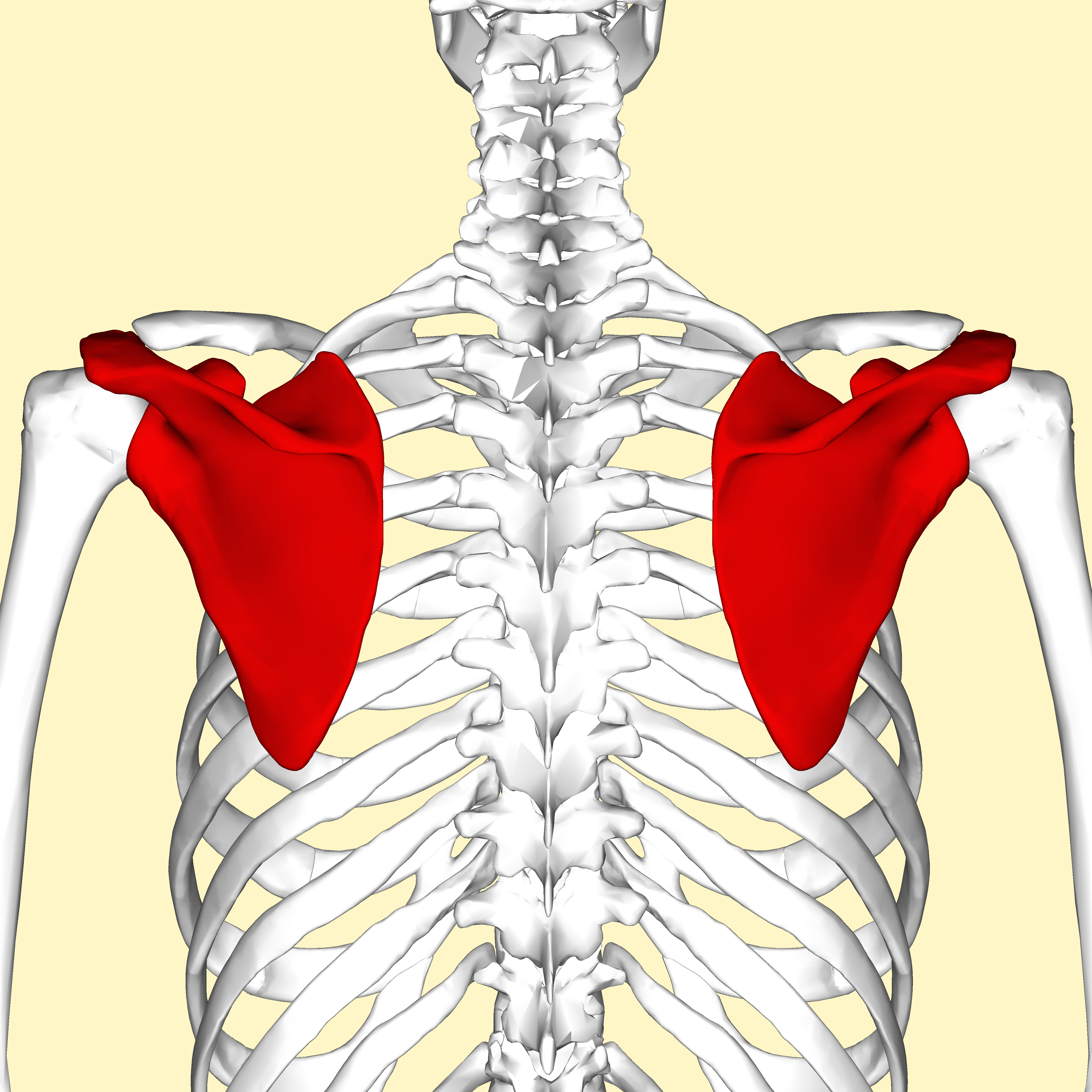
19.

What bones are colored red?

a)

Clavicle

b)

Scapula

c)

Sternum

d)

Carpals

20.

Phalanges are:

a)

finger bones

b)

arm bones

c)

leg bones

d)

spinal bones

21.

What CANNOT be determined by examining bones?

a)

age

b)

race

c)

weight

d)

gender

22.

Round eye orbits, subpubic angle of 103 degrees, rectangular-shaped pubis, smooth skull.

a)

male

b)

female

c)

other

23.

Pelvis narrow, protuberance on occipital bone, sloping forehead.

a)

human male

b)

human female

c)

animal

24.

The skull was found to be smooth with small brow ridges; would you expect to find a subpubic angle larger or smaller than 90 degrees?

a)

larger than 90 degrees

b)

smaller than 90 degrees

25.
What steps does an anthropologist first take during an examination of bones?
a)
Are the human bones?
b)
How did they die?
c)
Both 
26.
All of the following are things anthropologists want to know about a skeleton EXCEPT
a)
age 
b)
cause of death
c)
gender
d)
race
27.
When trying to find the age of an individual, anthropologists will give an exact age of the deceased
a)
true
b)
false
28.
What bones of the body are used to help determine age? Check all that apply
a)
humerus 
b)
patella
c)
femur
d)
femur and humerus
29.
What specific bone region is most useful in determining the gender of remains
a)
pelvis
b)
skull
c)
elbow
d)
femur
30.
Odontology is the study of 
a)
teeth 
b)
bones
c)
death
d)
race
31.
Using the photos on the screen, which Pelvis belongs to a male?
a)
1
b)
2
32.

locations where bones meet

a)

tendons

b)

ligaments

c)

joints

d)

skeletons

33.

the study of physical anthropology as it applies to human skeletal remains in a legal setting.

a)

forensic anthropology

b)

ossification

c)

skeletal trauma analysis

d)

osteoclast

34.

What bone is highlighted?

a)

Tibia

b)

Fibula

c)

Femur

d)

Humerus

35.

What bone is highlighted?

a)

Femur

b)

Tibia

c)

Fibula

d)

Humerus

36.
Which of these is a long bone?
a)
Femur
b)
Patella
c)
Scapula
d)
Carpal
37.
What two bones make up our lower leg?
a)
Patella
b)
Kneecap
c)
Tibia Fibula
d)
Pelvis
38.
What is another name for your shin bone?
a)
fibula
b)
tibia
c)
thigh bone
d)
femur