Wayground logo

Free Printable Worksheets

Font size

S
M
L
XL
Worksheets

CHAPTER 3 SUBTOPIC 3.3 AND 3.4

Total questions: 35

Worksheet time: 33mins
Name
Class
Date
1.
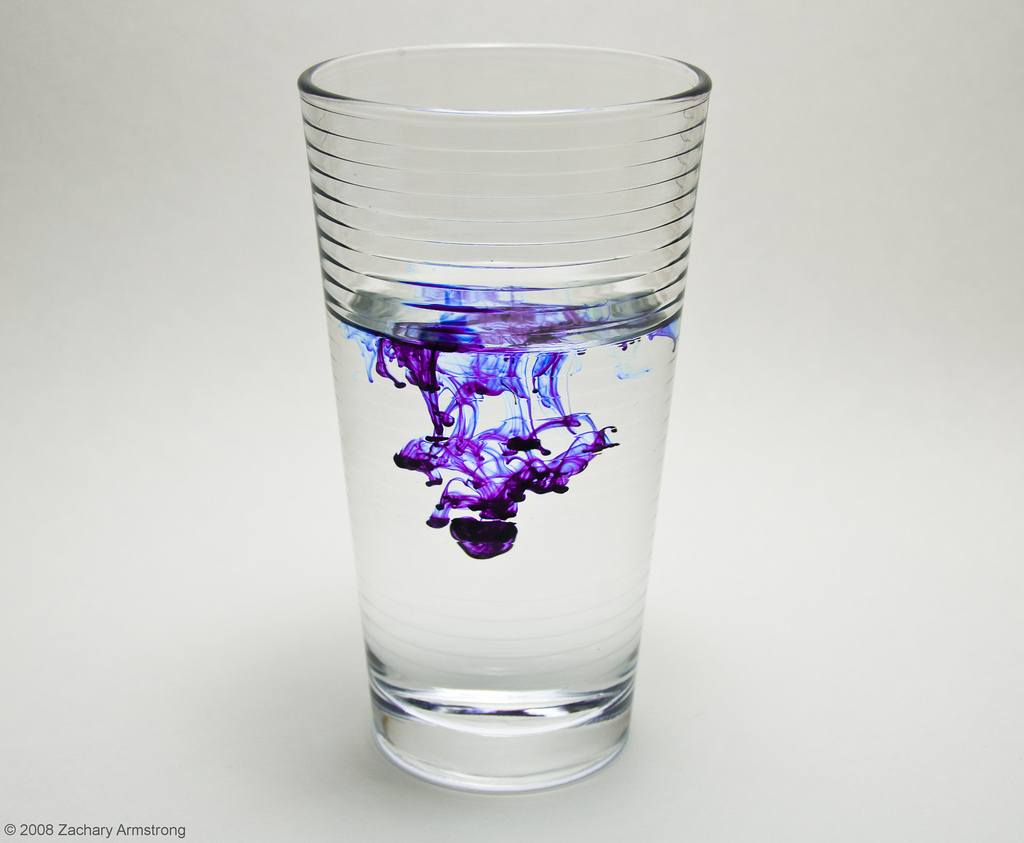
Where is there a low concentration of dye?
a)
at the bottom of cup
b)
in the color
c)
at the top of cup 
d)
no concentration gradient
2.
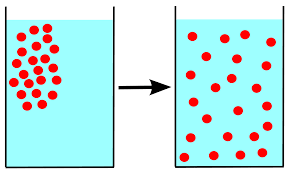
The picture below is an example of _________________.
a)
osmosis
b)
isotonic
c)
diffusion
d)
active transport
3.
Osmosis is the movement of _____ across a membrane.
a)
food
b)
energy
c)
oxygen
d)
water
4.
When both inside and outside of a cell have the same amount of water it is said that the cell has reached a state of
a)
Osmosis
b)
Diffusion
c)
Equilibrium
5.
Passive transport requires no
a)
concentration gradients
b)
osmosis
c)
motion
d)
energy
6.
The cell below is in a _________ solution.
a)
Hypotonic
b)
Hypertonic
c)
Isotonic
7.
What is diffusion?
a)
when molecules move from a low concentration to a high concentration 
b)
when molecules move from a high concentration to a low concentration.
c)
no movement 
d)
molecules move everywhere
8.
_______ regulates what enters and leaves a cell.  
a)
Cell Membrane
b)
Nucleus
c)
Mitochondria
d)
Cytoplasm
9.
When both inside and outside of a cell have the same amount of water it is said that the cell has reached a state of
a)
Osmosis
b)
Diffusion
c)
Equilibrium
10.
Movement of molecules from an area of high concentration to an area of low concentration is
a)
diffusion 
b)
passive transport
c)
osmosis
d)
all of the above
11.

If a red blood cell is put in distilled water, what will most likely happen to the cell?

a)

Nothing will happen

b)

It will shrivel.

c)

It will burst and then shrivel up

d)

It will swell and burst

12.

What does semi-permeable mean?

a)

Some molecules can move through the membrane

b)

Nothing can move through the membrane

c)

All molecules can pass through the membrane.

13.
Which type of transport requires an input of energy?
a)
Passive Transport
b)
Osmosis
c)
Simple Diffusion
d)
Active Transport
14.
When the concentration of solute molecules outside the cell is equal to the concentration inside the cell, the solution is
a)
hypertonic
b)
hypotonic
c)
isotonic
d)
ionic
15.
What is the difference between active and passive transport?
a)
Active does not need energy and passive uses ATP (energy)
b)
Active uses ATP (energy) and passive does not need energy
c)
Active stores transport proteins and passive releases 
d)
Active uses hormones and passive does not 
16.
If a red blood cell is put in distilled water, what will happen to the cell?
a)
Nothing will happen
b)
It will shrivel.
c)
It will burst and then shrivel up
d)
It will swell and burst
17.
What are three types of passive transport
a)
Transport proteins, Endocytosis, Exocytosis
b)
None of the ones listed
c)
Osmosis, Diffusion, Facilitated diffusion 
d)
Touchdown, interception, football
18.

When the number of water molecules outside of the cell is greater than inside the cell, which will most likely occur?

a)

Molecules of water will NOT MOVE either way.

b)

Molecules of water will move OUT of the cell.

c)

Molecules of water will move INTO the cell.

d)

Molecules of water will EVAPORATE.

19.
What caused the cell to look this way? 
a)
Adding Distilled water to a normal cell
b)
Adding saltwater to a normal cell
c)
Salt diffusing into the cell through the cell membrane 
d)
Water diffusing into the cell through the cell membrane 
20.
What caused the cell to look this way? 
a)
Adding Distilled water to a normal cell
b)
Adding saltwater to a normal cell
c)
Salt diffusing into the cell through the cell membrane 
d)
Water diffusing into the cell pushing salt out through the cell membrane 
21.
Which of the following causes plants to wilt? 
a)
Active Transport
b)
Osmosis 
c)
Is Isotonic solutions 
d)
PLasmolysis
22.

Name this structure

a)

cell wall

b)

phospholipid bilayer

c)

lipid layer

d)

mosaic

23.

Main components of phospholipid bilayer

a)

pore protein and carrier protein

b)

glycoprotein and carrier protein

c)

phospholipid and proteins

d)

glycogen and proteins

24.
a)

carrier protein

b)

pore protein

25.

Type of transport

a)

active transport

b)

simple diffusion

c)

facilitated diffusion

d)

osmosis

26.

A process of water molecules diffuse from a region of low solute concentration to a region of high solute concentration through plasma membrane

a)

active transport

b)

simple diffusion

c)

facilitated diffusion

d)

osmosis

27.

Type of transport

a)

active transport

b)

simple diffusion

c)

facilitated diffusion

d)

osmosis

28.

Which of the following involves active transport?

a)

Absorption of nutrient through villi of small intestines

b)

Absorption of mineral salts at root hair

c)

Evaporation of water vapors from stomata

d)

Secretion of sweat by sweat glands

29.
a)

Haemolysis

b)

Crenation

c)

Plasmolysis

d)

Deplasmolysis

30.

a)

A is hypotonic compared to B.

b)

A is hypertonic compared to B

c)

B is hypotonic compared to A.

d)

B is hypertonic compared to A.

31.

What causes the change from (a) to (b)?

a)

Plant cells immersed in hypotonic solution

b)

Plant cells immersed in hypertonic solution

c)

Plant cells immersed in isotonic solution

32.

What are the causes of plant to wilt?

a)

Excess water

b)

Excess fertiliser

c)

Lack of water

d)

Lack of fertiliser

33.

1. Vacuole shrinks

2. Plasma membrane and cytoplasm are pulled away from the cell wall

a)

Turgid

b)

Crenation

c)

Deplasmolysis

d)

Plasmolysis

34.

A few potato strips (all were 2.0 cm) were immersed in solutions with different concentration. Which of the following sizes show that the strips were immersed in hypotonic solution?

a)

1.8 cm

b)

1.9 cm

c)

2.0 cm

d)

2.1 cm

e)

2.2 cm

35.

Sugar and salt solution is hypertonic towards the fruit cells. This causes the water molecules ____________ and fruit becomes _______________

a)

diffuse in , dehydrated

b)

diffuse out , dehydrated

c)

diffuse in , hydrated

d)

diffuse out , hydrated